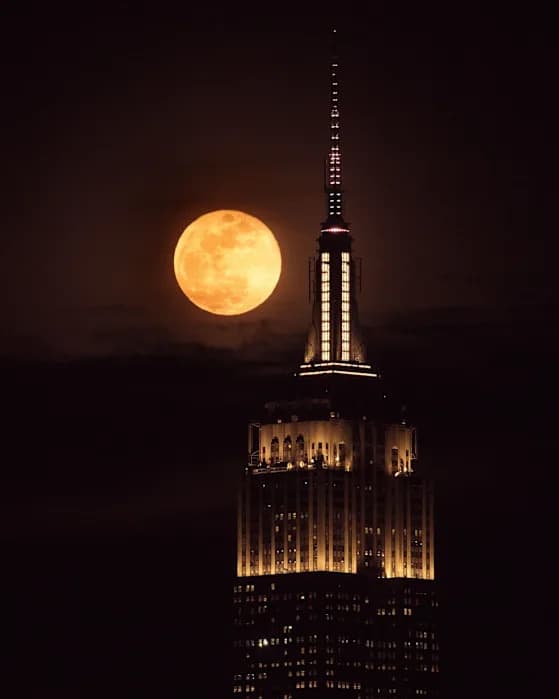
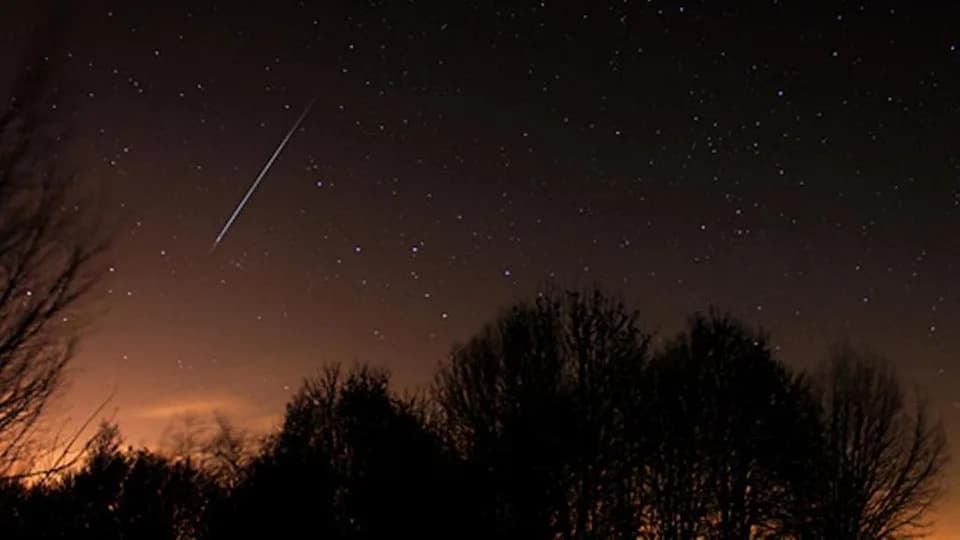
The Moon is a waxing crescent tonight, visible as a thin sliver after sunset. The Leonids (through Nov. 30) and Northern Taurids (through Dec. 10) remain active. The next full moon — the December "cold" supermoon — arrives Dec. 4 (peak ~6:14 p.m. ET) and coincides with the start of the Geminid meteor shower (Dec. 4–17), which peaks Dec. 13–14 and can produce as many as ~120 meteors per hour under dark skies.
Waxing Crescent Tonight — When the Next Supermoon and Geminid Meteor Shower Arrive

Tonight the Moon is a waxing crescent: a thin, curved sliver visible low in the western sky just after sunset. You may still spot meteors from the Leonids, which remain active through Nov. 30, and the Northern Taurids, active until Dec. 10.
Moon phase and key dates
The Moon will remain a waxing crescent from Friday, Nov. 21 through Nov. 23 — the first visible phase after the new moon. A narrow crescent of illuminated lunar surface appears after sunset as the Moon moves away from conjunction with the Sun.
- First quarter: Nov. 28
- Full moon (December cold moon / supermoon): Dec. 4 (peak illumination ~6:14 p.m. ET)
- Last quarter: Dec. 11
- New moon: Dec. 19
- First quarter: Dec. 27
About the December "cold" supermoon
The next full moon arrives on Thursday, Dec. 4. Often called the "cold moon" or "long night moon," this full moon will be a supermoon — meaning the Moon will be near perigee (its closest orbital point to Earth) as it appears full. The Old Farmer's Almanac lists the Moon's nearest approach for this full moon at about 221,965 miles. When a full moon occurs near perigee it appears slightly larger and brighter than average.
Because it will rise low on the horizon for several nights, observers may notice an enhanced apparent size and brightness. You can check precise moonrise and moonset times for your location using local astronomical resources or the Old Farmer's Almanac.
Meteor showers to watch
Several meteor showers are active now or coming soon:
- Northern Taurids — active Oct. 20 to Dec. 10. Peaked around Nov. 11–12. Near peak, observers can sometimes see up to about 15 Taurids per hour before moonrise. Taurids often appear yellowish-orange and radiate from Taurus.
- Leonids — active Nov. 6 to Nov. 30. Peaked around Nov. 16–17 but remain observable. Leonids are fast — striking the atmosphere at roughly 44 miles per second — and can produce bright meteors and occasional fireballs. They appear to radiate from the constellation Leo.
- Geminids — active Dec. 4 to Dec. 17, peaking the night of Dec. 13–14. The Geminids typically produce a rich display of bright, often colorful meteors and are usually the strongest shower of the year. Under dark, ideal skies, rates can reach about 120 meteors per hour at peak, and meteors may be visible from many parts of the sky rather than only near the radiant.
The Geminid shower is unusual because its parent body is an asteroid, 3200 Phaethon, rather than a typical comet. The December full supermoon coincides with the start of the Geminid activity window on Dec. 4.
Viewing tips
- Best viewing time: around local midnight through the pre-dawn hours for many showers; the Geminids often ramp up after 9 p.m. and peak near 2 a.m.
- Find a dark site away from city lights and allow at least 30 minutes for your eyes to adapt to the dark.
- Check local moonrise and moonset times to know when moonlight will interfere with faint meteors.
The winter solstice arrives on Sunday, Dec. 21, 2025, bringing the shortest day and longest night of the year in the Northern Hemisphere. The first full moon of 2026 is expected to be the January wolf supermoon on Jan. 3, 2026.
By Maria Francis
Help us improve.