President Trump is weighing an executive order that would authorize lawsuits and withhold federal funds to block certain state AI laws. The draft would create an "AI Litigation Task Force," direct Commerce and other agencies to identify conflicting state measures, and push the FCC and FTC to develop federal standards that could preempt state rules. The move is framed as necessary to protect U.S. competitiveness with China but has drawn bipartisan criticism for potential federal overreach and benefits to large tech firms.
Trump Weighs Executive Order to Challenge State AI Laws, Sparking Bipartisan Backlash
President Trump is considering an executive order to block certain state-level artificial intelligence rules, authorizing lawsuits and withholding federal funds from jurisdictions that adopt measures the administration views as obstructive to national AI competitiveness. The draft, which officials describe as a possible next step, frames the effort as necessary to prevent a patchwork of state rules from hindering U.S. firms in the global race with China.
What the draft would do
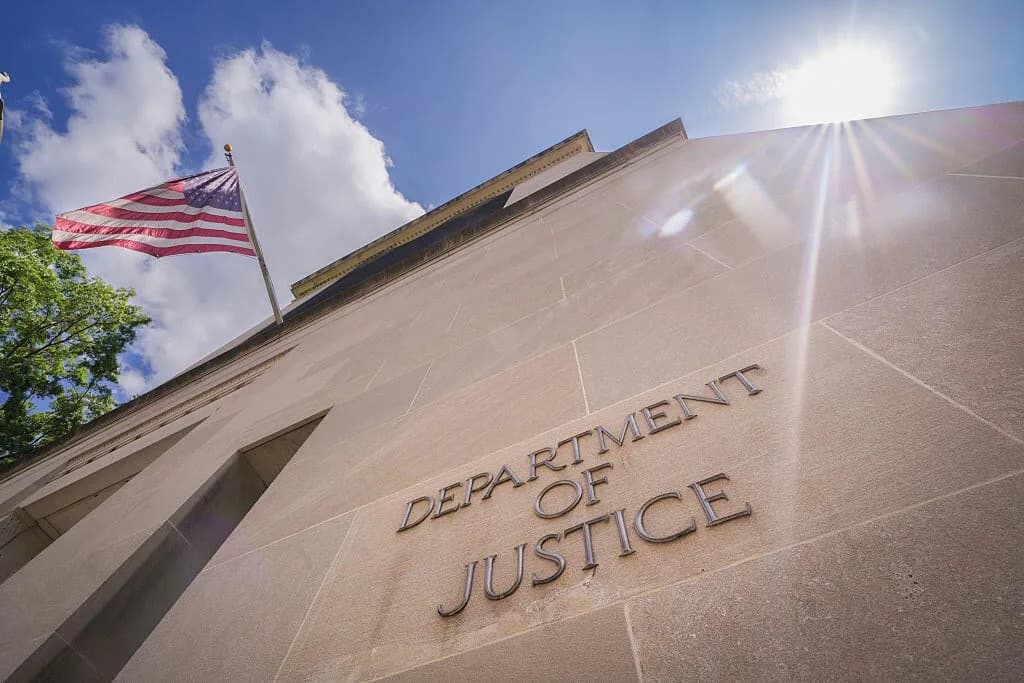
Under the proposal, Attorney General Pam Bondi would convene an "AI Litigation Task Force" to mount constitutional challenges to state AI laws, arguing they violate the Commerce Clause. Commerce Secretary Howard Lutnick would be asked to identify state measures that conflict with a proposed federal policy and refer them to the task force. The draft also directs Commerce to issue guidance that could make states ineligible for certain broadband funds if they adopt qualifying AI restrictions.
Other federal agencies would be asked to review whether discretionary grants could be conditioned on states refraining from enacting specific AI regulations. The Federal Communications Commission would evaluate a national reporting and disclosure standard for AI models intended to supersede state requirements, and the Federal Trade Commission would be asked to clarify how existing unfair and deceptive practices law applies to AI—and whether that interpretation preempts state statutes.
The draft additionally directs White House AI and crypto adviser David Sacks to prepare legislative recommendations for a federal AI regulatory framework, though that section includes no timeline for when such proposals must be delivered.
Reactions
The plan has prompted criticism from across the political spectrum. Democrats have accused the administration of favoring big technology companies and undermining consumer protections. Senator Richard Blumenthal (D-Conn.) said the approach risks benefiting large tech firms at the public’s expense and could accelerate risks such as predatory AI tools.
Some Republicans have also expressed opposition. Senators and governors from both parties have warned against broad federal preemption of state authority. Gov. Ron DeSantis (R) described preemption as a subsidy to Big Tech that would restrict states' ability to address online censorship, protect children, guard intellectual property and safeguard critical infrastructure. Rep. Marjorie Taylor Greene (R) likewise argued that states must retain the right to regulate AI for their residents' benefit.
Former Rep. Brad Carson (D-Okla.), president of Americans for Responsible Innovation, called the move a possible "Hail Mary," saying the administration could have acted earlier and that the legal grounds for a sweeping executive preemption may be weak.
Why it matters
The draft frames federal action as part of a broader strategy to maintain U.S. leadership in AI and prevent regulatory fragmentation that could disadvantage domestic firms competing with China. Critics contend, however, that using executive authority to preempt states risks overreach, fuels partisan conflict, and may benefit large technology companies more than consumers or public safety.
The White House has cautioned that discussion of potential executive orders is speculative until an order is formally issued. If implemented, the draft's combination of litigation, conditional funding, and interagency guidance would intensify debates about federalism, industry regulation, and national strategy toward emerging AI technologies.
Help us improve.