The National Science Foundation renewed a $7.5 million grant for the University of Georgia’s Georgia Coastal Ecosystems program on Sapelo Island. The funding expands research into how extreme disturbances affect the resilience of salt marshes and estuaries across the study area from northern Sapelo to Little St. Simons Island. Scientists will monitor flooding, temperature and salinity to inform coastal management and policy. GCE, active since 2000, has shown coastal wetlands are among the most effective carbon-storing ecosystems on Earth.
NSF Renews $7.5M to Expand Sapelo Island Program Studying Georgia’s Coastal Resilience

The National Science Foundation has renewed a $7.5 million grant to extend the University of Georgia Marine Institute’s long-running Georgia Coastal Ecosystems (GCE) program on Sapelo Island. GCE is one of NSF’s flagship long-term ecosystem studies and examines how coastal systems function, change over time, and respond to human and climate-related pressures.
Managed from Sapelo Island, the GCE study area stretches from northern Sapelo Island to Little St. Simons Island. The new funding will expand investigations into how extreme ecological disturbances—such as storms, prolonged flooding, heat events, and salinity shifts—affect the resilience of salt marshes and estuaries across this region.
“Extremes matter, and we’re learning how those extremes shape the resilience of our marshes,” said Merryl Alber, director of the Marine Institute. The team will explore whether changes in variability can reveal a system’s underlying health.
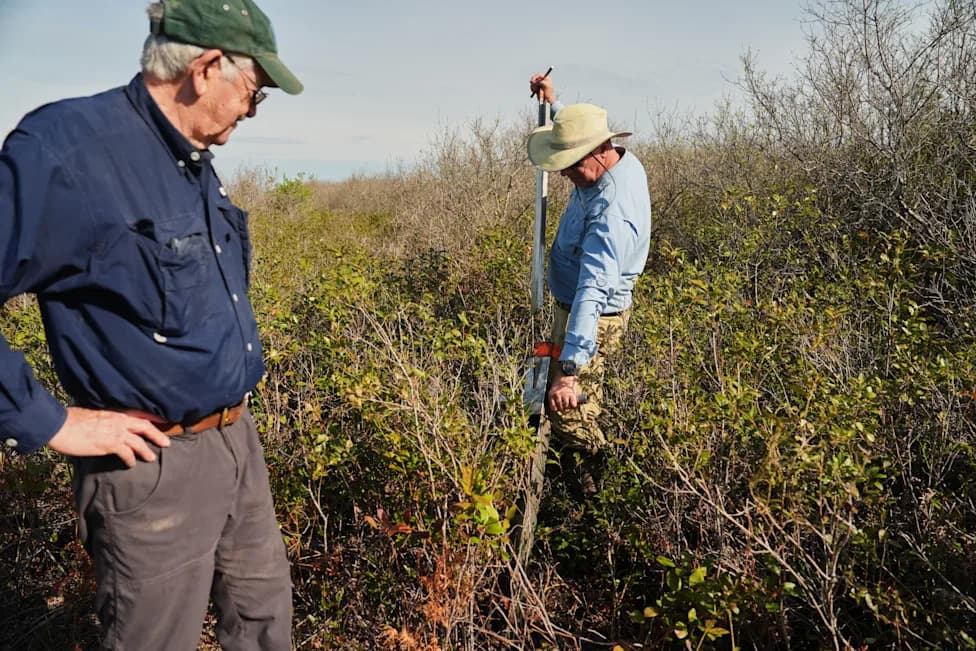
Salt marshes provide multiple benefits: they buffer shorelines from erosion, filter pollutants from water, support fisheries, and sequester carbon—making them essential to coastal communities and climate mitigation. To better understand these roles under changing conditions, researchers will continuously monitor environmental drivers such as flooding frequency and depth, air and water temperature, and salinity.
Since its start in 2000, GCE has produced important findings on the patterns and processes that shape Georgia’s coastal environments. One notable result is that coastal wetlands—including marshes, mangroves, and seagrass beds—store carbon at some of the highest rates on Earth, underscoring their value for climate resilience and nature-based solutions.
“The work of our coastal researchers has never been more important,” said Chris King, UGA’s interim vice president for research, celebrating the program’s achievements and the potential impact of renewed NSF support.
Researchers expect the new phase of GCE to produce data and insights that will guide coastal management, inform policy decisions, and help communities prepare for increasingly frequent and intense ecological extremes.
Help us improve.