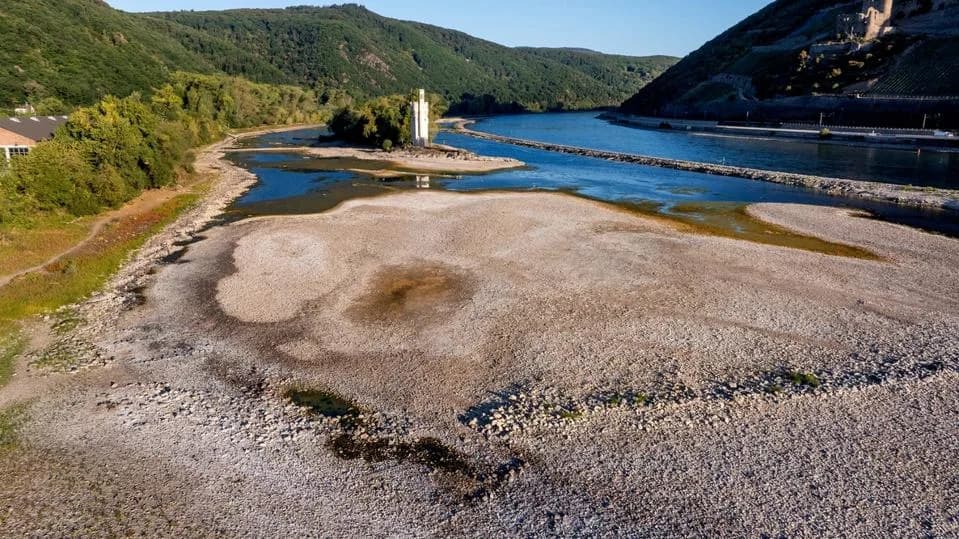
Copernicus reports that summer 2026 brought Europe its lowest average river flows since records began in 1992, with major rivers such as the Rhine, Danube, Loire and Seine experiencing record or near-record low discharges. Sea surface temperatures were unusually warm, with strong to exceptional marine heatwaves along the Atlantic and in the Mediterranean. Western Europe recorded its warmest summer on record at 21.7°C (2.5°C above the 1991–2020 average) and 52% of the continent experienced "very strong" heat stress. These conditions strained irrigation, hydropower, nuclear cooling and freshwater supplies, highlighting links between climate change and energy security.
Europe’s Rivers Hit Lowest Summer Flows Since 1992 While Seas Reach Record Warmth in 2026
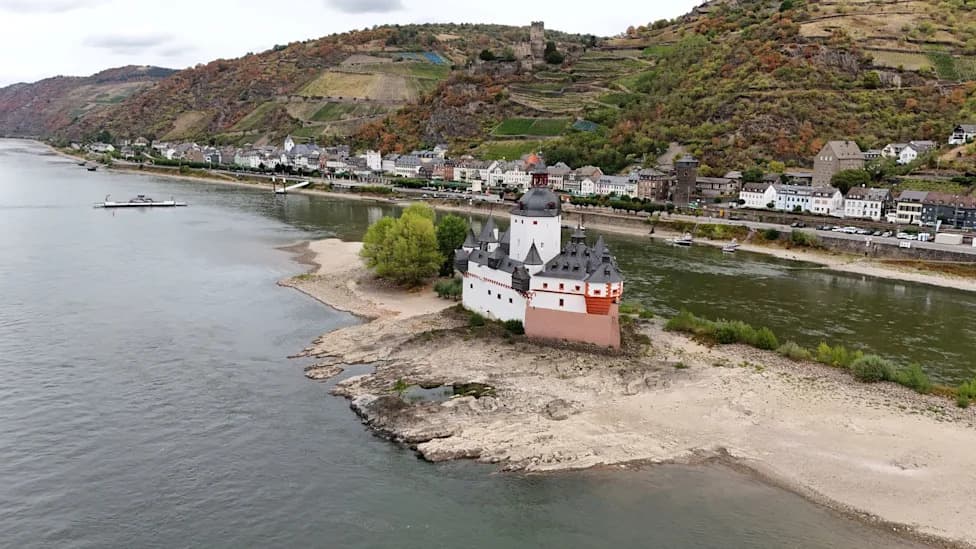
FILE PHOTO - The Kaub ferry transports cars from Kaub to Bacharach, after it has suspended operations due to low water levels. (is associated with: «Europe's rivers record lowest summer flows in more than 30 years») Boris Roessler/dpa
Europe recorded its lowest average river flows in summer since monitoring began in 1992, while sea surface temperatures around the continent were unusually high in 2026, the EU Copernicus Climate Change Service reported.
Key Findings
During July and August many major waterways — including the Rhine, Danube, Loire and Seine — registered record-low or near-record discharges. Copernicus said these diminished flows put increased pressure on irrigation, nuclear reactor cooling, hydropower generation, freshwater availability and overall energy supply, underlining how climate change can intersect with geopolitical and infrastructure risks.
Marine Heatwaves And Coastal Impacts
The agency also reported record or near-record sea surface temperatures along much of the Atlantic coast and across the western and central Mediterranean, accompanied by strong to exceptional marine heatwaves. Marine heatwaves can intensify coastal heat by reducing overnight cooling and increasing humidity, exacerbating heat stress for nearby populations.
Copernicus: Summer 2026 was the third-warmest on record for Europe and the warmest on record for Western Europe.
Western Europe averaged 21.7°C for the season — about 2.5°C above the 1991–2020 average. By the end of summer a record 52% of the continent's surface had been exposed to "very strong" heat stress, conditions that feel like 38°C or higher.
Implications
Lower river flows and warmer seas carry cascading impacts: reduced hydropower output, strain on agriculture and drinking-water supplies, heightened risks for nuclear plant cooling, and increased energy demand for cooling. The Copernicus findings highlight the need for adaptive planning, resilient water and energy systems, and international cooperation to manage climate-driven risks.
Help us improve.