Scholars, former officials and legal experts warn that President Trump’s repeated use of conspiratorial rhetoric mirrors tactics associated with authoritarian leaders and risks eroding trust in democratic institutions, science and public health. Critics point to his claims about election fraud, his decision to bar major news outlets from the White House, a contested 'grand conspiracy' inquiry, rollbacks of climate protections and amplified vaccine skepticism. Recent judicial rulings and resignations have challenged some actions, but experts say the broader pattern has lasting consequences for civic trust and policy-making.
“Page One of the Repressive Playbook”: Critics Warn Trump’s Conspiratorial Attacks Threaten Democracy, Science and Health
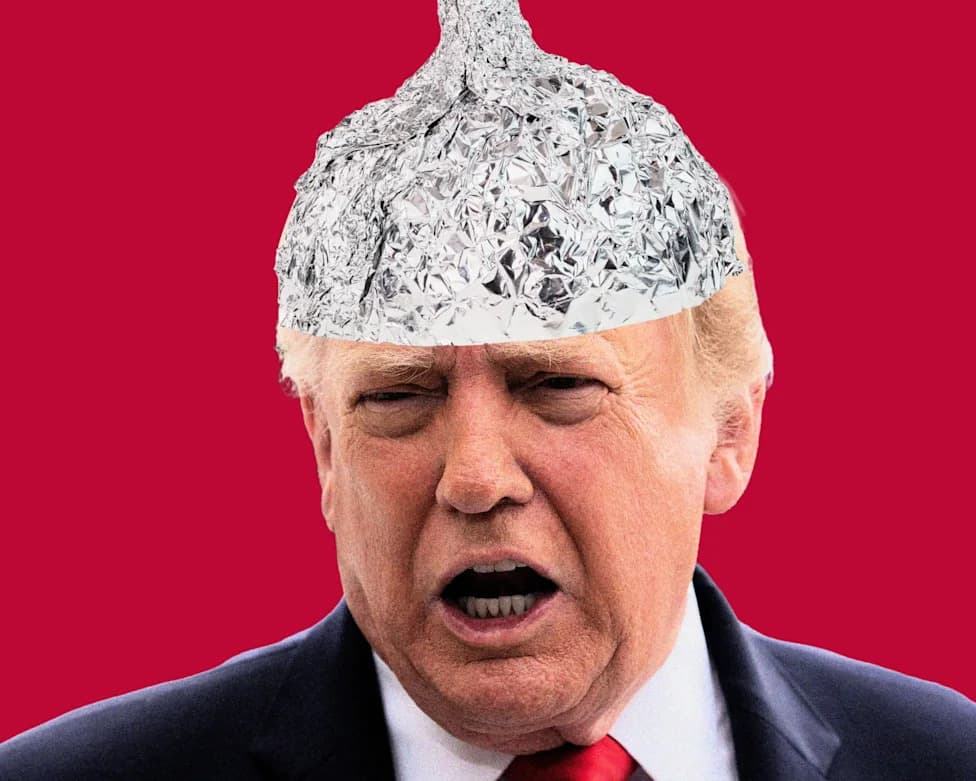
Composite: The Guardian/Getty Images
Since the start of his second presidency, President Donald Trump has repeatedly deployed conspiratorial rhetoric against critics and perceived foes—dismissing dissent as hoaxes or coordinated attacks. Scholars, former officials and legal experts warn that this pattern undermines public trust, endangers public health and weakens democratic norms.
Conspiracy Rhetoric and an Authoritarian Playbook
Observers say Trump’s frequent use of conspiracy narratives mirrors tactics used by authoritarian leaders who sow fear, scapegoat opponents and justify repressive measures. Harvard government professor Steven Levitsky, co-author of How Democracies Die, argued that conspiracies are often the first page of a repressive playbook because they permit leaders to allege vast threats without producing evidence.
‘They’re almost always used to justify repression,’ Levitsky said, noting historic parallels from Mao and Stalin to more recent authoritarian figures.
Election Claims and Press Restrictions
Critics point to Trump’s persistent claims of widespread election fraud stemming from the 2020 vote and his repeated assertions that the US is facing a “crisis of election security.” These claims — contradicted by extensive evidence and expert analysis — have been cited to justify proposals for new voting restrictions.
Last week the White House barred three news organizations (CNN, Politico and MS Now) from access to presidential events; the outlets jointly sued on First Amendment and due process grounds on 21 September. A federal judge in Washington, DC ordered on 23 September that their press passes be restored, finding the administration’s action likely unconstitutional.
Former White House special counsel Ty Cobb warned that Trump uses fabricated conspiracies to delegitimise critics: ‘He resorts to abject fabrications in response to any criticism or resistance.’
The 'Grand Conspiracy' Inquiry: Staffing and Resignations
The Justice Department has also pursued an expansive inquiry into what Trump calls a ‘grand conspiracy’ involving a so-called deep state. That probe has subpoenaed former national security officials, including ex-CIA director John Brennan and ex-FBI director James Comey. The investigation’s leadership has been unstable: veteran prosecutor Maria Medetis Long resigned in April, and Joe diGenova—recruited to lead the effort—abruptly stepped down on 10 September after five months.
Former DOJ inspector general Michael Bromwich criticized the probe’s approach: it appears to start with designated targets and then search for facts to support a preconceived theory.
Climate, Energy and Scientific Findings
On environmental policy, the administration has rolled back rules aimed at curbing greenhouse gases, sought to prop up ageing coal plants and paused offshore wind leases. In December the administration paused leases on five East Coast wind projects that were expected to power more than 2.5 million homes and support roughly 10,000 jobs. In mid-September a federal judge ruled that the Energy Department exceeded its authority by ordering one Michigan coal plant to remain open.
In February the administration rescinded a major scientific 'endangerment finding' that linked climate change to public-health harms—an action critics call politically motivated and contrary to overwhelming scientific evidence. Harvard science historian Naomi Oreskes said these choices raise both direct energy costs and indirect public-health and climate harms.
Public Health and Vaccine Misinformation
Public-health experts also expressed concern about the administration’s messaging on vaccines. HHS Secretary Robert F. Kennedy Jr., who has a history of making inaccurate claims about vaccine safety, has aligned publicly with Trump on several points. In August Trump asserted, without scientific evidence, that the combined MMR vaccine could be “quite lethal,” and he advocated altering longstanding pediatric immunization schedules—proposals at odds with established medical guidance.
Anti-vaccine speakers and organizers have received visible support: Kennedy addressed a Children’s Health Defense conference in Washington on 16 September and pledged White House backing. Polling suggests vaccine hesitancy has increased in some segments of the public following years of amplified misinformation.
Why Experts Are Alarmed
Historians and legal scholars say the cumulative effect of these conspiratorial claims is corrosive: they weaken confidence in elections, erode trust in the press, hamstring efforts to address climate risk and complicate public-health responses. Princeton historian Julian Zelizer observed that while conspiracy theories are nothing new in American politics, senior leaders historically pushed back against them—whereas repeated amplification from the presidency itself risks long-term damage to institutions.
Key dates and details: Trump’s televised speech urging tighter election measures aired on 16 July; the three news outlets filed suit on 21 September and won a court order restoring access on 23 September; Joe diGenova resigned from the grand-conspiracy probe on 10 September. The Heritage Foundation’s conservative analysis cited roughly 100 documented cases of non-citizen voting over 25 years—an indicator critics use to contest claims of systemic non-citizen voting.
Help us improve.