New Delhi has rolled out a winter action plan to reduce dangerous smog: construction will be suspended from Dec. 10, 2026 to Jan. 20, 2027, parking fees will double starting Nov. 1, 2026, and staggered office hours will run through Feb. 28, 2027. The package aims to cut dust, traffic emissions and other seasonal sources that drive PM2.5 well above safe levels. Officials hope early, coordinated measures will prevent air quality from reaching hazardous levels; research links long-term pollution in India to millions of deaths.
New Delhi Orders Six-Week Construction Halt, Doubles Parking Fees to Tackle Winter Smog
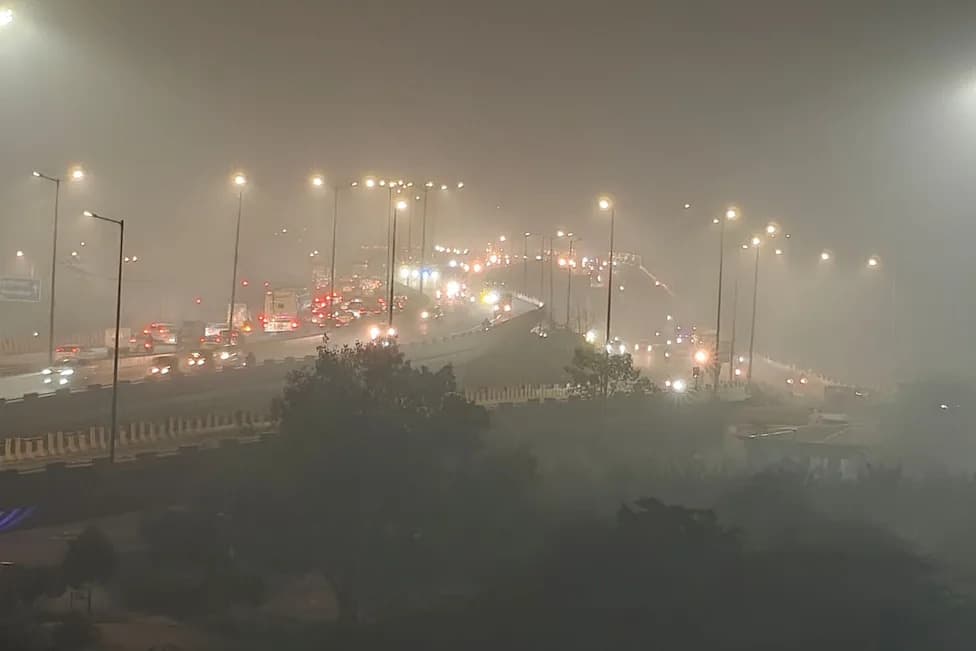
Photo Credit: Getty Images
New Delhi has announced a coordinated winter action plan designed to blunt the city’s annual spike in air pollution. The package includes a six-week suspension of construction, a doubling of parking fees, staggered office hours and other traffic-control measures intended to reduce smog before it becomes hazardous to public health.
According to The Straits Times, the measures will take effect ahead of the cold season: parking fees and staggered office hours begin on Nov. 1, 2026 (staggered hours run through Feb. 28, 2027), while construction activity will be paused from Dec. 10, 2026 to Jan. 20, 2027. Officials say the early timing is intended to prevent pollution levels from rising to dangerous levels once winter trapping conditions set in.
Home to roughly 30 million people, Delhi regularly ranks among the world's most polluted capital regions. Pollution stems from multiple sources: power plants, road traffic, construction dust and smoke from crop residue burning in surrounding states. In winter, cooler air and temperature inversions tend to trap pollutants close to the ground, increasing exposure.
"Early implementation of these stringent measures would help prevent the city's air from reaching hazardous levels during winter," said Delhi Environment Minister Manjinder Singh Sirsa.
Fine particulate matter (PM2.5) in Delhi frequently climbs above 300 micrograms per cubic metre — roughly 20 times higher than the World Health Organization's recommended daily guideline in many cases. A 2024 study in The Lancet Planetary Health estimated that air pollution contributed to about 3.8 million deaths in India between 2009 and 2019, highlighting the long-term health burden.
How the Measures Are Intended to Work
The action plan targets several seasonal pollution drivers at once:
- Construction pause: A temporary halt to construction aims to cut dust and particulate emissions from building sites.
- Higher parking fees: Doubling parking charges is intended to discourage private car use and encourage public transit.
- Staggered office hours: Adjusting start and end times seeks to spread commuter traffic and reduce peak congestion and idling.
Officials acknowledged past interventions produced mixed results: previous seasons saw limited restrictions on fossil-fuel vehicles and the use of water-spraying trucks to settle dust. This year’s plan emphasizes earlier, broader controls in hopes of achieving clearer improvements.
Delhi’s air-quality challenge is part of a wider regional and global effort to curb urban pollution. Cities from Lahore to London and Paris are experimenting with measures such as clean-air zones, vehicle bans in sensitive areas and other policies to protect public health.
What to Watch: The effectiveness of these measures will depend on enforcement, coordination with neighboring states (to address crop-burning smoke), and public adoption of alternatives to private cars.
Help us improve.