Ukrainian commanders say they turned vintage BTR-60 APCs into VBIEDs that enabled breakthroughs of heavily fortified Russian lines during Operation Vivaldi in the Lyman sector. A deliberate feint toward Shandryholove and Zelena Dolyna masked the main strike aimed at Nove, helping secure tactical surprise. Commanders report 19 square miles retaken in phase three and 67 square miles overall, with electronic warfare and counter-drone measures cited as key enablers.
Map Shows How Converted 'Kamikaze' APCs Helped Ukraine Break Russian Lines in Lyman
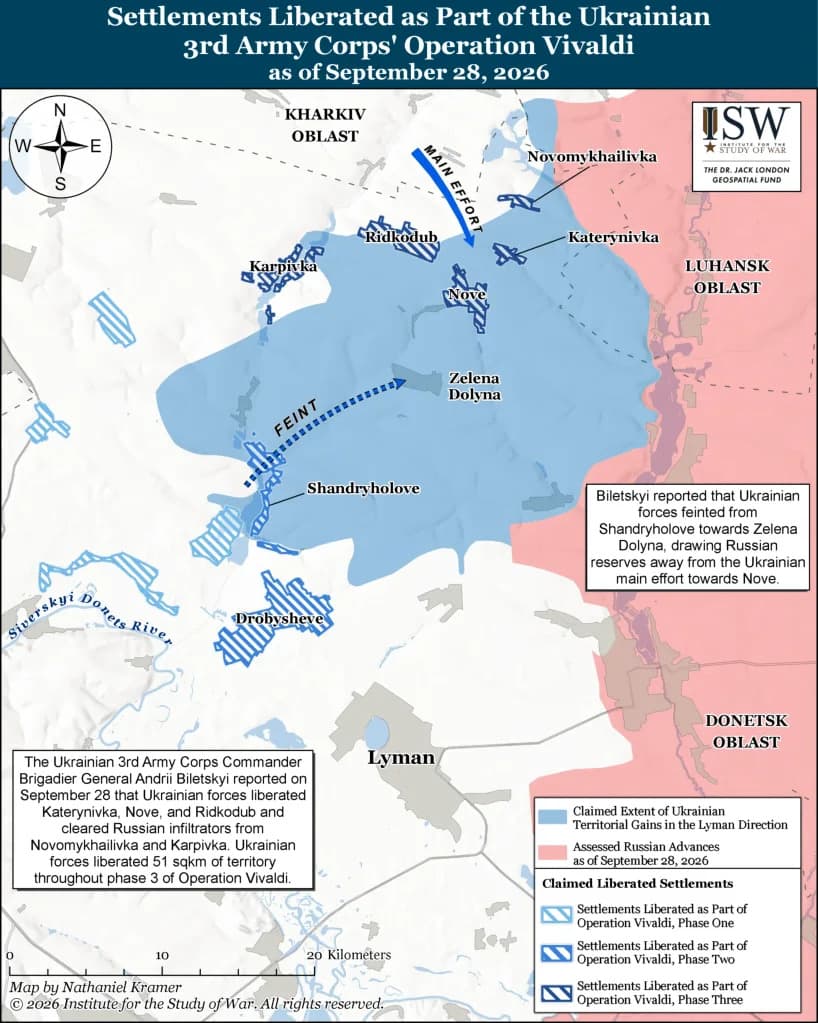
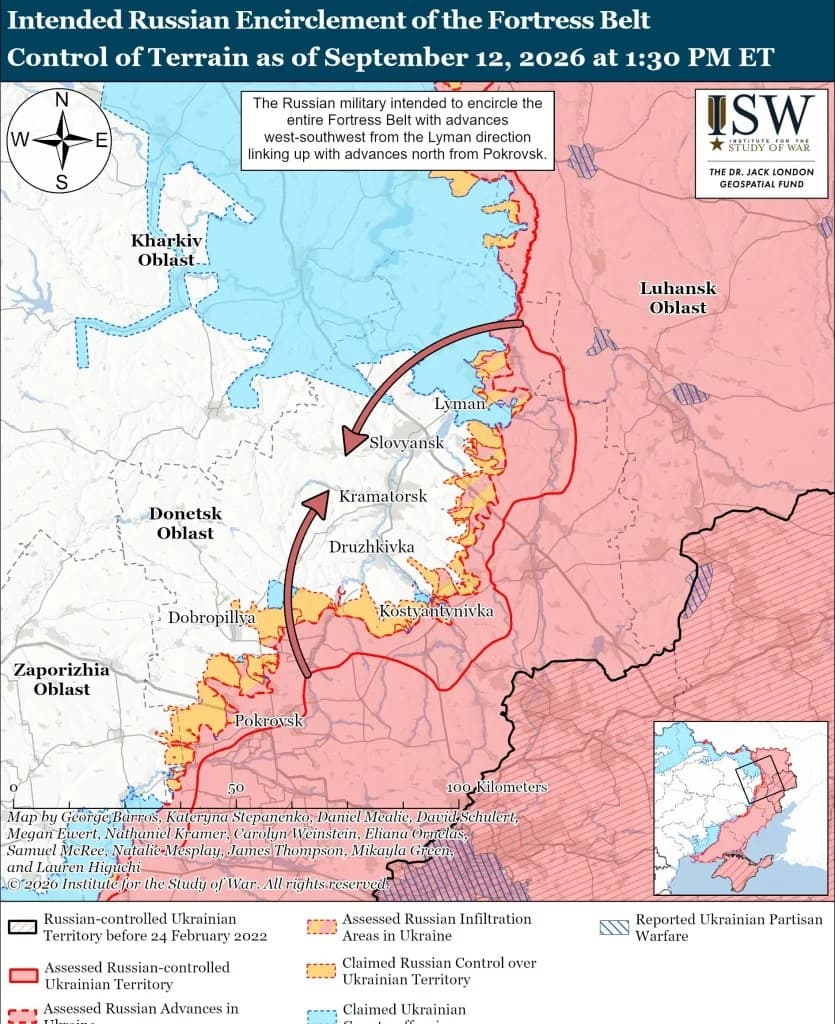
This map by the Institute for the Study of War from September 28, 2026, shows Ukrainian gains in Operation Vivaldi in the Lyman Sector.
Ukrainian commanders say they converted aging Soviet-era BTR-60 armored personnel carriers into vehicle-borne improvised explosive devices (VBIEDs) to punch through Russian defenses in Donetsk oblast, helping accelerate gains in the Lyman sector during a summer counteroffensive.
Brigadier General Andriy Biletsky, commander of Ukraine's Third Army Corps, described the adaptation as a tactical innovation that allowed Ukrainian forces to destroy heavily fortified Russian positions.
"To break through the enemy's defenses, the Third Army Corps employed its own invention—Soviet BTR-60s converted into robotic kamikaze complexes," Biletsky said on the unit's X channel.
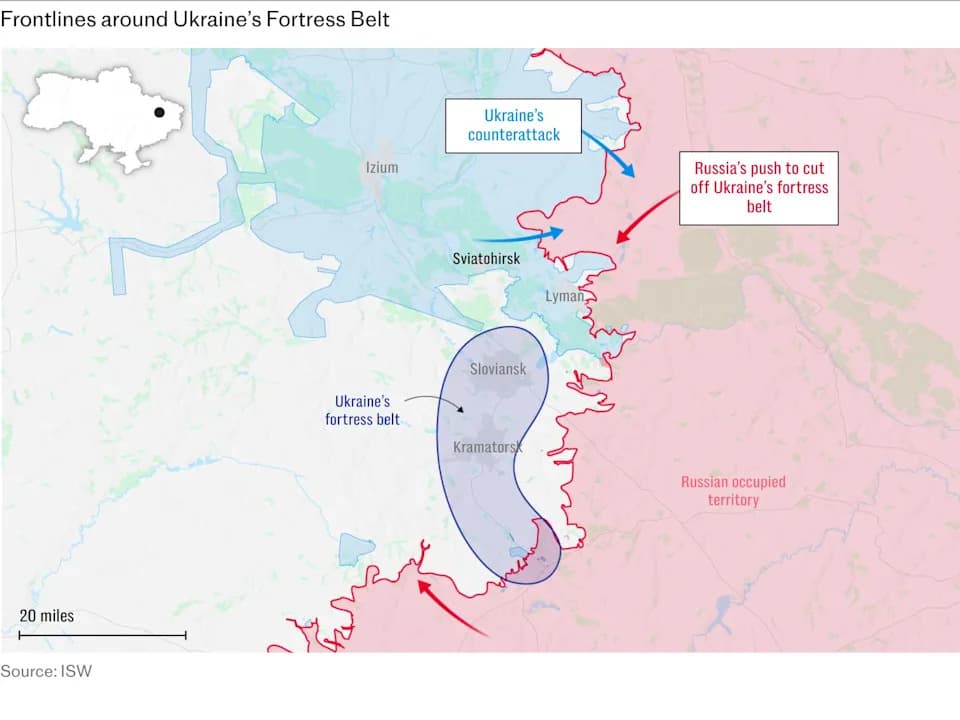
A map produced by the Institute for the Study of War (ISW) dated September 28, 2026, illustrates territory Kyiv's forces captured in Operation Vivaldi, a multi-phased effort aimed at blunting Russian attempts to secure the Donbas "Fortress Belt" of fortified towns and lines.
Biletsky said the operation used a deliberate feint from Shandryholove northwest of Lyman toward Zelena Dolyna to divert Russian attention from the main objective on the northern flank: the village of Nove. The ISW map aligns with that account, showing the diversion and the subsequent main strike toward Nove.
"The enemy was convinced that the main direction of the strike was Shandryholove—Zelena Dolyna. This forced it to senselessly burn through its reserves in counterattacks precisely in that direction. The Russians missed the real strike, which was focused on capturing Nove," Biletsky wrote.
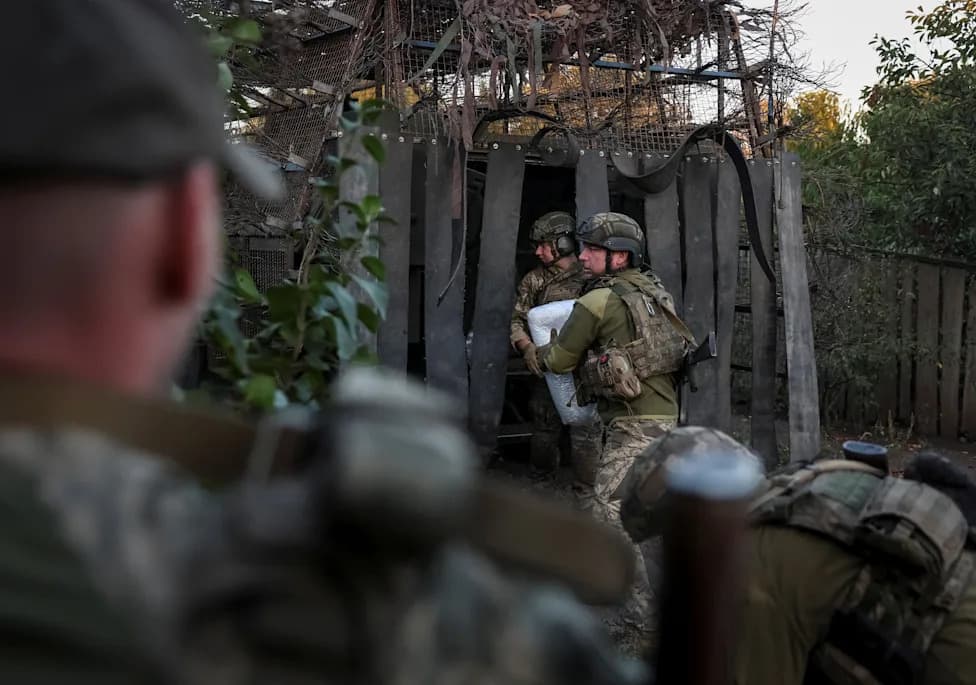
Biletsky said converted BTR-60s—armored personnel carriers originally developed in the 1950s and still used in troop-transport roles by both sides—were adapted into VBIEDs to breach prepared defenses and demolish heavy fortifications. He added that some Russian subunits, including officers and specialist crews, surrendered following those breakthroughs.
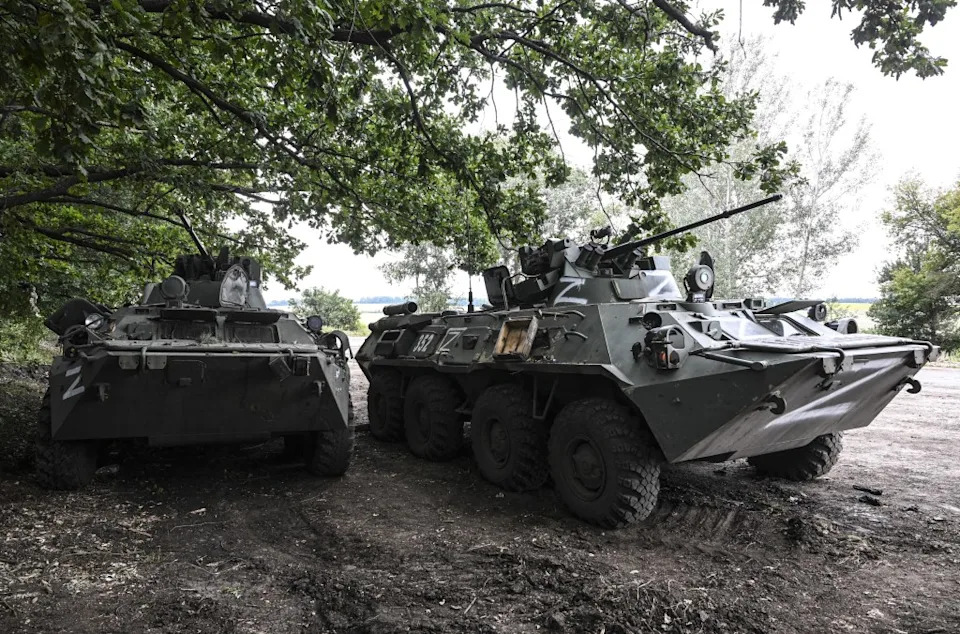
File image: Russian BTR-80 armored vehicles are seen in Ukraine's Kharkiv region on September 10, 2022.
File image: Russian BTR-80 armored vehicles were photographed in Ukraine's Kharkiv region on September 10, 2022.
The Third Army Corps reported that Ukrainian forces liberated 19 square miles during the operation's third phase, bringing the total territory regained in Operation Vivaldi to 67 square miles. Analysts say the success was helped by strict operational security and counter-drone measures that degraded Russian situational awareness.
Major Maksym Zhorin, deputy commander of the 3rd Army Corps, has said Ukrainian advances were concealed using a "protective drone" system combining electronic warfare and other measures. Those steps, commanders say, preserved tactical surprise and limited Russian ability to respond effectively.
Russian military bloggers and some pro-Moscow channels have disputed Kyiv's account, claiming Russian forces held their lines and that the salient north of Lyman was not cut off. Ukrainian observer Yuriy Butusov accused pro-Moscow milbloggers of circulating doctored footage and misinformation to hide battlefield losses, while other Russian sources have criticized the Russian defense ministry for not acknowledging the full scope or location of frontline changes.
The ISW stated on Wednesday that Ukrainian forces control both Nove and Shandryholove, with the closest reported Russian positions at least five miles from Nove and 10 miles from Shandryholove. Newsweek has contacted the Russian defense ministry for comment. Battlefield claims remain contested and independently verifiable details are limited.
Help us improve.