The Trump administration's campaign to identify noncitizen voters highlights that such cases are extremely rare, often hard to verify and unlikely to affect election outcomes. Federal charges in Minnesota target 10 people amid broader totals the Justice Department says include roughly 90 election-related matters, about 50 involving alleged noncitizens. Experts warn aggressive federal searches of voter rolls risk disenfranchising lawful voters, divert resources from higher-priority threats and often produce far smaller confirmed totals after review.
Administration’s Push to Find Noncitizen Voters Underscores How Rare — and Insufficient — Those Cases Are to Alter Elections
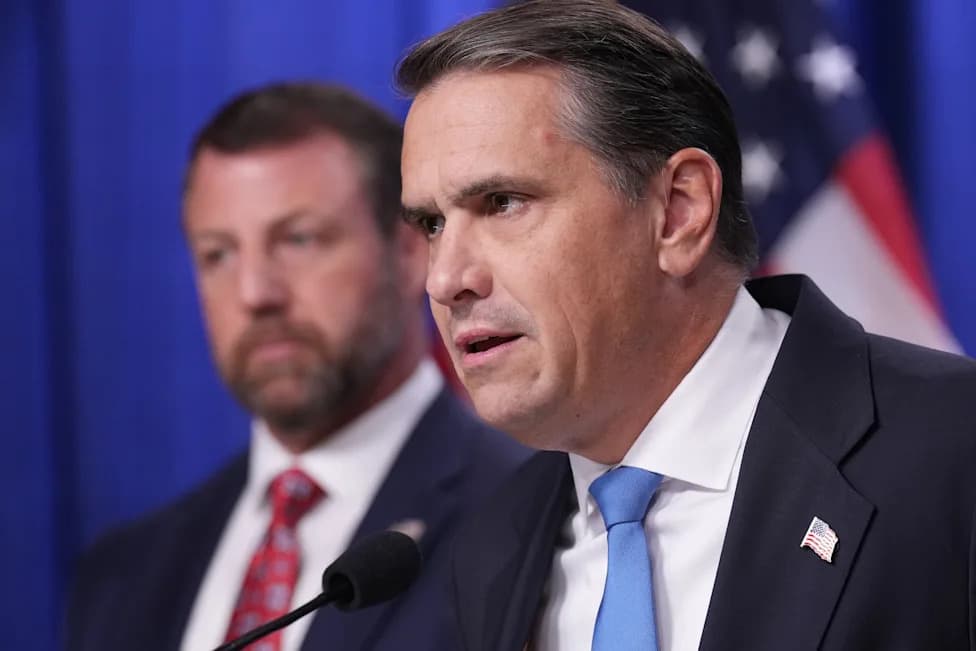
Attorney General Todd Blanche speaks during a news conference at the Department of Justice, Wednesday Sept. 30, 2026, in Washington, as Secretary of Homeland Security Markwayne Mullin, looks on. (AP Photo/Jacquelyn Martin)(AP Photo/Jacquelyn Martin)
The Trump administration's intensified effort to identify noncitizen voting is reinforcing what critics of the former president's election-fraud claims have long said: incidents of noncitizens casting ballots are exceptionally uncommon, difficult to prove and far too few to determine the outcome of major elections.
Federal authorities have devoted substantial resources to what election experts and local administrators describe as a relatively small problem—some noncitizens, often because they misunderstand eligibility rules, appear on voter rolls among the many millions of ballots cast in national contests.
On Wednesday, Attorney General Todd Blanche announced federal charges against 10 people in Minnesota accused of illegally voting over the past three election cycles, a period in which the state recorded more than 8 million ballots cast.
“We're focused on providing accountability and restoring trust in our elections,” Blanche said, adding that he was disappointed the media had not given greater attention to the voter-fraud cases his office has pursued.
Blanche said his office has pursued roughly 90 cases of various election misconduct, including about 50 allegations involving noncitizen voting. Even combined, those totals are minuscule compared with the tens of millions of votes cast in presidential elections and are nowhere near enough to swing major federal or state races.
For the 2024 presidential contest, the U.S. had nearly 228 million registered voters and more than 152 million ballots were submitted — putting the handful of alleged noncitizen voters in stark perspective. “They're incredibly low numbers no matter how you slice it,” said Aaron Blacksberg of the Institute for Responsive Government during a panel of election officials and experts in Washington, D.C., just before Blanche’s announcement.
Concerns About Federal Scrutiny
The administration’s steady emphasis on alleged voter fraud and noncitizen participation, even as investigations show such incidents are rare, has heightened concerns among Democrats, civil-rights groups and election administrators about potential interventions in the November vote.
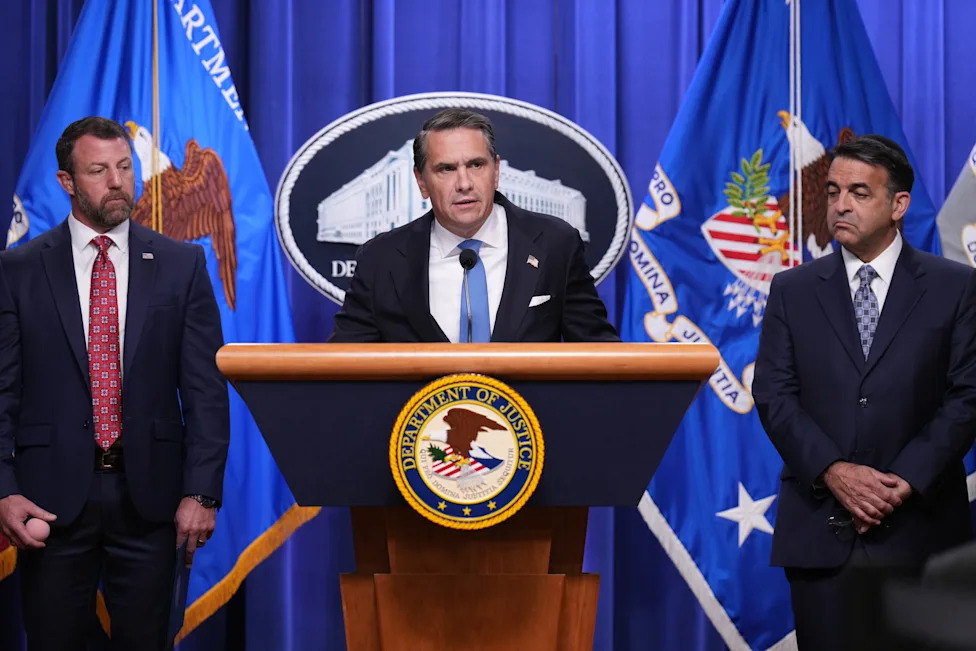
Attorney General Todd Blanche speaks during a news conference at the Department of Justice, Wednesday Sept. 30, 2026, in Washington, as Secretary of Homeland Security Markwayne Mullin and Daniel Rosen, U.S. Attorney for the District of Minnesota, look on. (AP Photo/Jacquelyn Martin)(AP Photo/Jacquelyn Martin)
Election officials who met with experts sought to reassure the public that they are preparing for disruptions this fall. Democrats and civil-rights organizations have filed lawsuits to block what they say could be an escalation, including fears that federal agents might be sent to polling places — a step administration officials say they will not take.
Former President Trump has repeatedly expressed regret that he did not use military power to seize voting machines after the 2020 election, which has led some election officials and Democrats to brace for extreme possibilities. Gen. Dan Caine, chairman of the Joint Chiefs of Staff, told a U.S. senator in a letter last month that there are no plans to deploy the military for domestic election operations.
Why Confirming Noncitizen Votes Is Challenging
The low incidence of proven fraud and noncitizen voting helped convince election officials, courts and some former administration figures that there was no broad scheme to steal the 2020 vote. Still, the current administration has launched a broad review intended to find and document alleged cases, directing Homeland Security and other federal agents to comb voter rolls for presumed noncitizens.
A whistleblower statement filed with Congress earlier this month warned the effort might run afoul of state laws and said agents are being given only about 12 minutes to determine whether a flagged individual is actually a citizen. Distinguishing true noncitizens from lawful voters who share names, birthdates or other identifiers is a core reason voting-rights advocates and many Democrats oppose the aggressive campaign: they fear it would wrongly disenfranchise lawful voters at a greater rate than it would stop illegal votes.
Past experience underpins those worries. In Kansas, a 2011 proof-of-citizenship rule blocked more than 31,000 U.S. citizens from registering until a federal judge struck the law down as unconstitutional. Congress declined to pass a similar federal measure pushed by the administration, and a later attempt to curb mail voting through executive action was halted by the courts and prevented from affecting midterm procedures by the U.S. Supreme Court.
The administration has at times issued large preliminary figures of “suspected” noncitizen registrants that were later revised sharply downward. In July, for example, it reported that Nevada had 1,500 noncitizen registrants; after state officials reviewed the names, the final tally of actual registered noncitizens in Nevada was zero. In Maricopa County, Arizona, an initial database flag of 60 possible noncitizen registrants ultimately led prosecutors to file charges in eight cases.
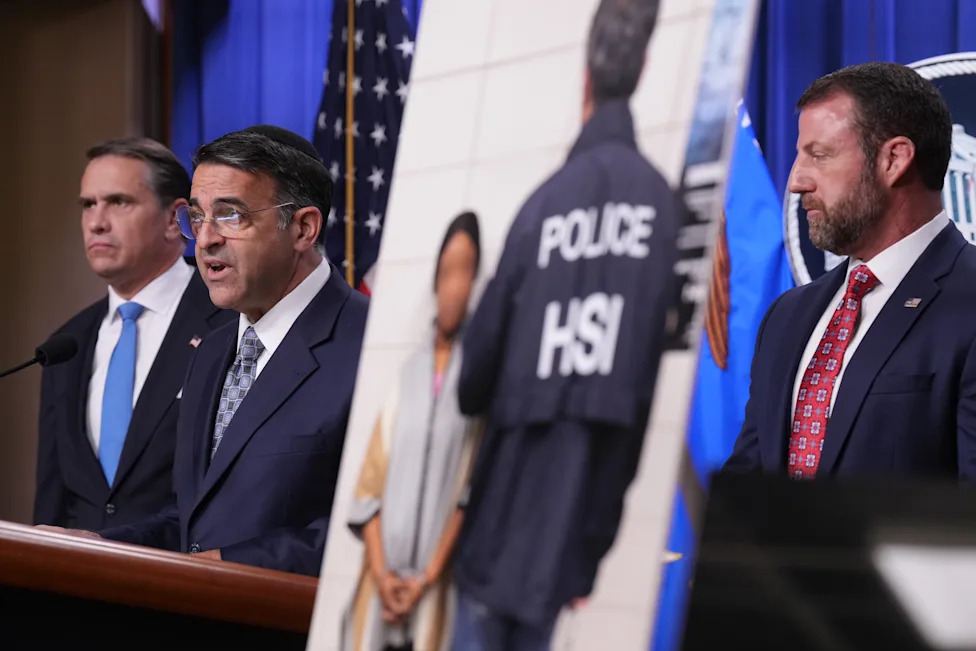
Daniel Rosen, U.S. Attorney for the District of Minnesota, speaks during a news conference at the Department of Justice, Wednesday Sept. 30, 2026, in Washington, as Attorney General Todd Blanche, left, and Secretary of Homeland Security Markwayne Mullin, look on. (AP Photo/Jacquelyn Martin)(AP Photo/Jacquelyn Martin)
Similar reviews in other states produced small numbers: Ohio prosecutors secured indictments against nine people for voting as noncitizens over 10 years in a state of roughly 8 million registered voters, and a prior Georgia review found about 20 potential noncitizen registrants among roughly 8.2 million voters.
Blanche acknowledged on Wednesday that the cases appear sporadic and unconnected, undercutting the narrative — promoted by Trump — of an orchestrated effort to steal elections. “I don't think we can say there's a pattern we've identified,” he said. “I think that—every case is different.”
Administration officials continued to cite large totals at the news conference: Department of Homeland Security figures mentioned several thousand cases under review. Minnesota U.S. Attorney Daniel Rosen said the state environment seemed to encourage illegal voting by noncitizens, a claim disputed by state election officials.
In a statement, Minnesota Secretary of State Steve Simon, a Democrat, emphasized that noncitizen voting is a felony. “These indictments affirm the fact that noncitizen voting is a vanishingly rare crime,” the office said. “If these indictments result in convictions, that will amount to ten individuals over a period in which around 8.5 million votes were cast in Minnesota.”
Voters must declare U.S. citizenship when they register, and falsely doing so can carry felony penalties including prison and deportation. Blanche noted that investigations are complex and time-consuming: even when officials have lists of suspected ineligible voters, full inquiries are required before any arrests or charges.
Election experts say history and practical limits explain why federal law enforcement traditionally does not prioritize noncitizen voting: it is a very small problem best handled locally. “It does appear that there have been a lot of resources redirected away from things like violent crime and counterterrorism, which is where Homeland Security usually focuses its efforts,” said David Becker, a former Justice Department attorney who runs the Center for Election Innovation & Research. He added that it would not have been unusual in past administrations to deprioritize this issue because of its limited scale.
Riccardi reported from Denver.
Help us improve.