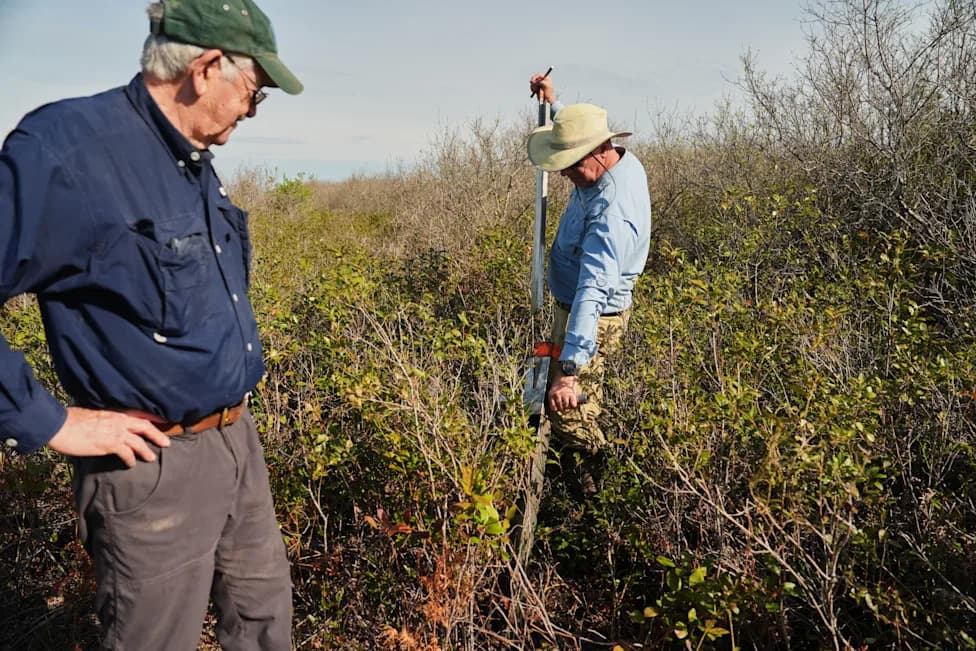
Researchers and farmers in the Netherlands are piloting rice cultivation on peat soils between Amsterdam and The Hague to keep fields wet, slow peat degradation and reduce CO2 emissions. The 0.6-hectare trial — led by Wageningen and Leiden universities with support from Land van Ons and Wij Land — is testing around 30 rice cultivars and aims to yield about three tonnes of short-grain rice. Scientists are closely monitoring CO2 and methane to ensure rice farming mitigates rather than worsens greenhouse-gas emissions, while local chefs show early interest in premium Dutch-grown rice.
Can Rice Save Sinking Peatlands? Dutch Pilot Tests Rice Farming To Halt Subsidence
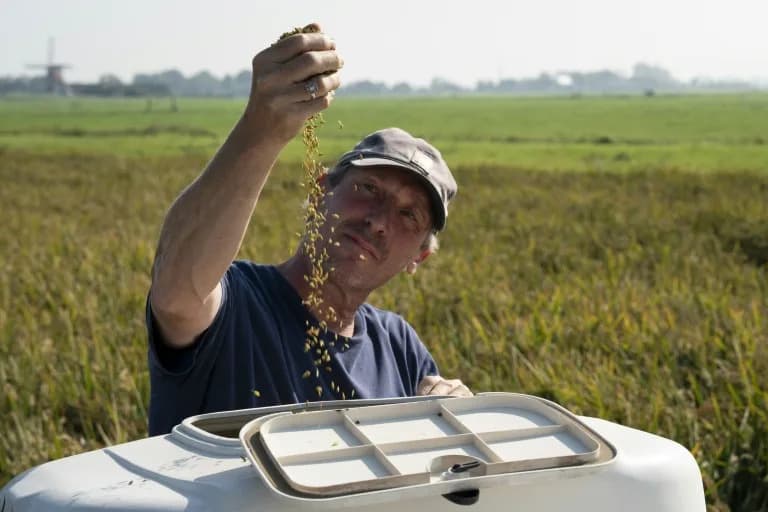
Climate change has made Dutch-grown rice a possibility (Lina Selg)
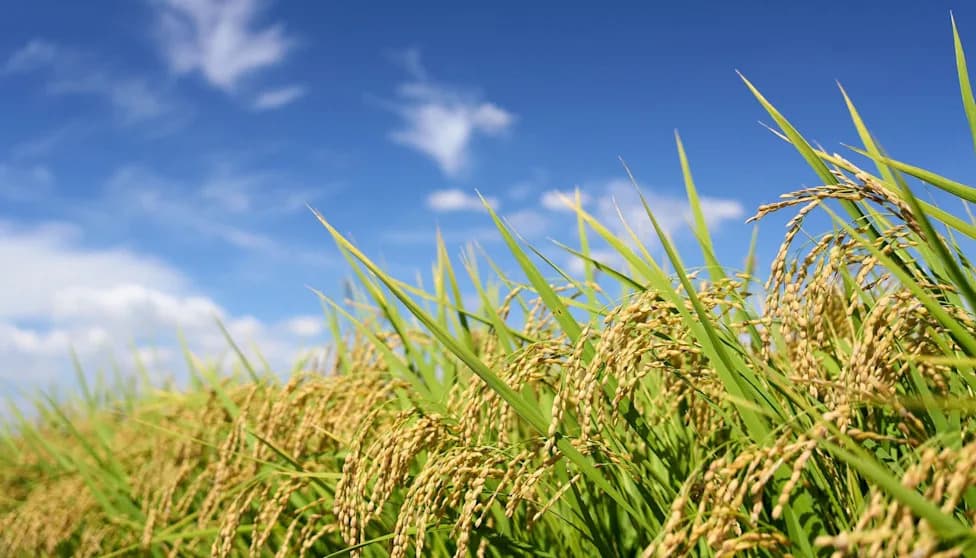
In a waterlogged parcel of land between Amsterdam and The Hague, farmer Sander Roeleveld drives a small white combine through a crop that until now had never been harvested in the Netherlands: rice. The scene remains unmistakably Dutch — canals lace polders two metres below sea level, windmills punctuate the skyline and cows graze nearby.
Why This Experiment Matters
Researchers and farmers are piloting rice cultivation on peat soils to keep fields permanently wet, slow peat decomposition and reduce greenhouse gas emissions and land subsidence. About one-tenth of the Netherlands sits on peat that has been drained for grazing; as peat dries it releases millions of tonnes of CO2 and the ground can sink by several centimetres a year in the worst-affected areas.
The Pilot
The trial covers 0.6 hectares (1.5 acres) and aims to produce roughly three tonnes of short-grain rice suitable for sushi or risotto. The team is testing approximately 30 cultivars sourced from Russia, China, Japan and Uzbekistan to identify varieties best adapted to the Dutch climate — a northern Japanese strain has so far shown promising results.
"We would never have thought maybe 20 years ago that we would be able to grow rice in the Netherlands," said Philippe Terheggen, chairman of the Land van Ons association. "But it's also scary because it tells you what is possible... now the climate has changed."
Wageningen University and Research and Leiden University are leading the scientific work, with local organizations Land van Ons and Wij Land supporting the farmers. Crucially, the research team is monitoring both CO2 and methane emissions from the rice plots and comparing them with emissions from traditional grassland to ensure that the solution does not produce greater greenhouse gas impacts than the problem it seeks to solve.
Local Interest And Wider Implications
Local restaurateurs have already expressed interest in premium, domestically produced rice; chefs are considering using the grain for sushi and even sake. Beyond the Netherlands, the peat problem affects much of northern Europe — including Germany, Belgium and the Baltic states — so a workable approach to keep peatlands wet while producing viable crops could have broader regional benefits.
As researcher Julian Helfenstein put it: "Rice is an opportunity for this part of the world to adapt to climate change — and to mitigate it by stopping peat from degrading and emitting CO2." The pilot is small, but results so far are encouraging and will determine whether rice can be scaled as a climate-smart alternative on wet peatlands.
Help us improve.