Japanese farmers are increasingly planting heat-tolerant rice varieties—such as hinatamaru, developed after about 12 years of research—to cope with rising temperatures and drier conditions that degrade grain quality. Heat-tolerant strains now cover almost 67% of Saga's rice acreage and 248,000 hectares nationally in 2025 (about 18% of the crop), up sharply from 2024. The 2023 heat wave prompted a 2024 "Reiwa rice crisis" and emergency stockpile releases, underscoring risks to food supplies and prices. Experts say breeding, new technologies and changes to farm practices can help, but broader climate action is essential.
Heat-Resistant Rice Offers a Lifeline to Japanese Farmers as 'Cruelly Hot' Days Rise
Photo Credit: iStock
New heat-tolerant rice varieties are emerging as a rare piece of positive news for Japanese farmers facing hotter, drier seasons that damage grain quality and shrink yields.
Heat-Tolerant Varieties Take Root
Across Japan, growers are switching to rice strains bred to withstand intense heat and drought. In Saga Prefecture, the variety hinatamaru has stood out for maintaining strong yields and good taste through hot, dry conditions—a trait the region's farmers desperately need.
Extreme temperatures can make rice grains chalky and brittle and increase the risk of cracking during milling, which lowers market value and reduces supplies of premium rice. After temperature records were broken again in 2026, Japan's meteorological agency adopted a new classification for days above 40°C (104°F): "cruelly hot."
Adoption and National Impact
The shift has been fastest in warmer regions. According to Japan's agriculture ministry, heat-tolerant varieties now occupy almost 67% of Saga's rice acreage, compared with just under 50% in Nagasaki and 47% in Shimane. Nationwide, heat-tolerant rice covered 248,000 hectares in 2025—about 18% of Japan's rice crop—up sharply from 42,000 hectares in 2024. By that count, only three of Japan's 47 prefectures had not yet adopted these new strains.
When harvests decline, the economic effects ripple outward: food supplies tighten, prices rise, and governments may need to dip into emergency reserves. Japan experienced this in 2024 after record heat in 2023 triggered the so-called "Reiwa rice crisis," prompting officials to release emergency stockpiles to ease shortages and stabilize prices.
Farmers Adapting Beyond Seeds
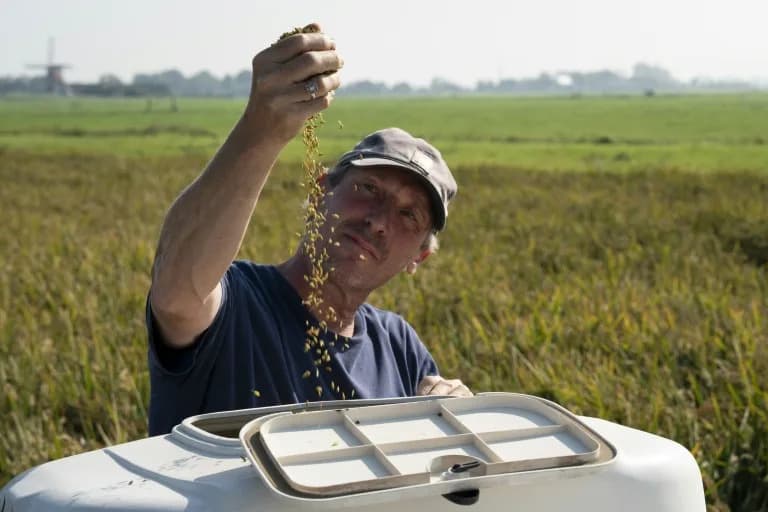
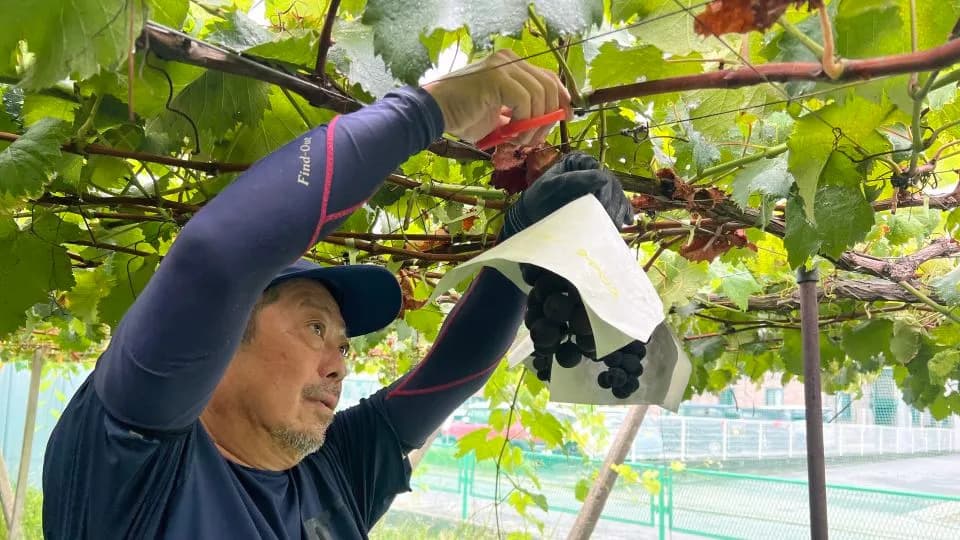
Rising temperatures are also reshaping everyday farm work. Some fruit and vegetable growers now conduct inspections at night; others are experimenting with warm-weather crops such as avocado, bitter melon and okra. In Shiroishi, rice farmer Haruki Kawasaki said his crew can no longer stay in the fields all day. "So as a farmer, I'm just grateful that we have found something that works. And it tastes great," he said.
The demographic challenge compounds the problem: roughly 70% of Japan's farmers are age 65 or older, limiting how many labor-intensive adaptations are feasible on a large scale.
How New Varieties Are Developed
Breeding heat-resilient rice is a multistep process: researchers crossbreed promising lines, test traits in controlled environments, and run extensive field trials. Hinatamaru, for example, took about 12 years of research to reach farmers.
"Over 50 years of accelerating heat waves have pushed Japan's most iconic agricultural hubs past their thermal limits, placing both crop viability and supermarket prices on the line," said Ikumi Toyota of Greenpeace Japan.
"While farmers are showing incredible ingenuity to adapt, single operations cannot outrun systemic climate disruption. When the people who feed us run out of options, national food security becomes everyone's crisis," the group warned.
Research Frontiers and Broader Efforts
Parallel research is advancing other solutions, from zinc oxide nanoparticles that can protect rice from heat stress to genome editing that produces varieties of rice and tomatoes better suited to extreme conditions. Scientists are also developing mutant lines with improved disease resistance to help crops withstand multiple climate-driven threats.
Taken together, breeding, technology and shifts in farm practices are helping Japan build resilience—but experts warn that broader systemic action on climate is needed to safeguard future harvests and national food security.
Help us improve.