Defense Secretary Pete Hegseth unveiled Project Meridian, a 120-day Pentagon study co-led by Elon Musk, Palmer Luckey and Newt Gingrich to assess how emerging technologies will shape future warfare. The team, overseen by Defense CTO Emil Michael, must recommend actionable steps to develop, test and field advanced capabilities. Hegseth also announced an Autonomous Warfare Command to speed deployment of autonomous systems and drones. Observers warn of potential conflicts of interest given the commercial defense ties of some co-leads.
Pentagon Launches 'Project Meridian' — Musk, Luckey and Gingrich to Lead 120-Day Study on Future Warfare
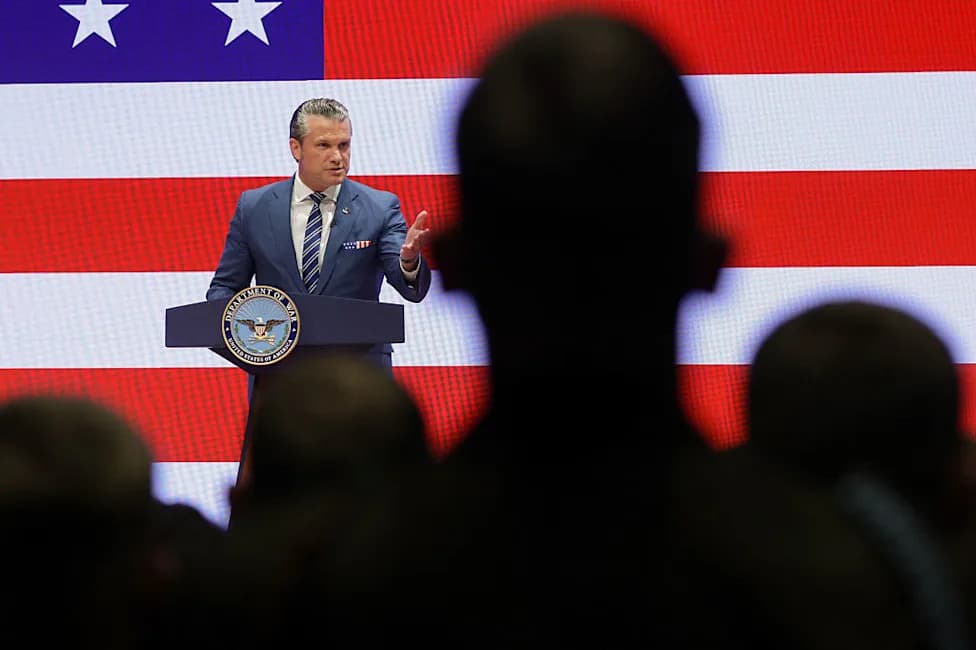
QUANTICO, VIRGINIA - SEPTEMBER 30: U.S. Secretary of War Pete Hegseth gives a State of the Force address at Marine Corps Base Quantico on September 30, 2026 in Quantico, Virginia. Secretary Hegseth delivered his State of the Force address to junior officers, enlisted leaders, and special guests including Anduril Industries co-founder Palmer Luckey. (Photo by Alex Wong/Getty Images) | Image Credits:Alex Wong / Staff
Defense Secretary Pete Hegseth used a "State of the Force" address to announce Project Meridian, a new 120-day effort to examine how rapidly advancing technologies will shape future battlefields and military capabilities.
Elon Musk, Anduril founder Palmer Luckey and former House Speaker Newt Gingrich will co-lead the initiative, which will operate under the direction of the Defense Department's Chief Technology Officer, Emil Michael. The team has been tasked to "study the battlefields of the future" and identify the "weapons and technologies warfighters may use on them," according to Hegseth's announcement.
The panel — whose final membership and size were not disclosed — must deliver findings and propose "actionable solutions to start developing, testing, and fielding" advanced systems intended to help maintain U.S. military superiority within the 120-day window. Hegseth also announced the creation of an Autonomous Warfare Command to accelerate development and deployment of autonomous systems and unmanned aircraft.
One notable omission from the Pentagon's release is the identity of the partner organization that will carry out the study; the announcement did not name that organization or its leadership. When TechCrunch sought comment, the Defense Department pointed to the press statement and said it had "nothing further to provide beyond the Secretary's comments."
Musk and Luckey's involvement is broadly consistent with their companies' work: SpaceX conducts government launches and operates satellite services that support national defense and security missions, while Anduril develops autonomous systems, sensing platforms and integration work for defense customers. Their appointments have prompted scrutiny: critics warn that placing industry executives on a study that recommends procurement and development priorities could create perceived or real conflicts of interest if recommendations align with commercial offerings.
The Trump administration has prioritized advanced military technologies in procurement and development and has increasingly engaged with Silicon Valley and defense-tech firms. Project Meridian and the new Autonomous Warfare Command appear aimed at accelerating the adoption of autonomy, AI and other emerging technologies across the Department of Defense, but details on governance, conflict-of-interest safeguards and the unnamed partner organization remain sparse.
What to watch: the identities and backgrounds of additional panel members, the unnamed partner organization leading the study, the team's final recommendations within 120 days, and how the Pentagon addresses conflict-of-interest concerns.
Help us improve.