Adicet Bio’s allogeneic CAR‑T candidate prula‑cel produced promising Phase 1 results in lupus nephritis: 50% of evaluable patients had a complete kidney response and 54% met remission criteria at one year, with all responders stopping immunosuppressants. The donor‑derived, gamma‑delta T cell product reported no serious CRS or neurological events, though ~25% experienced mild/moderate CRS and infections occurred in >50% (≈8% Grade 3+). Adicet plans a pivotal study in Q4 and may expand enrollment beyond nephritis patients; the findings are preliminary and require larger trials for confirmation.
Adicet’s Off‑the‑Shelf CAR‑T Candidate Shows Early Promise Driving Lupus Remission
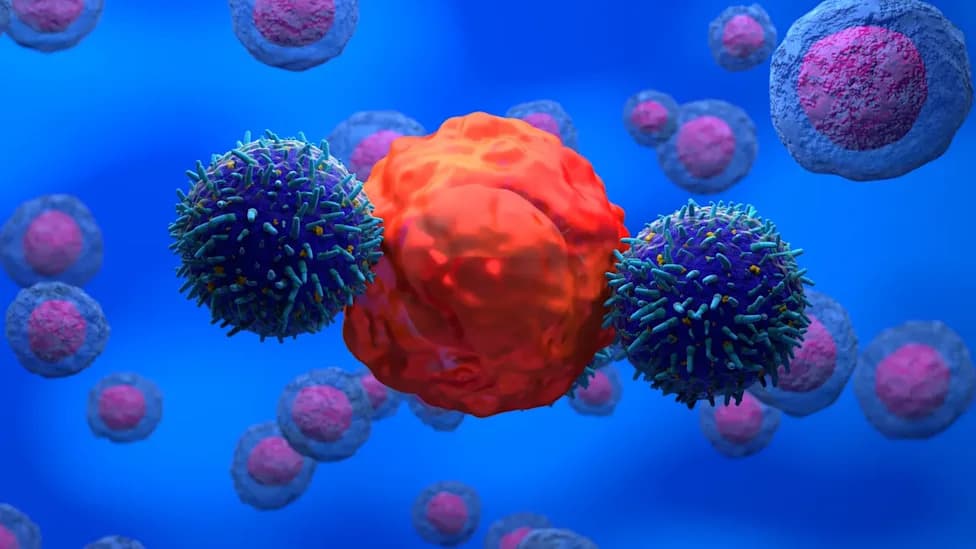
CAR-T therapies help a patient's immune cells attack tumors. Drugmakers hope to use a similar approach to treat lupus, and potentially other inflammatory conditions too.
Adicet Bio’s donor‑derived CAR‑T candidate, prula‑cel, produced encouraging early human data suggesting it can push lupus toward remission — offering preliminary but noteworthy evidence that engineered cell therapies may treat autoimmune diseases.
Key Trial Findings
After one year of follow‑up in a Phase 1 trial, 50% of lupus nephritis patients who were treated with prula‑cel and were evaluable for efficacy achieved a complete kidney response; 54% met a commonly used statistical threshold for remission. All responding patients, who had previously failed multiple therapies, discontinued chronic immunosuppressive medications.
Safety Profile
Adicet reported no serious cases of cytokine release syndrome (CRS) or neurological toxicities — two major safety concerns with many cell therapies. Approximately one quarter of treated patients experienced mild to moderate CRS. Infections were reported in more than half of patients, with about 8% experiencing infections graded as Grade 3 or higher.
How Prula‑cel Differs
Unlike many CAR‑T products that are autologous (made from a patient’s own cells), prula‑cel is an off‑the‑shelf, allogeneic product derived from healthy donors. It is built on gamma‑delta (γδ) T cells rather than the more common alpha‑beta (αβ) T cells used by many rivals. Adicet’s CEO Chen Schor said γδ cells tend to "secrete fewer and lower levels" of inflammatory cytokines, which the company believes may reduce immune‑related side effects.
Context And Caution
CAR‑T approaches originally developed for cancer have been adapted to target autoimmune disease because they may be able to "reset" the immune system by eliminating malfunctioning immune cells. However, many earlier CAR‑T autoimmune efforts have been autologous and carry risks of severe adverse events. Those concerns were underscored recently when Novartis and Bristol Myers Squibb paused individualized CAR‑T trials after troubling safety signals, including deaths tied to a rare immune reaction.
Adicet’s gamma‑delta, allogeneic approach is intended to be faster and less costly to manufacture and may avoid some risks of personalized products, but the Phase 1 data are preliminary and from a small cohort, so results should be interpreted with caution.
Next Steps
Adicet plans to initiate a pivotal lupus study in the fourth quarter and says it will discuss with regulators the potential to expand a pivotal program to include patients without lupus nephritis. The company’s shares fell about 22% by mid‑morning following the announcement; Adicet’s valuation had earlier peaked in 2022 after promising gamma‑delta CAR‑T signals in cancer.
Bottom line: Prula‑cel’s early data are promising and distinct in platform and manufacturing approach, but confirmatory studies in larger, controlled trials are needed to establish durability, safety and broader applicability.
Help us improve.