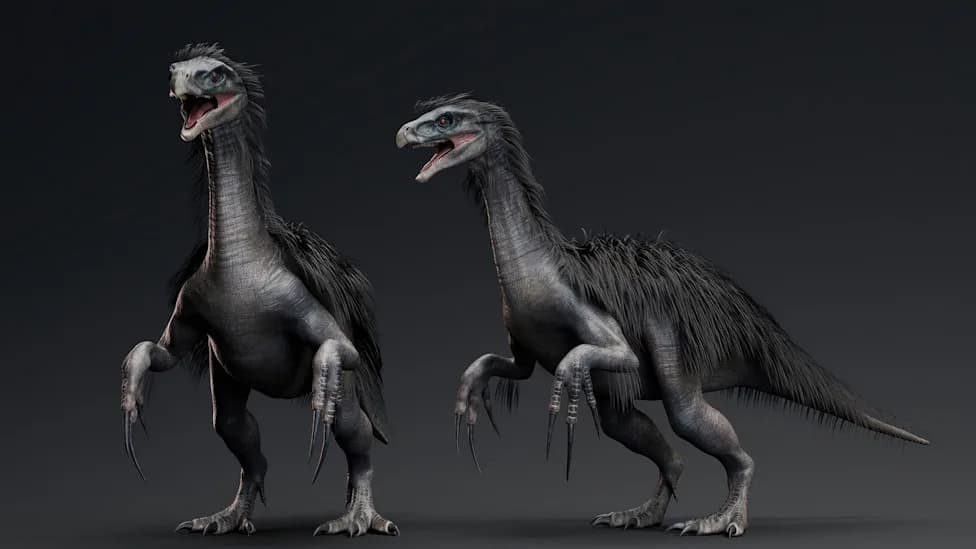
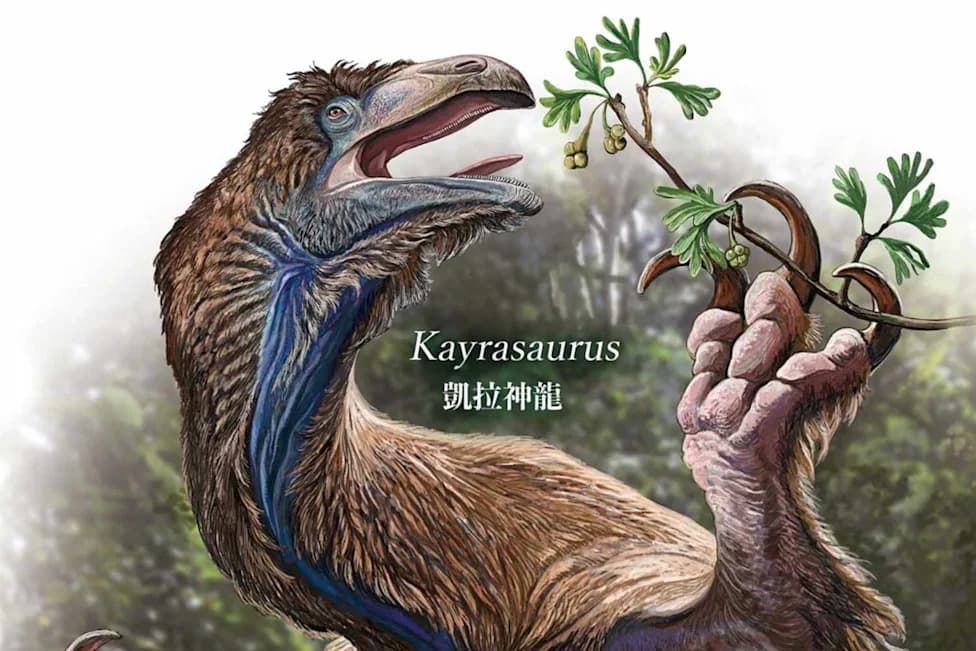
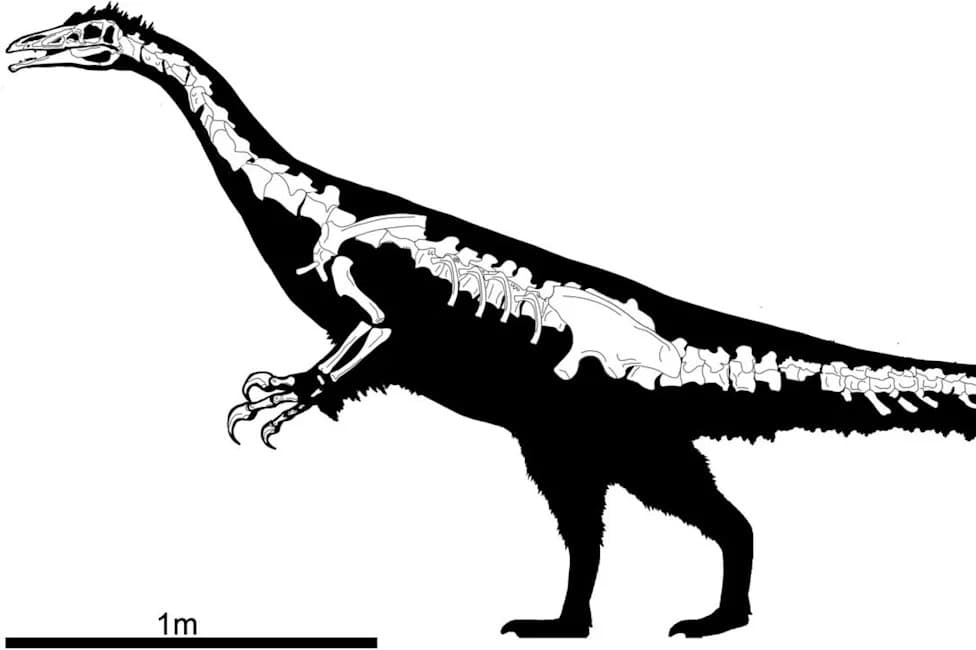
Kayrasaurus changliensis is a newly described giant therizinosaur from the Lower Cretaceous Yixian Formation of northeastern China. The nearly complete juvenile skeleton indicates an animal roughly 12 ft (3.7 m) long and ~250–600+ lb (≈113–272+ kg), with enormous three‑foot claws and an unusual dentition of 45 lower and 32 upper teeth. Distinct jaw openings and a pronounced underbite set it apart from other therizinosaurs, while jaw and tooth shape point to a predominantly herbivorous diet.
Three‑Foot Claws and Dozens of Teeth: Meet Kayrasaurus changliensis, an 'Anatomically Bizarre' Giant Therizinosaur
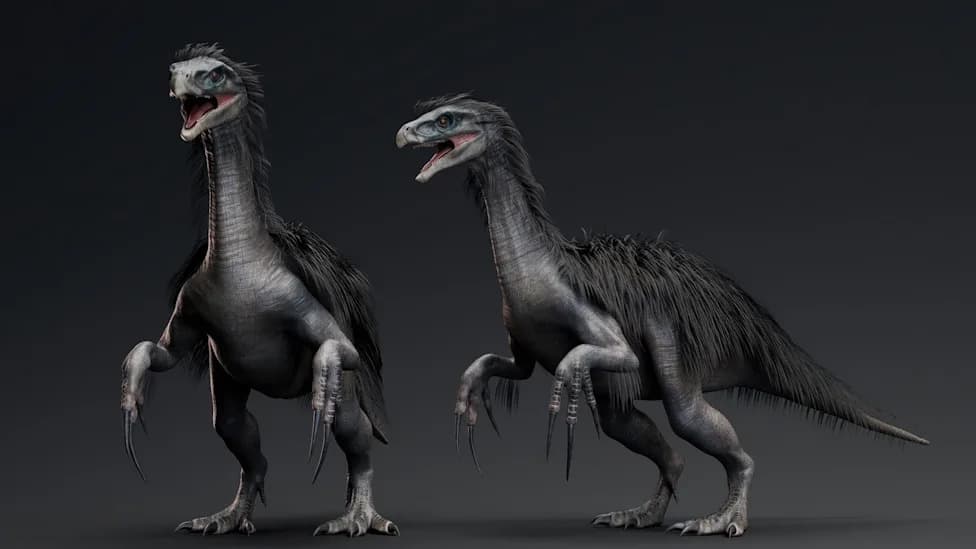
3-foot claws, tons of teeth: Scientists find ‘anatomically bizarre’ giant dinosaur
Paleontologists in China have described a newly identified therizinosaur so unusual that the research team called it anatomically bizarre even within its already distinctive family. The species, Kayrasaurus changliensis, combines enormous manual claws with an unprecedented dental arrangement and a robust, herbivore‑like skull.
The discovery is reported in the Journal of Systematic Palaeontology by Chun‑Chi Liao, William J. Freimuth, Lindsay E. Zanno and Xing Xu. The specimen—a nearly complete, but juvenile, skeleton—was recovered from the Lower Cretaceous Yixian Formation of northeastern China, a fossil‑rich unit dated to roughly 125 million years ago.
Anatomy and Size: Although the individual had not finished growing, it was already large for a therizinosaur. Researchers estimate a body length close to 12 feet (3.7 m) and a mass in the range of about 250–600+ lb (≈113–272+ kg), comparable to an adult male grizzly in bulk. Like other therizinosaurs, K. changliensis walked on two legs, had a long neck and a relatively small head, and likely bore a rounded, feathered belly.
Claws and Teeth: The species is notable for massive manual claws—some therizinosaur claws exceed three feet (0.9 m) in length—and for an unusual dentition. The specimen shows a pronounced underbite with tightly packed small teeth: 45 in the lower jaw and 32 in the upper. No previously known large therizinosaur has been documented with more than 40 teeth in either jaw.
Unique Jaw Openings: The lower jaw bears a triangular lateral opening and the upper jaw shows a large anterior opening near the snout. These openings are distinctive and their functional significance remains unclear, offering an intriguing avenue for future study.
Diet and Lifestyle: Despite its formidable claws and heavy build, the shape of the jaws and the form of the teeth align closely with herbivorous dinosaurs, suggesting that K. changliensis fed primarily on plants rather than hunting vertebrate prey. Compared with more gracile, fleet therizinosaurs adapted for speed, K. changliensis appears to have been a sturdier animal built around bite force and feeding mechanics.
Context and Significance: The specimen expands the known range of body plans and dental specializations within Therizinosauria and raises new questions about how these animals fed and processed vegetation. It also highlights how dramatic anatomy—long claws and dense, unusual teeth—can accompany a plant‑based diet.
Popular Culture Note: The portrayal of therizinosaurs as aggressive carnivores in some films (for example, a scene in the 2022 movie Jurassic World Dominion) contrasts with the evidence here suggesting herbivory for K. changliensis.
Reference: Liao C.‑C., Freimuth W. J., Zanno L. E., & Xu X. (Journal of Systematic Palaeontology). Description of Kayrasaurus changliensis from the Lower Cretaceous Yixian Formation.
Help us improve.