Kayrasaurus changliensis is a newly described therizinosaur from the Lower Cretaceous Yixian Formation of western Liaoning, China. Based on a nearly complete skeleton (hind limbs absent), it measured about 11.8 ft and weighed an estimated 258–604 lb. Distinctive features include very large, curved hand claws, a dorsally extended "lip," and extremely small, densely packed teeth — traits that suggest a robust, less cursorial body plan. The authors say K. changliensis is the largest therizinosaur known from the Jehol Biota but note interpretations are provisional pending more specimens.
Kayrasaurus changliensis — New Giant‑Clawed Therizinosaur Unearthed in China
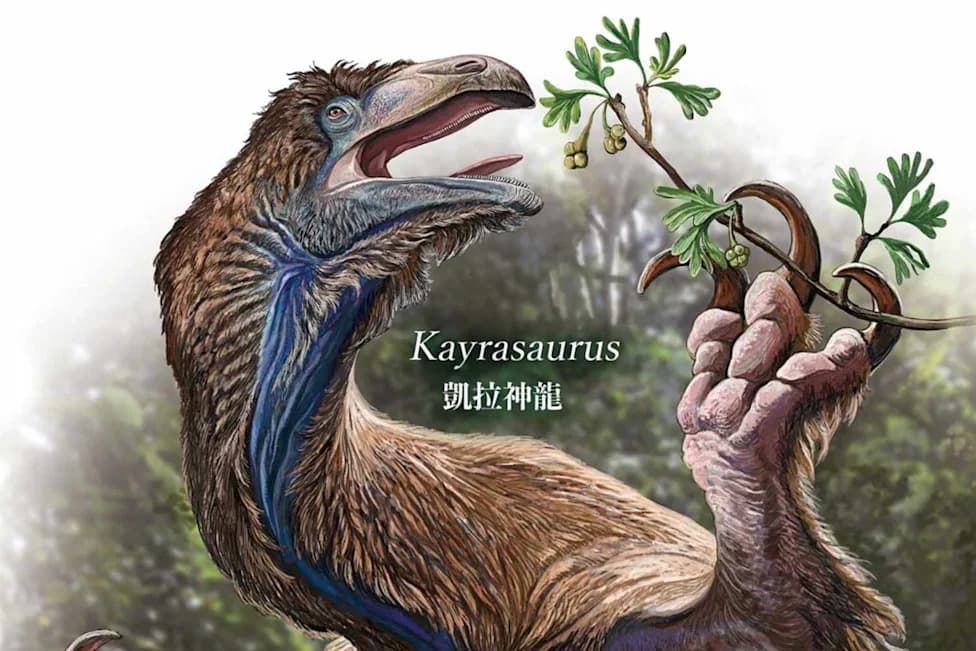
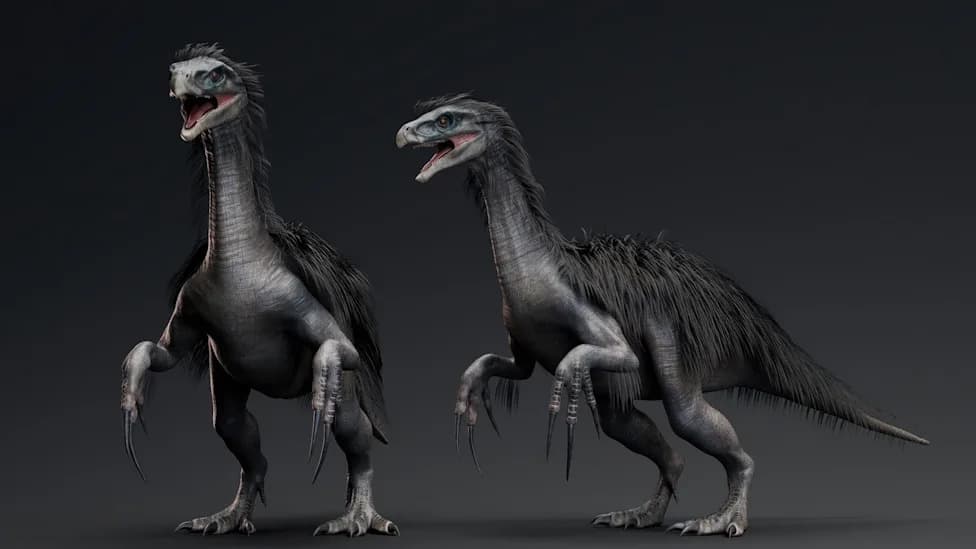
An illustration of Kayrasaurus changliensis.Credit: Illustration by Kōhei Futaka
A nearly complete skeleton from western Liaoning, China, has revealed a striking new therizinosaurian dinosaur named Kayrasaurus changliensis. Described in the Journal of Systematic Palaeontology, the specimen comes from the Lower Cretaceous Yixian Formation and is dated to roughly 125 million years ago.
Unusual Anatomy: Big Claws and Dense Teeth
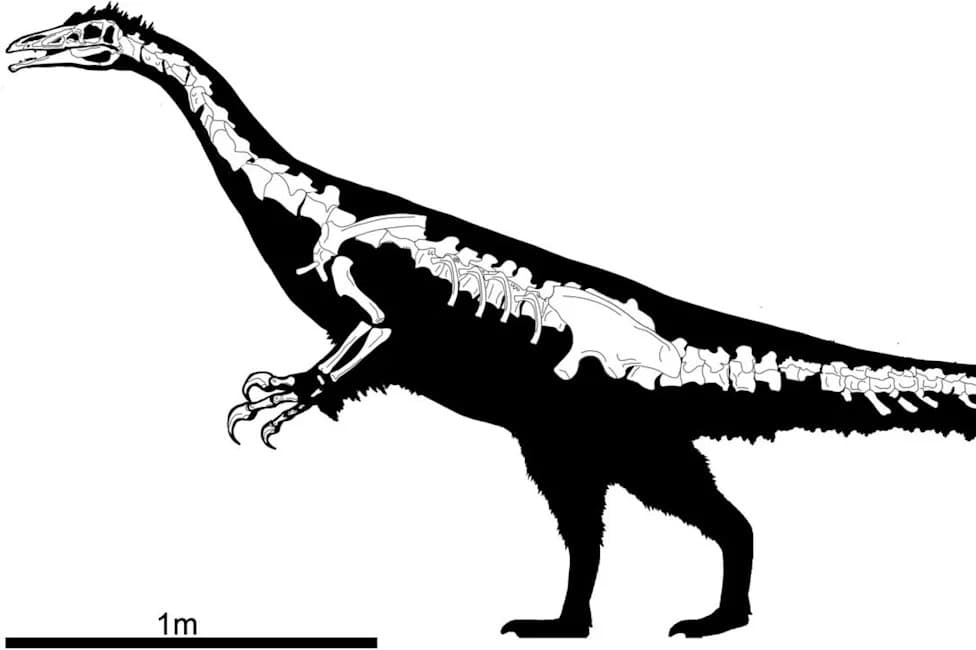
Kayrasaurus is notable for very large, strongly curved manual claws on three hand digits and relatively complete preservation of the manual phalanges. The skull and jaws bear extremely small, densely packed teeth — a combination the authors interpret as consistent with a more robust, less cursorial body plan and possibly an increased bite force compared with some relatives.
Size, Preservation, and Limits
Researchers estimate the animal measured about 11.8 feet (nearly 12 ft) in length and weighed between 258 and 604 pounds based on preserved elements and comparative scaling. The specimen is described as nearly complete but lacks preserved hind limbs, and the authors note some features remain provisional pending additional finds.
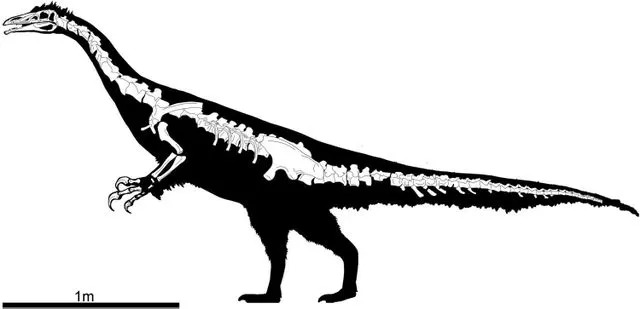
A skeletal diagram of Kayrasaurus changliensis.Credit: Journal of Systematic Palaeontology
Phylogenetic and Ecological Significance
As the largest therizinosaur currently known from the Jehol Biota, K. changliensis helps bridge morphological gaps among related taxa (for example, compared with Beipiaosaurus inexpectus and other genera illustrated in the paper). The combination of dental, manual, and cranial features offers fresh clues about morphological evolution and ecological adaptation of therizinosaurians in the well‑preserved Early Cretaceous ecosystems of northeastern China.
Name and Provenance: The genus name references Kayra, a creator figure in Turkic shamanism and signals a phylogenetic link to the genus Erlikosaurus; the species name changliensis refers to Changli, the historical locality associated with the fossil.
Caveat: The research team stresses that interpretations remain provisional due to missing elements and other limitations of the material; they call for additional, better‑preserved specimens to test and refine these hypotheses.
Credit: Description and figures from the Journal of Systematic Palaeontology; discovery reported by outlets including Phys.org and Sci.News.
Help us improve.