Kayrasaurus changliensis is a newly named, large therizinosaur from the Jehol Biota of Liaoning, China. The subadult specimen measured about 3.6 m long and is estimated at 117–274 kg, with adults likely larger. Key features include 45+ small, densely packed lower‑jaw teeth, elongated neck vertebrae, and a dorsally projecting "lip" on the hand claws. The find sheds light on therizinosaur diversity and ecology and calls for further fossils and biomechanical study.
Meet Kayrasaurus changliensis — A Giant, Long‑Clawed Therizinosaur From China
New bizarre, long-clawed dinosaur species discovered in China
Kayrasaurus changliensis is a newly described species of therizinosaur discovered in the Jehol Biota of western Liaoning (northeastern China). The nearly complete skull and well-preserved skeleton, reported in the Journal of Systematic Palaeontology (2026), reveal an unusually large and distinctive member of this curious group of two‑legged, long‑clawed dinosaurs.
Discovery and Context
The specimen represents a subadult with a preserved length of about 3.6 m from head to tail. It was recovered from Jehol Biota deposits dated to roughly 135–121 million years ago, a formation famous for yielding many feathered and exceptionally preserved dinosaur fossils.
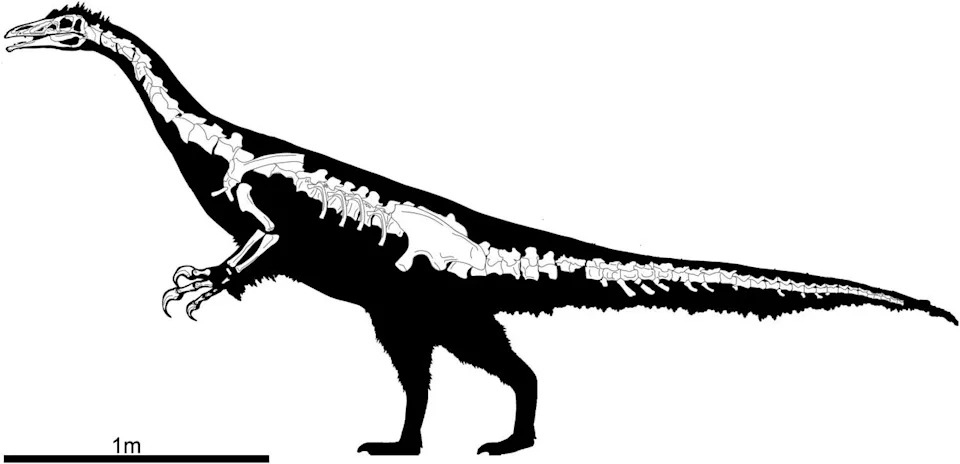
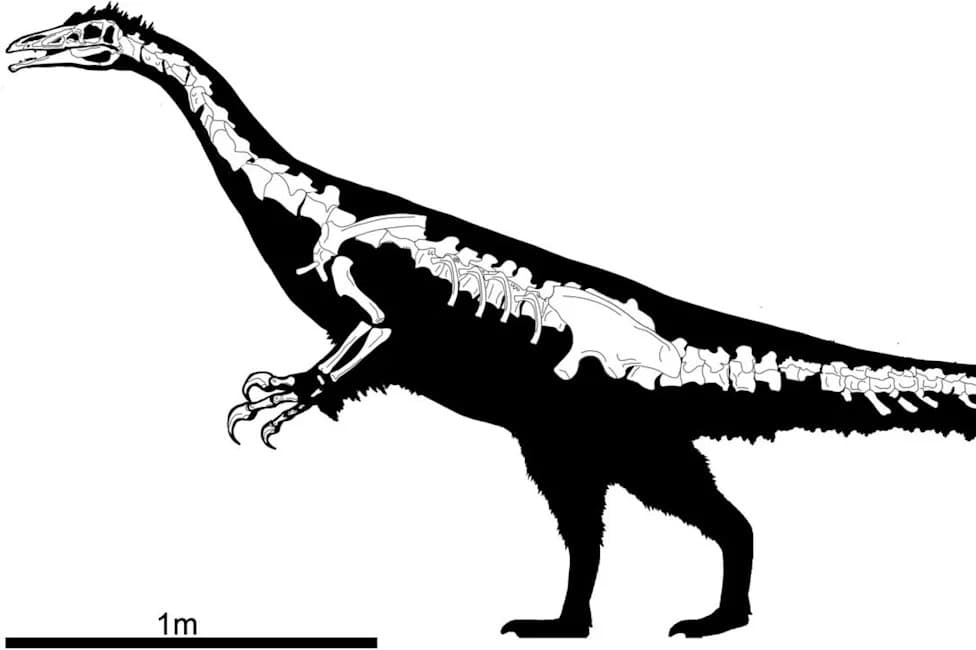
Skeletal diagram of Kayrasaurus changliensis in lateral view (Journal of Systematic Palaeontology 2026)
Distinctive Anatomy
Anatomical study highlights several features that set Kayrasaurus changliensis apart from other Jehol therizinosaurs:
- Extremely small, densely packed teeth — more than 45 in the lower jaw.
- Cervical (neck) centra that are markedly longer than dorsal (back) centra, suggesting a relatively long neck profile.
- A dorsally projecting "lip" on the manual (hand) claws, a previously unreported claw morphology for Jehol therizinosaurs.
Size, Weight and Life Habit
Because leg bones were absent from the specimen, researchers estimated body mass by comparison with closely related therizinosaurs, arriving at a range of approximately 117–274 kg for the subadult; fully grown adults were likely heavier. The authors infer a sturdier, less cursorial (less agile) body plan and jaws capable of stronger bites than some of its contemporaries, and reconstruct the animal as a higher‑browsing herbivore or omnivore.
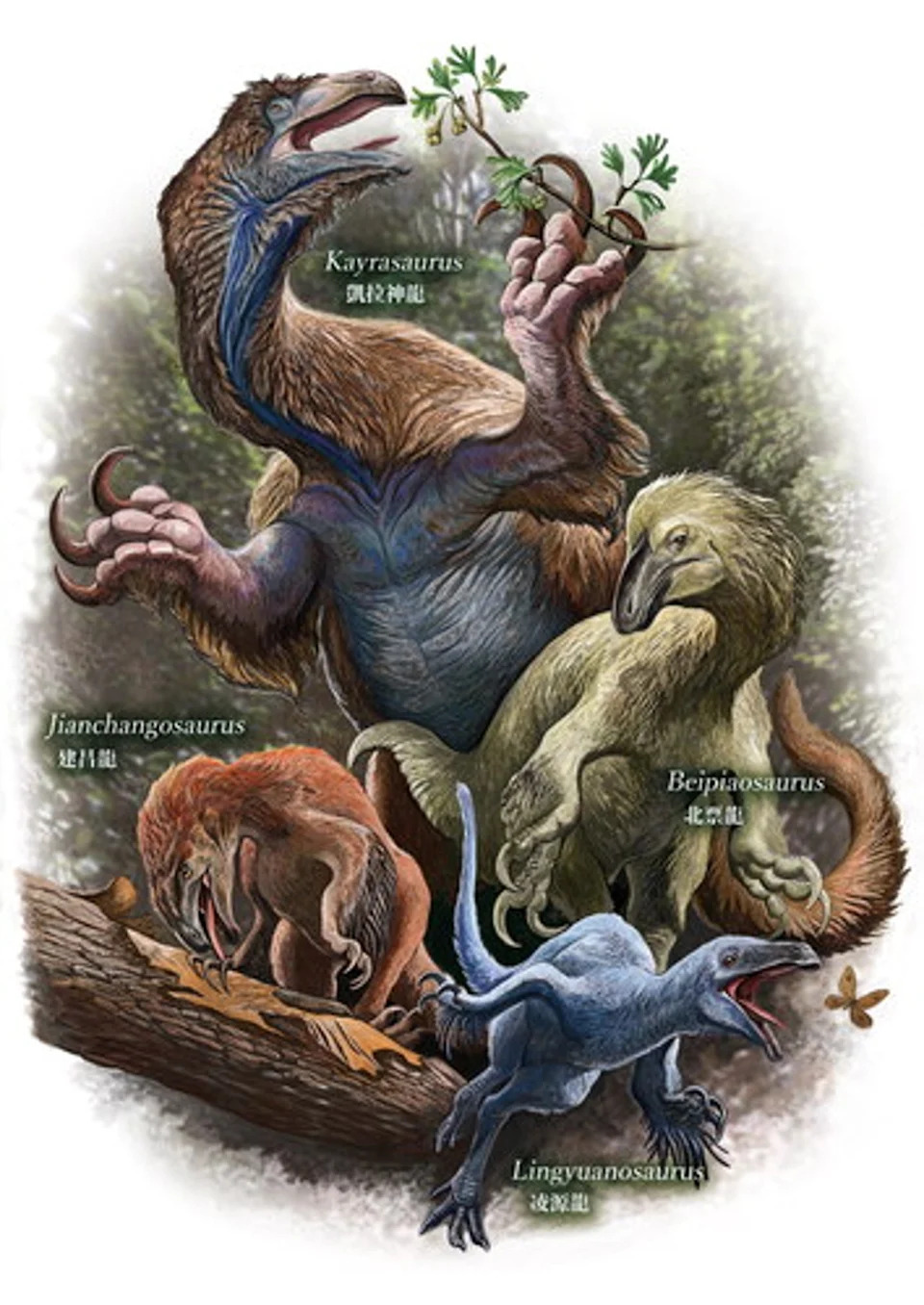
L sihedangensis is shown in a posture suggesting greater cursoriality. J yixianensis is depicted engaging in feeding, consistent with its robust hyoid apparatus. B inexpectus exhibits a robust, less cursorial bauplan. K changliensis is reconstructed browsing on higher vegetation, reflecting its larger body size and inferred feeding strategy (Kōhei Futaka/Journal of Systematic Palaeontology 2026)
"The combination of multiple unique traits in K. changliensis highlights the morphological diversity of penecontemporaneous therizinosaurians in the Jehol group," the authors write.
Significance and Next Steps
The discovery expands our understanding of therizinosaur diversity and ecological partitioning within the Jehol Biota. The researchers emphasize that additional finds, more detailed anatomical descriptions and biomechanical analyses are needed to refine interpretations of feeding strategy, growth and locomotion in this unusual group.
Reference: Journal of Systematic Palaeontology (2026).
Help us improve.