The article explains the "benefits cliff," where modest income gains can trigger a loss of SNAP benefits greater than the added earnings, leaving families worse off. It profiles Nebraska mother Alicia Freemont, who lost $150 monthly after earning $19 over the eligibility limit and later struggled to regain assistance. Research and surveys link benefit loss to higher food and energy insecurity and show many recipients decline raises or extra hours to avoid cliffs. Policies such as Broad-Based Categorical Eligibility can raise eligibility ceilings but do not eliminate hard cutoffs.
Benefits Cliff: When a Raise Leaves Families Worse Off
Stock image: a child picks at crumbs on their plate.
Working families that rely on the Supplemental Nutrition Assistance Program (SNAP) can face a harsh trade-off: a small increase in earnings can push them past an eligibility cutoff and cause a loss of benefits worth more than the extra pay. That sudden gap — known as a "benefits cliff" — can leave households with less money for food, housing and other essentials even after they earn more.
How the Benefits Cliff Works
SNAP benefits are available to low- and no-income households nationwide. More than 35 million people in all 50 states and U.S. territories receive monthly benefits loaded onto a prepaid card that can be used at participating grocery stores. SNAP benefits typically taper as income rises, using a formula that includes a 20% earned-income deduction. According to the Center on Budget and Policy Priorities (CBPP), benefits usually fall by about $0.24–$0.36 for each additional dollar earned.
However, SNAP also enforces gross-income eligibility limits. Under the standard federal gross-income test, households are generally required to be at or below 130% of the federal poverty level to qualify. If a household’s earnings push it above that threshold, it can lose eligibility entirely even if, after accounting for housing, childcare or other deductible expenses, it would still need substantial assistance.
Personal Story: Alicia Freemont
Alicia Freemont, a 29-year-old mother from Nebraska, lost $150 a month in SNAP in early 2024 after officials determined her household income was $19 over the eligibility limit. At the time she was a single mother working full time as a grocery store manager. "I was $19 over, and that was so hard," she told Newsweek.
"That actually took a big chunk off my back. I was scared because at that point I was a single mom, and I was already trying my best to keep my eight-year-old's head above water. I didn't really care for myself, and I worked almost around the clock."
After losing SNAP, Alicia picked up extra shifts—sometimes working extremely long days—but a later car accident forced her out of work for months. She lost her home, moved in with her grandmother, remarried, and later suffered another injury in 2026 that cut her hours again. Two subsequent SNAP applications were denied, and her household has relied in part on credit cards to pay bills. "I'll skip a meal because, if we have leftovers, I'd rather it go to the boys," she said. "Sometimes, my heart gets a little heavy, a little lump in my throat, because it shouldn't feel this hard."
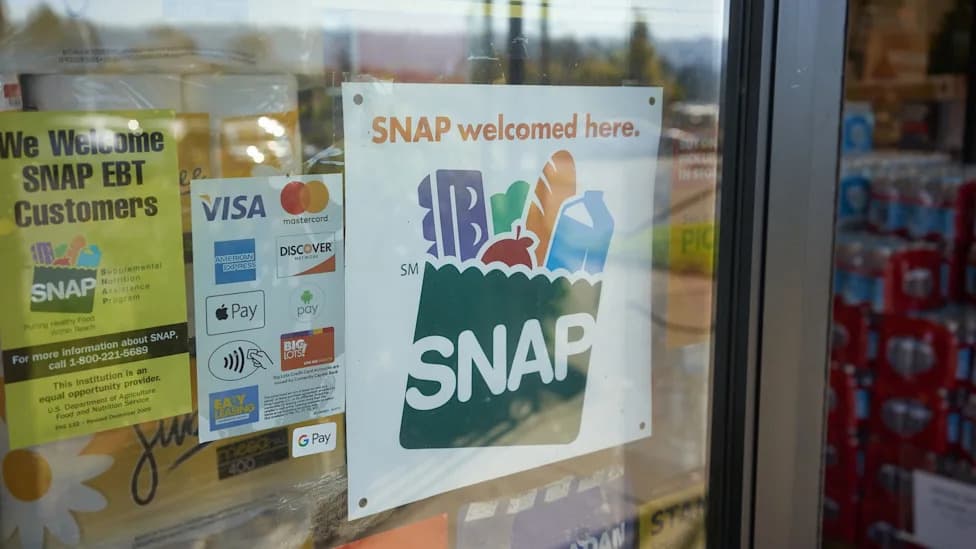
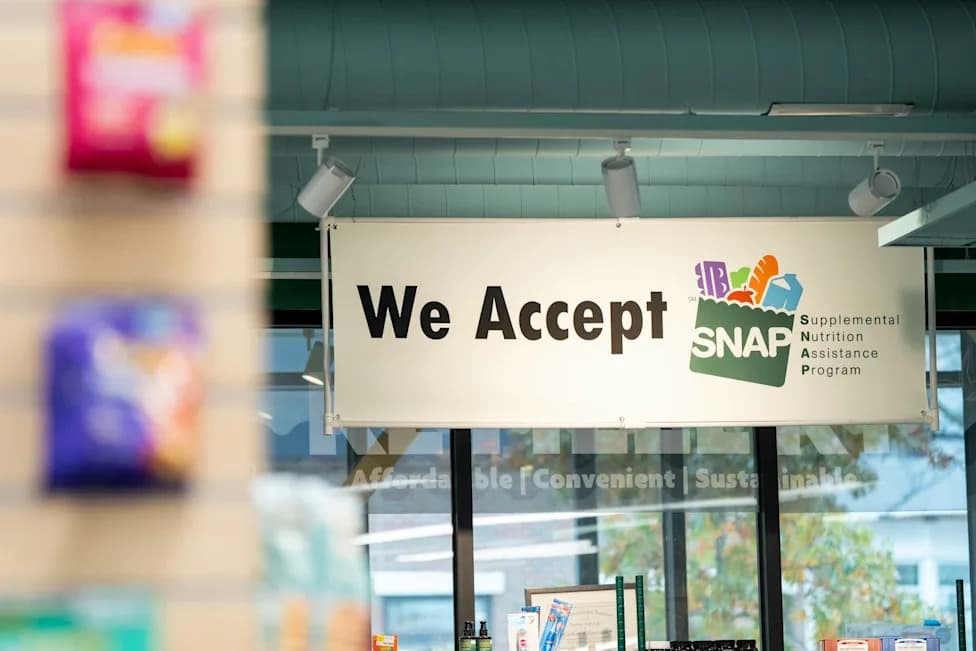
Stock image: a SNAP sign is seen in a retailer's window.
Evidence and Expert Views
Research links SNAP loss to rising hardship. A 2019 Health Affairs study of working families with young children found households whose SNAP was cut after earnings rose had higher odds of household and child food insecurity, energy insecurity, and foregoing health care. A 2021 study in the American Journal of Clinical Nutrition reported that former SNAP recipients who had lost benefits within the previous year had more than double the odds of severe household and adult food insecurity and 80% higher odds of low food security among children compared with current recipients.
Stephen Grimaldi, executive director of New York Common Pantry, emphasized that crossing an eligibility line does not usually alter day-to-day expenses: "Families can be just a few dollars or a small amount of income above a threshold and still be facing the same rent, grocery prices, transportation costs and childcare expenses." He and other experts say a sudden cutoff can disincentivize work because the net financial gain from higher wages can disappear when benefits are lost.
Survey data supports that behavior. A 2024 Department of Health and Human Services study of 1,804 current and former recipients of SNAP, Medicaid, Temporary Assistance for Needy Families and childcare subsidies found respondents were less likely to recommend accepting higher-paying jobs when benefit loss was a factor. A 2025 survey by Washington University in St. Louis’s Center for Social Development found that more than one in five workers receiving public benefits had declined extra hours, job offers or promotions to avoid falling into a benefits cliff.
Policy Options
States can reduce cliffs through Broad-Based Categorical Eligibility (BBCE), which lets them raise SNAP’s gross-income ceiling above the federal threshold. Nebraska uses BBCE and sets its expanded gross-income limit at 165% of the federal poverty level. According to CBPP, roughly 8,000 Nebraskans received SNAP in 2023 because of the higher state limit, including about 7,000 people in households with children. While BBCE moves the cutoff higher and helps many families, a hard eligibility boundary still exists and can cause abrupt loss of support.
Advocates argue for smoother phase-outs or policy changes that allow benefits to decline incrementally as income rises, reducing the sudden financial shock and encouraging stable workforce advancement.
Bottom Line
The benefits cliff creates a real dilemma for low- and moderate-income workers: the pursuit of higher pay can sometimes make a household worse off when it triggers the loss of critical supports like SNAP. Stories like Alicia's and multiple studies show that policymakers must consider both earnings gains and program design to avoid punishing families who try to improve their economic position.
Help us improve.