Summary: The article argues that critics mistakenly focused on the name "National Centre for Information Defence," missing the bigger issue: anonymous accounts, bots and AI now allow hostile actors to distort public debate. It explains how traditional laws requiring attribution for political material no longer carry over to the online world, outlines common manipulation techniques, and proposes balanced safeguards that protect free speech while restoring accountability.
Free Speech Is Being Weaponised — Why Democracies Must Tackle Anonymous Online Influence
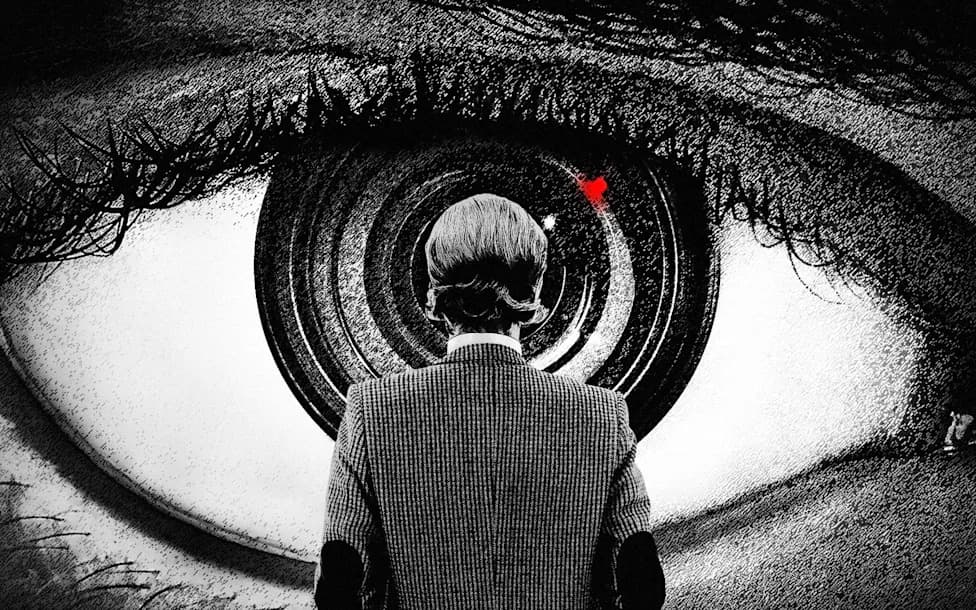
Giving a government the power to decide what is true is totalitarian and comparable to Orwell's 1984 - Film Stills
Downing Street misjudged the optics. Naming a proposed body the "National Centre for Information Defence" invited immediate "Orwell" comparisons and distracted from the real problem the Prime Minister was trying to highlight: how anonymous online actors and AI-powered techniques can be used to subvert democratic debate.
Context and Misstep
Andy Burnham’s proposal to tackle so‑called "disinformation" sparked ridicule in part because it was framed as a government attempt to police truth. That framing raises an essential and legitimate question: who decides what is true? Handing the state unchecked authority to define truth would be deeply illiberal. Yet the public reaction has obscured the underlying threat Burnham described.
The Real Threat: Weaponised Speech
Open societies rely on free expression, but that same openness can be exploited. Hostile actors — including foreign state‑linked campaigns, organised networks and opportunistic individuals — now use social media, anonymity tools and AI to create and amplify falsehoods. Deepfakes, synthetic audio, and plausible impersonations make it easier than ever to manufacture convincing but fraudulent content.
Why Existing Rules No Longer Suffice
Many democracies, including the UK, long required attribution for political material: leaflets, posters and campaign publications must name their publisher and printer. Those rules assumed identifiable actors. The internet upended that model. A single person or a small team can spin up hundreds of fake accounts or botnets and create the appearance of a mass movement or a groundswell of opinion.
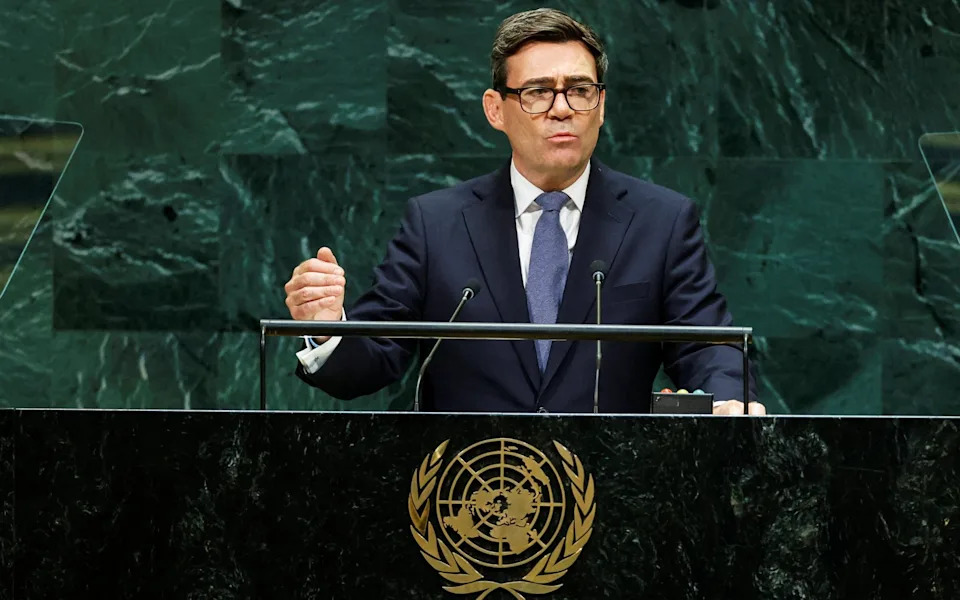
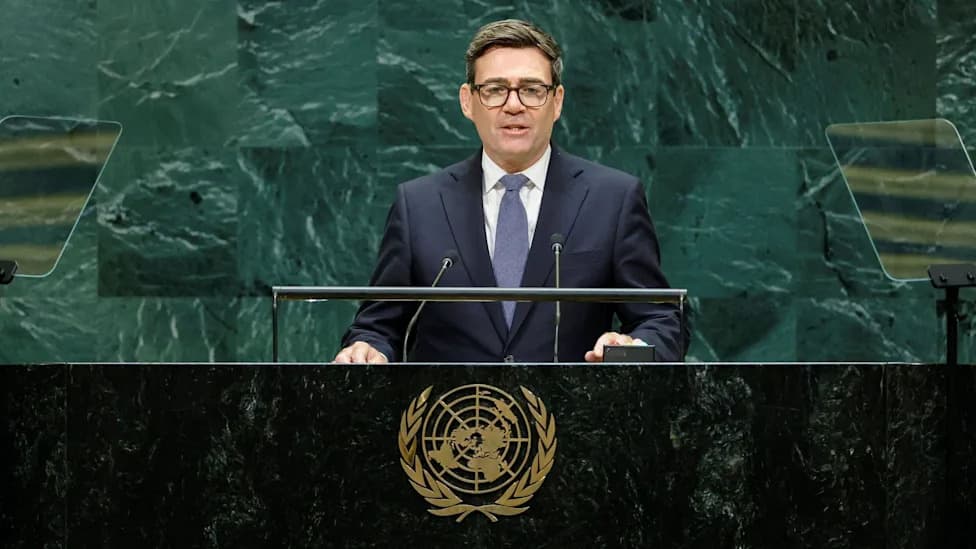
Andy Burnham delivers his first speech to the UN General Assembly in New York - REUTERS
How Manipulation Works
One common tactic is the manufactured mob: coordinated or automated accounts post identical, short, emotive messages to create an impression of widespread outrage. Such campaigns aim to erode trust in institutions and polarise debate. While bots are often detectable by their repetitive, shallow content, mixed campaigns that combine real users, paid promoters and automated accounts are harder to spot.
Protecting Speech Without Censoring It
There are legitimate reasons to preserve anonymity — whistleblowers, vulnerable victims and legitimate dissenters may need protection. Professional news organisations mitigate risks by verifying sources and corroborating claims. A balanced response could therefore protect free expression while requiring verifiable identification for political publishers and those who pay to amplify messages, backed by transparent disclosure rules, technical verification and legal safeguards.
Practical Safeguards
Possible measures include stronger attribution requirements for paid political advertising, platform verification for high‑reach accounts, penalties for covert state influence, and clearer rules for provenance tagging of AI‑generated media. Any policy must be narrowly tailored, transparent and subject to democratic oversight to avoid overreach.
Conclusion: Mocking the name of a proposal should not blind us to a strategic challenge: defending open societies from anonymous, automated and AI‑augmented efforts to distort democratic discourse. The task is to design rules and technologies that preserve free speech while restoring accountability and trust online.
Help us improve.