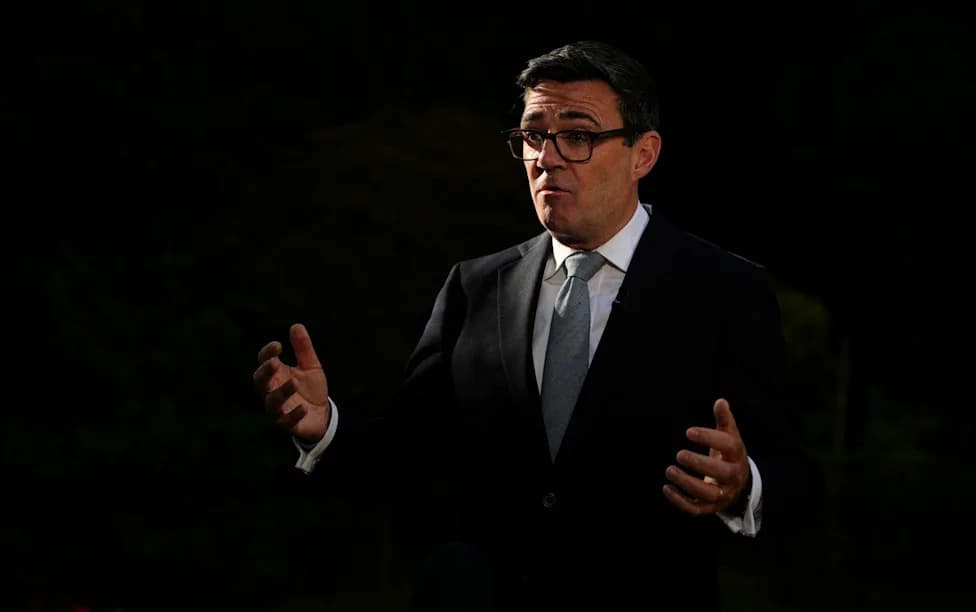
During his second half-hour of Prime Minister's Questions, Andy Burnham offered a memorable line: "Our national security cannot come at the expense of our social security." The remark captured Labour MPs' attention — some interpreted it as a signal to prioritise welfare spending, others as a promise that any extra defence funding would be found from alternative sources.
Ministers are reportedly discussing whether an international, NATO-style version of the old war bonds could help finance defence needs. Such a proposal could make sense as a financing tool — provided it is transparent, multilateral, and not used as a backdoor to other political arrangements.
Burnham’s comment is revealing about his priorities, but it also raises concerns. It suggests a framing of public priorities that underestimates the foundational role national security plays in sustaining the social safety net. In opening Prime Minister’s Questions this week, Mr Burnham marked the 25th anniversary of the 9/11 attacks, saying the Commons should take "a moment to remember the nearly 3,000 people who died, including 67 British citizens." Those words were appropriate, but he notably avoided terms such as "terrorist" or "attacks," language that helps contextualise the cause and consequences of that day.
Foreign Policy Signals and Domestic Reactions
At the same time, the Government’s most explicit public stance this week has focused on violence by Jewish settlers in the West Bank — with ministers discussing targeted sanctions on goods or services from certain settlements, including an Airbnb listing in Efrat. Foreign Secretary Ed Miliband condemned "settler terrorists" and accused some settlers of "ethnic cleansing." His remarks were later praised by Hamas, an organisation that is itself associated with large-scale violence and atrocities.
The resulting impression, the author argues, is that Labour’s emotional energy is directed toward criticising Israeli actions rather than squarely confronting the armed groups and ideologies that perpetrate mass murder — the kinds of movements that also carried out the 9/11 atrocities.
Why National Security Matters for Social Security
There are two core problems with prioritising social security independently of national defence. First, national security underwrites social security. Since 1945, Britain’s comparative peace has been a precondition for sustaining broad taxpayer-funded welfare. If the public comes to doubt the safety of its streets, critical infrastructure, or borders, priorities shift quickly: people accept temporary hardship in wartime or when war seems imminent.
Ed Miliband was commended for his sanctions on Israel by Hamas - Getty Images
Second, the security environment has changed. China and Russia now pose hybrid and asymmetric threats that do not require conventional invasion: political influence and espionage, cyberattacks that could disable communications and infrastructure, interference with financial systems, and compromises of sensitive data. Malware and information operations are tools of statecraft and conflict in the 21st century.
If the Government cannot provide credible reassurance that the country is defended against these threats, public confidence could erode rapidly — with consequences for both national cohesion and the fiscal foundation of welfare programmes. The author suggests this urgency partly explains recent political moves, including John Healey’s resignation and subsequent appointment as Chancellor, which some observers interpret as creating a misleading sense of stability.
Domestic Radicalisation and Institutional Links
The second major omission is the need to link national security work with domestic institutions. For 25 years since 9/11, Western states have recognised that violent ideologies and subversive networks can emerge from within their own populations. The four 7/7 bombers were British; the Manchester Arena attacker, Salman Abedi, was born and raised in Britain. Ahead of violent acts lies a broader pool that spreads ideology, foments grievances, organises protests and intimidation, and can occupy trusted positions in public services and critical industries.
Intelligence and safeguarding efforts are not yet fully integrated with education, health, social services, local government, policing, and the tech sector. The Government’s understandable fear of being labelled Islamophobic complicates efforts to identify and disrupt subversive activity, even though most Muslims are not involved in such activity. Reintroducing a targeted, rights-respecting concept of counter-subversion — carefully constrained by oversight and civil liberties protections — would help detect threats while protecting communities.
Finally, electoral politics shape choices. Ministers and party leaders calculate the political costs of security measures as well as their benefits. With a by-election in Holborn and St Pancras on Oct. 8, and with communities still grappling with the legacy of past violence, political calculations are especially acute. (St Pancras, historically, is venerated as a Christian martyr traditionally described as a young boy.)
The central takeaway: social security depends on credible national security. Policymakers should pursue both robust defence and inclusive domestic policies that protect civil liberties while closing gaps that allow radicalisation to spread.