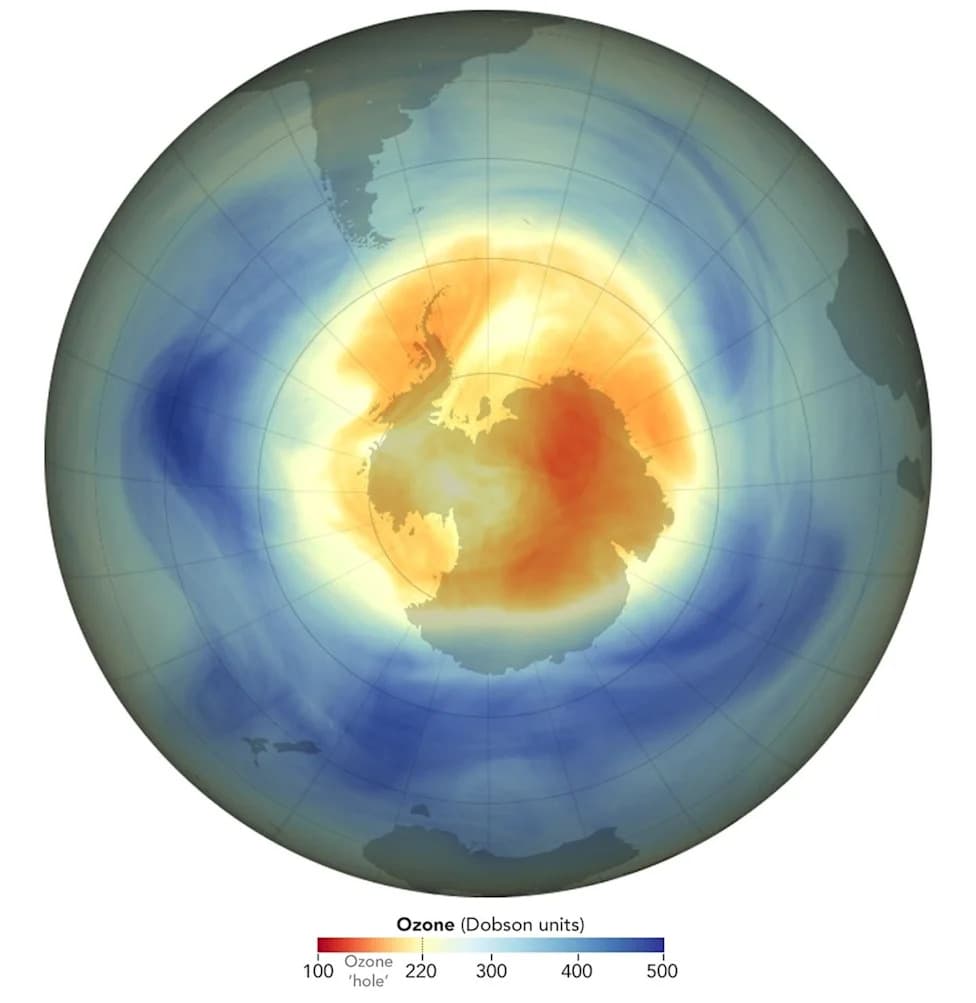
New multi-model simulations show that future ozone changes could add about 0.268 W/m² of radiative forcing between 2015 and 2050 under a high-pollution scenario — roughly 40% more than earlier estimates. About half of that warming comes from recovery of the stratospheric ozone layer and half from increased tropospheric ozone driven by pollution. While the Montreal Protocol remains essential for protecting health and ecosystems, the study argues that climate models and policy must better account for ozone’s complex, warming role.
Ozone Recovery Could Add Unexpected Warming — New Study Finds ~0.27 W/m² by 2050

A University of Reading study finds ozone recovery and air pollution may contribute 40% more warming than previously estimated, making ozone the second-largest driver of future climate change after carbon dioxide. (CREDIT: Shutterstock)
New research shows that the recovery of Earth's ozone layer — a major environmental success — carries an unexpected climate consequence: changes in ozone could add about 0.268 watts per square meter of additional radiative forcing between 2015 and 2050 under a high-pollution scenario. That is roughly 40% more warming than earlier estimates.
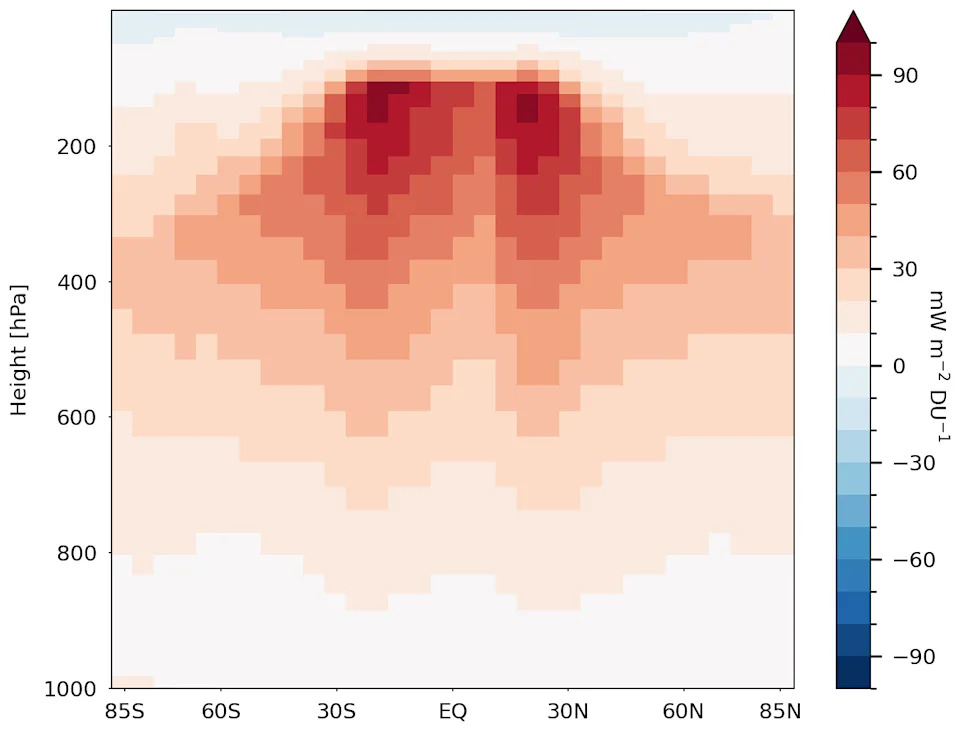
Radiative efficiencies (SARF) for ozone changes up to 0.1 hPa in mW m−2 per DU based on calculations in Skeie et al. (2020). (CREDIT: Atmospheric Chemistry and Physics)
What the Study Did
Scientists led by the University of Reading combined results from seven major climate and atmospheric chemistry models to simulate ozone changes through 2050 under the SSP3-7.0 scenario, which assumes only limited reductions in air pollution while maintaining compliance with international ozone-depletion controls.
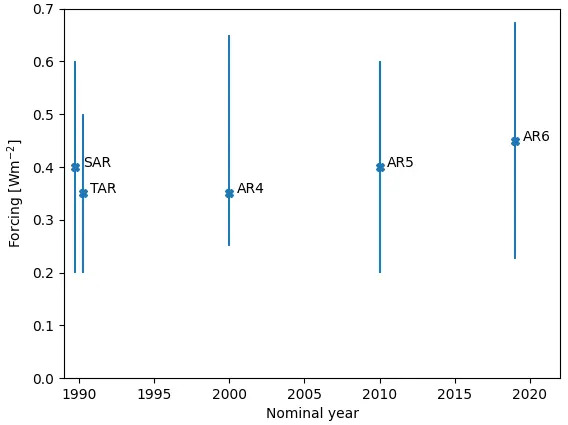
The tropospheric ozone radiative forcing from "pre-industrial" (1850 for SAR to AR4, 1750 for AR5 and AR6) to a nominal year assessed by the Second (SAR) to Sixth (AR6) IPCC Assessment Reports. Both SAR and the Third IPCC Assessment Report (TAR) used ozone concentrations representative of 1990 but have been offset in the figure for clarity. (CREDIT: Atmospheric Chemistry and Physics)
Key Model Findings
The multi-model mean projections show increases in ozone both aloft and nearer the surface. Global total-column ozone rises from an average of 298.3 Dobson units (DU) in 2015 to 310.5 DU in 2050, while tropospheric ozone increases from 36.2 DU to 40.5 DU over the same period. The largest tropospheric ozone gains occur over regions with substantial pollution in the scenario, notably India, Southeast Asia and the Middle East.
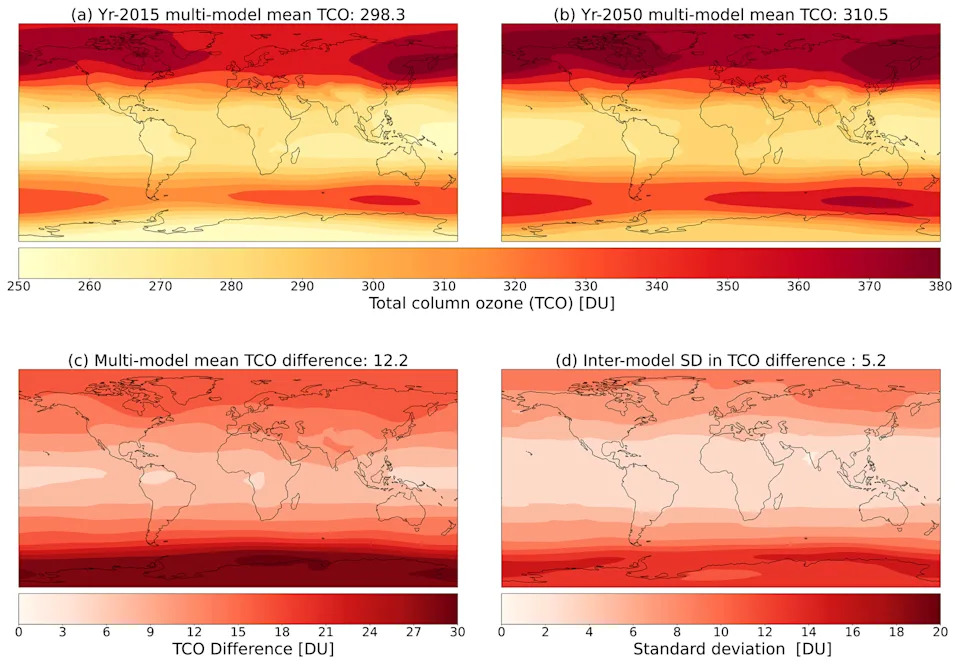
Multi-model mean climatologies of total column ozone (TCO) in Dobson units (DU) for (a) the present day (year 2015) and (b) the future (year 2050) following the SSP3-7.0 scenario, (c) the multi-model mean difference between the climatologies (year 2050 minus year 2015), and (d) the inter-model standard deviation about the multi-model mean difference. (CREDIT: Atmospheric Chemistry and Physics)
Why This Adds Warming
Ozone plays a dual role in Earth’s atmosphere: high-altitude (stratospheric) ozone shields life from harmful ultraviolet radiation, while ozone at all levels also absorbs infrared radiation and acts as a greenhouse gas. The study finds that ozone-related radiative forcing by 2050 (~0.268 W/m²) comes from two roughly equal sources:
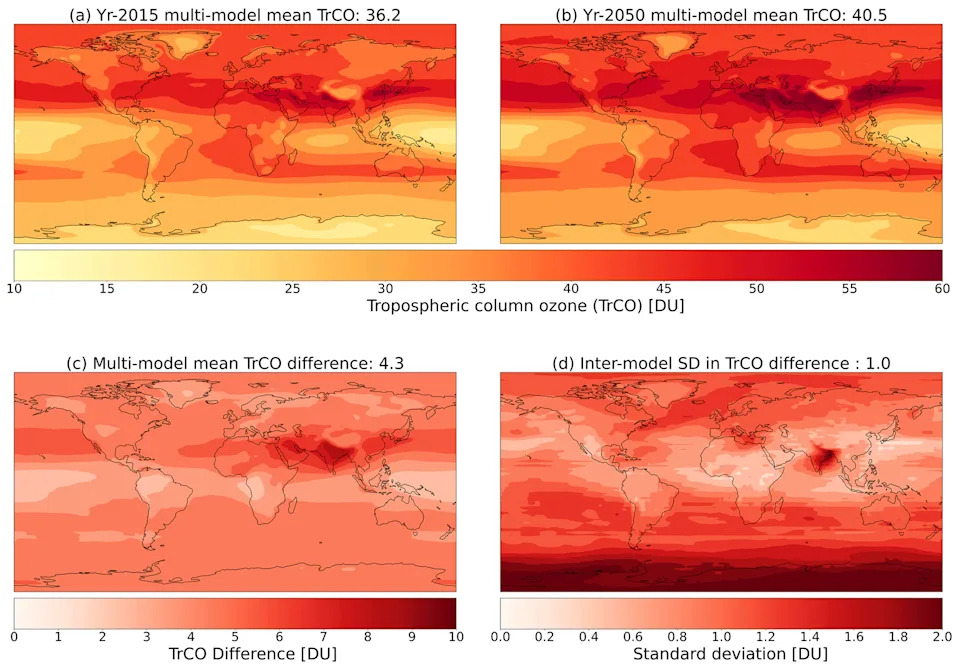
Multi-model mean climatologies of tropospheric column ozone (TrCO) in Dobson units (DU) for (a) present-day (year-2015) and (b) future (year 2050) global distributions, (c) the multi-model mean difference between the climatologies (year 2050 minus year 2015), and (d) the inter-model standard deviation about the multi-model mean difference. (CREDIT: Atmospheric Chemistry and Physics)
- Stratospheric Ozone Recovery: As the ozone layer repairs itself following the phaseout of CFCs and HCFCs, increased ozone aloft traps more heat.
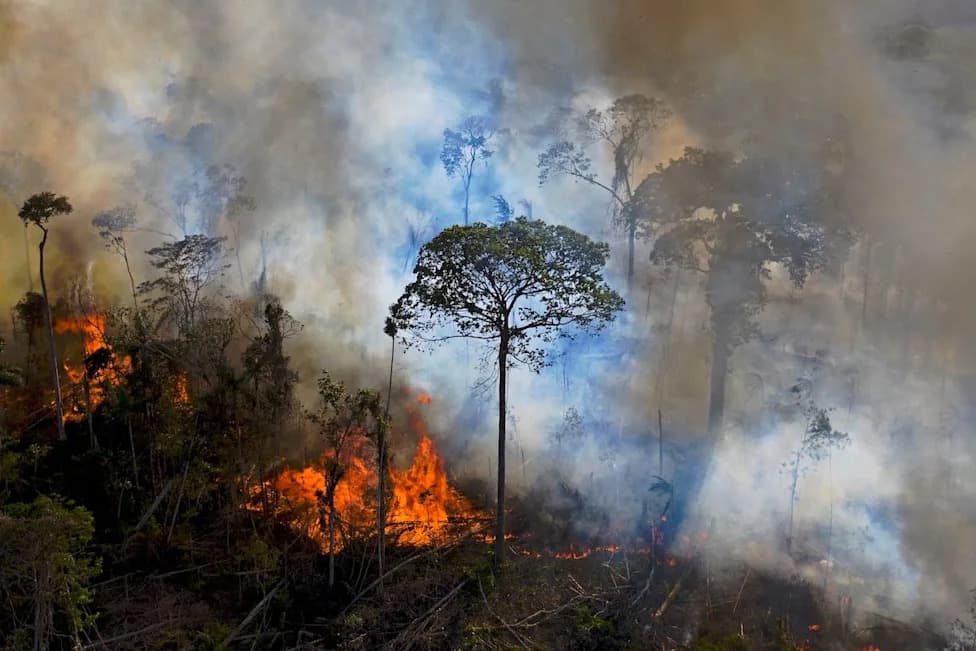
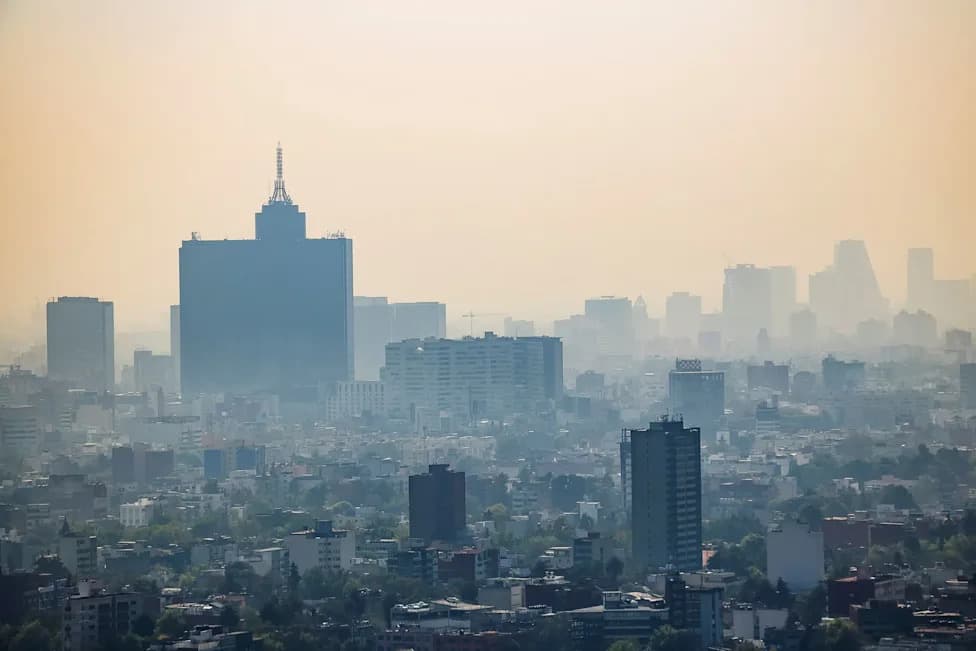
- Rising Tropospheric Ozone: Pollution-driven ozone near the surface increases warming and harms health and crops.
Context And Consequences
For comparison, carbon dioxide is projected to add about 1.75 W/m² of radiative forcing over the same 2015–2050 interval in this scenario, placing ozone as the second-largest contributor to additional warming in the study's simulations. The authors emphasize that this result does not undermine the Montreal Protocol or efforts to protect the ozone layer — those remain essential for reducing UV-related health and ecological harms.
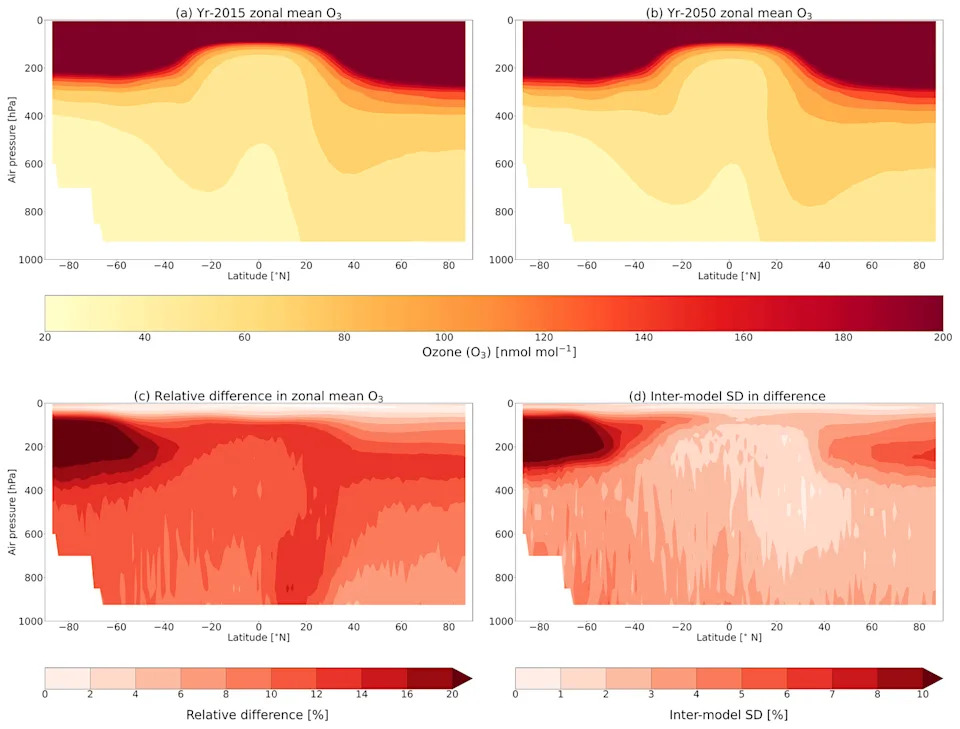
Multi-model zonal-mean climatologies of (a) present-day (year 2015) and (b) future (year 2050) ozone distributions, (c) the multi-model mean relative difference between the climatologies (year 2050 minus year 2015), and (d) the inter-model standard deviation about the multi-model mean relative difference. (CREDIT: Atmospheric Chemistry and Physics)
"Countries are doing the right thing by continuing to ban chemicals called CFCs and HCFCs that damage the ozone layer above Earth," said Professor Bill Collins of the University of Reading, the study's lead author. "However, while this helps repair the protective ozone layer, we have found that this recovery in ozone will warm the planet more than we originally thought."
Additional Effects And Policy Implications
Beyond direct warming, the models show secondary changes — modest reductions in cloud cover, slight decreases in surface reflectivity, and localized increases in stratospheric humidity — that together amplify ozone's net climate effect. The study also highlights that different forcing metrics can give different results and argues that effective radiative forcing (ERF) best captures ozone's total climate influence.
The practical takeaway: protecting the ozone layer remains critical, but climate models and policy planning should more carefully account for ozone's evolving role as both a protective shield and a greenhouse gas. Coordinated action on air pollution, ozone precursors and greenhouse gases will be important to manage these interacting effects.
Source: Research published in Atmospheric Chemistry and Physics; lead author from the University of Reading.
Help us improve.