Scientists reanalyzed potassium-rich pumice from Oplontis, a Pompeii suburb, using a refined argon-argon calibration tied to Pliny the Younger’s account of Vesuvius. Eight sanidine crystals return an age equivalent to about 1,946 years before present with ~0.7% precision and ~0.4% accuracy. The team validated the traditional August 24, 79 CE date to within roughly two months. Improved argon-argon ages will sharpen eruption chronologies for hazardous volcanoes and help calibrate radiocarbon dating.
Pompeii Suburb Rocks Tighten the Clock on Vesuvius — And Improve Volcanic Dating Worldwide
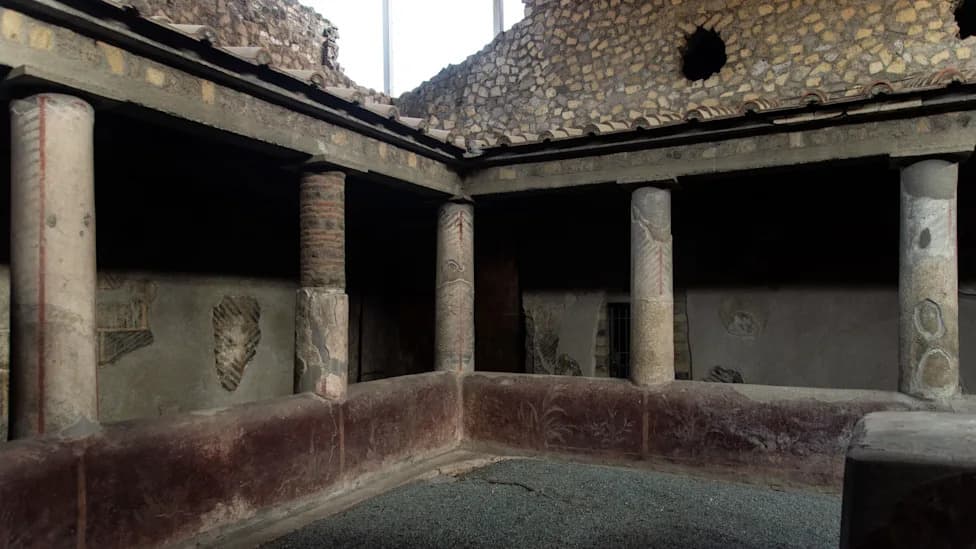
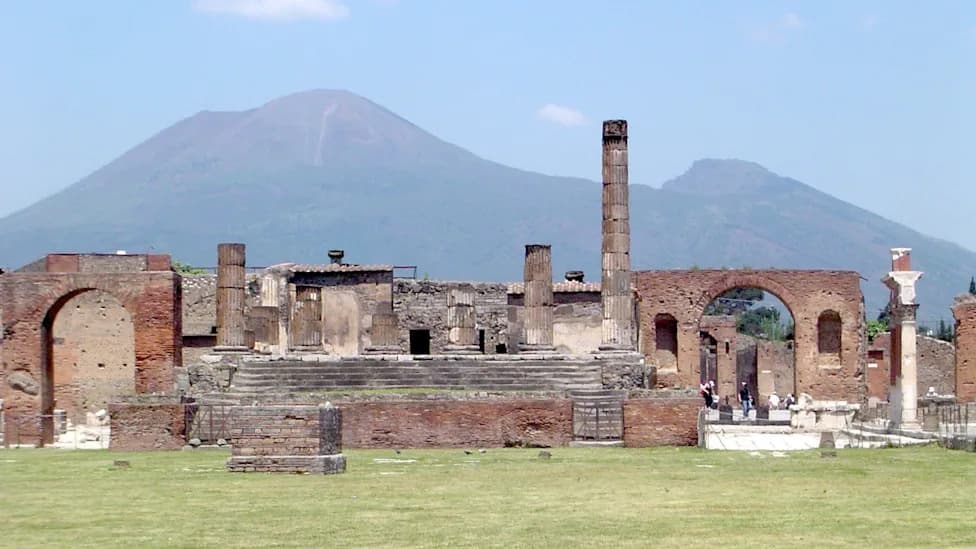
The general view of the archaeological site of Oplontis in Torre Annunziata, Italy. The archaeological site of Oplontis is one of the wonders returned after the eruption of Vesuvius in 79 AD together with the excavations of Pompeii and Herculaneum.
Two thousand years after Pliny the Younger recorded the catastrophic eruption of Mount Vesuvius that buried Pompeii and Oplontis, scientists have sharpened the geological clock tied to that event. A new study in Science Advances applies an improved argon-argon (40Ar/39Ar) calibration to potassium-rich pumice from Oplontis and reports more precise and accurate ages for the eruption linked to Pliny’s eyewitness account.
New Analyses of Old Samples
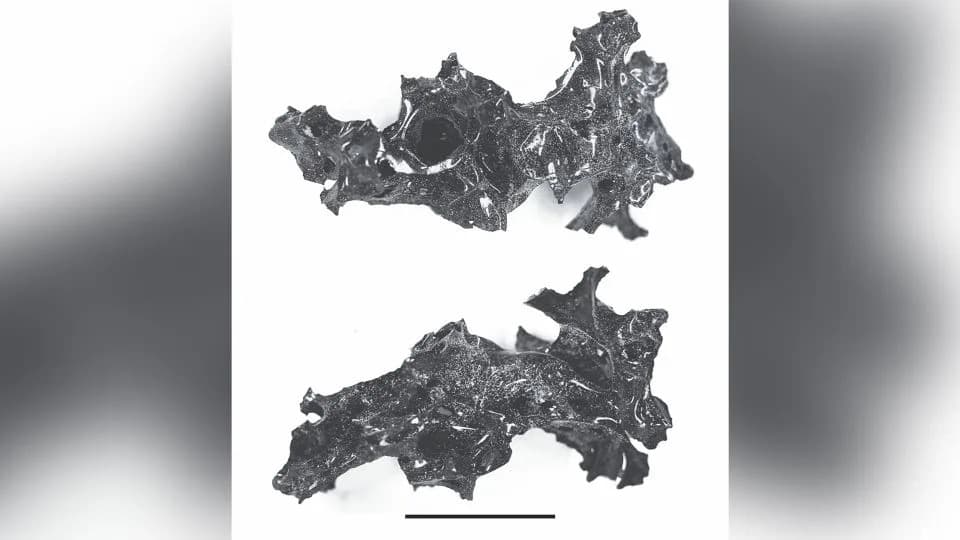
In 1998, Andrea Marzoli (University of Padua) collected potassium-rich pumice clasts from basal deposits at Oplontis — material erupted during the earliest phase of Vesuvius’ blast. Those samples were set aside and only recently retrieved for modern geochronology by graduate students Caroline Hasler, Anthony Fuentes and Andy Tholt. The team analyzed eight sanidine crystals (a potassium-bearing volcanic mineral) using a refined argon-argon protocol.
Higher Precision and Better Accuracy
Argon-argon dating determines ages by measuring isotope ratios of argon trapped in volcanic minerals. The revised calibration, anchored to the historically inferred date of August 24, 79 CE from Pliny’s writings, yields an estimated age equivalent to about 1,946 years before present for the volcanic minerals. The study reports an analytical precision of roughly 0.7% and an accuracy of about 0.4% for these measurements — significant improvements for historically recent eruptions.
"If you want to put together the eruptive history of a volcano in relatively recent time, precision and accuracy really count," said Paul Renne, a co-author and geochronologist at UC Berkeley. "The study shows that you can achieve that kind of highly useful precision and accuracy into the historical realm."
Why This Matters
More precise and accurate argon-argon ages help scientists build tighter eruption chronologies for volcanoes that threaten densely populated regions, including Mexico City (Mexico), Naples (Italy) and Yogyakarta (Indonesia). Tighter age constraints also improve calibration of radiocarbon dating — the dominant method for dating organic remains younger than ~55,000 years — and allow researchers to test causal links in Earth history, such as timing relationships between impacts, climate change and extinctions.
Validating the Historical Date
Hasler’s close reading of Pliny the Younger’s account and other historical evidence helped the team validate the August 24, 79 CE eruption date to within about two months, roughly doubling the precision of earlier estimates based on the same historical anchor.
By combining carefully chosen early-eruption material, modern argon-argon methods and historical documentation, the study demonstrates a pathway for unifying geologic dating techniques with improved mathematics and Bayesian frameworks — while keeping argon-argon dating as a key calibrant for recent volcanic events.
Help us improve.