The King's College London study of 144,702 adults found genetic differences help shape responses to trauma, with childhood experiences showing stronger links to PTSD symptoms than adult events. Childhood neglect, in particular, interacted more with genetic risk than abuse, and the gene FAM120A was highlighted for its link to emotional neglect. However, polygenic risk explained only about 2% of symptom variation, so genetics cannot predict individual outcomes. The authors call for richer, prospective trauma measures in future research.
Genes May Increase Vulnerability to Trauma — Childhood Neglect Shows Strong Genetic Interaction
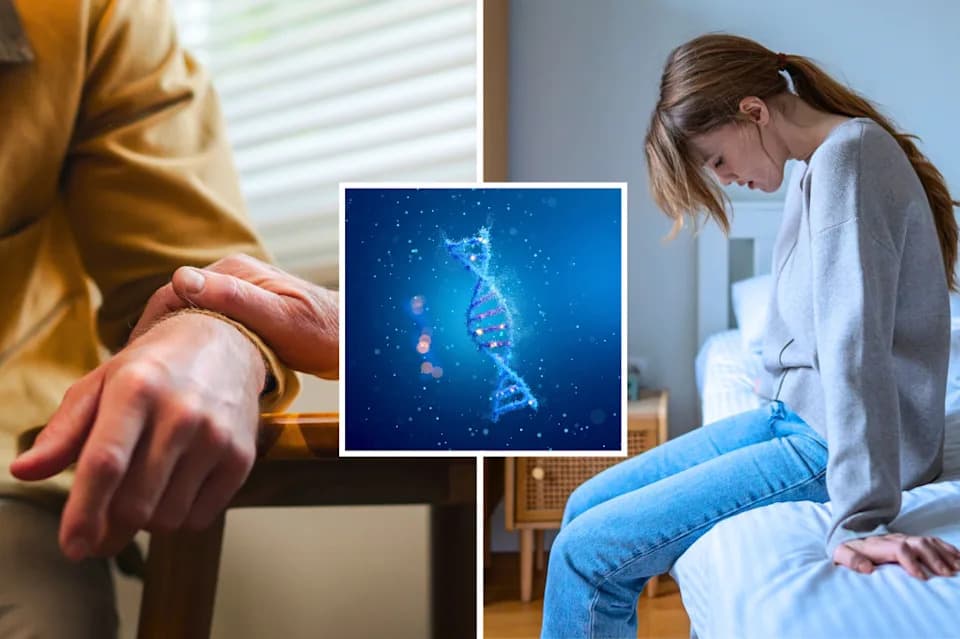
From left: a patient is comforted during a psychotherapy session; inset, a DNA strand; and a woman sitting on a bed.
New research from King's College London suggests genetic differences can help explain why some people develop post-traumatic stress disorder (PTSD) after trauma while others remain resilient. The study finds that genes appear to shape responses to different trauma types, with particularly strong effects for adverse experiences in childhood — and especially for childhood neglect.
Study and Methods
The team analysed mental-health and genetic data from 144,702 adults drawn from the U.K. Biobank and three National Institute for Health and Care Research (NIHR) studies. Participants completed PTSD symptom assessments and reported whether they had experienced 11 types of potentially traumatic events in childhood and adulthood.
Childhood traumas assessed included emotional abuse, emotional neglect, physical abuse, physical neglect and sexual abuse. Adult traumas included serious accidents, serious illness, sexual assault, violent crime, exposure to war and witnessing death.
Investigators tested gene–environment interactions at three levels: overall polygenic risk scores (PRS), specific genes, and individual genetic variants.
Key Findings
Childhood trauma had the strongest overall link to PTSD symptoms. Across the sample, early-life exposures were more strongly associated with PTSD symptoms than traumas encountered in adulthood.
Neglect and abuse behaved differently. Although childhood abuse showed the largest direct association with PTSD symptoms overall, childhood emotional and physical neglect demonstrated stronger interactions with genetic risk. That is, a person’s genetics appeared to matter more for outcomes after neglect than after abuse.
Specific genetic signals identified. The study highlighted several genes that interacted with particular trauma types. Notably, the gene FAM120A — linked to brain processes involved in fear and stress — showed a stronger interaction with childhood emotional neglect than with other trauma types.
Genetics explain only a small portion of variation. The polygenic risk score accounted for roughly 2% of the differences in PTSD symptom levels between people, so genetics alone cannot predict individual outcomes.
Limitations and Implications
The authors note important limitations: trauma histories were self-reported using relatively simple questions, often many years after the events, introducing the possibility of recall bias. The findings need replication with more detailed, prospective measures of trauma.
Nevertheless, the results underscore that different trauma types may interact with biology in distinct ways. Incorporating detailed trauma information into genetic studies could improve understanding of PTSD, enhance risk prediction models, and ultimately support more targeted prevention and care strategies.
Citation: Coleman, J. R. I., et al. (2026). Identifying Differential Interactions of Potentially Traumatic Experiences With Genetic Risk for Posttraumatic Stress Disorder. European Journal of Psychotraumatology. https://doi.org/10.1080/20008066.2026.2709319.
Bottom line: Genetics appear to influence how strongly some people respond to trauma — especially childhood neglect — but they explain only a small fraction of individual differences. Social, environmental, and clinical factors remain central to prevention and treatment.
Help us improve.