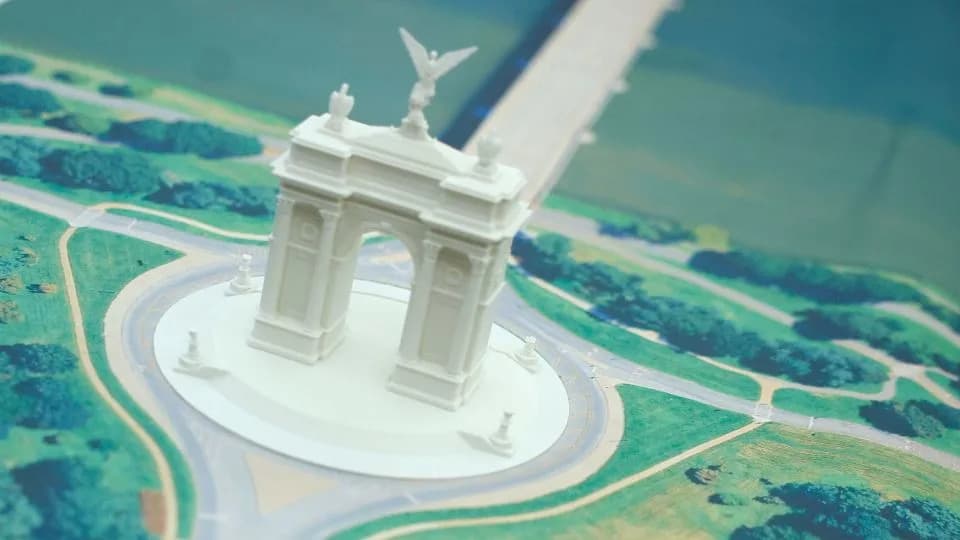
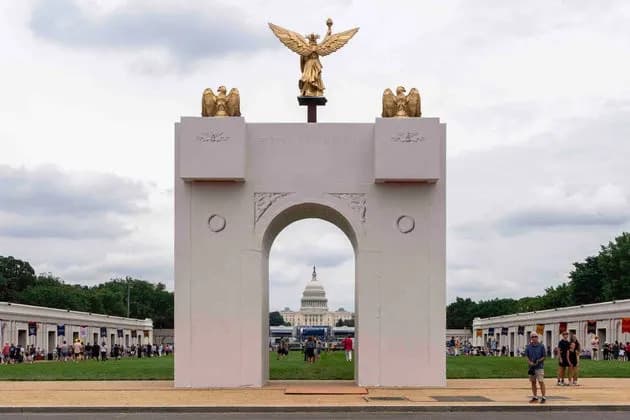
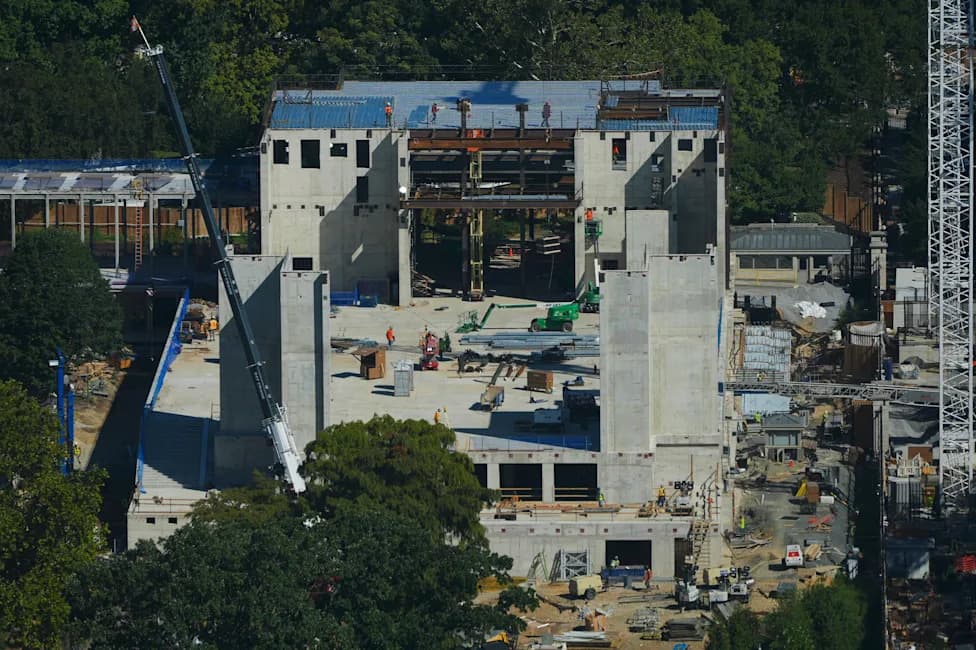
President Trump announced plans to convert a proposed 250-foot 'Triumphal Arch' in Washington into a military-style facility to house drones, snipers and ammunition, saying the move was made at the U.S. military's request. He presented the project as a national security priority. The National Park Service is expediting a final review ahead of a likely November approval, while its August report warned the arch would harm nearby monuments and sightlines. Critics also raised concerns about potential impacts on airspace and public views of national symbols.
Trump Says Proposed Washington 'Triumphal Arch' Will Be Converted Into Drone, Sniper And Ammunition Facility
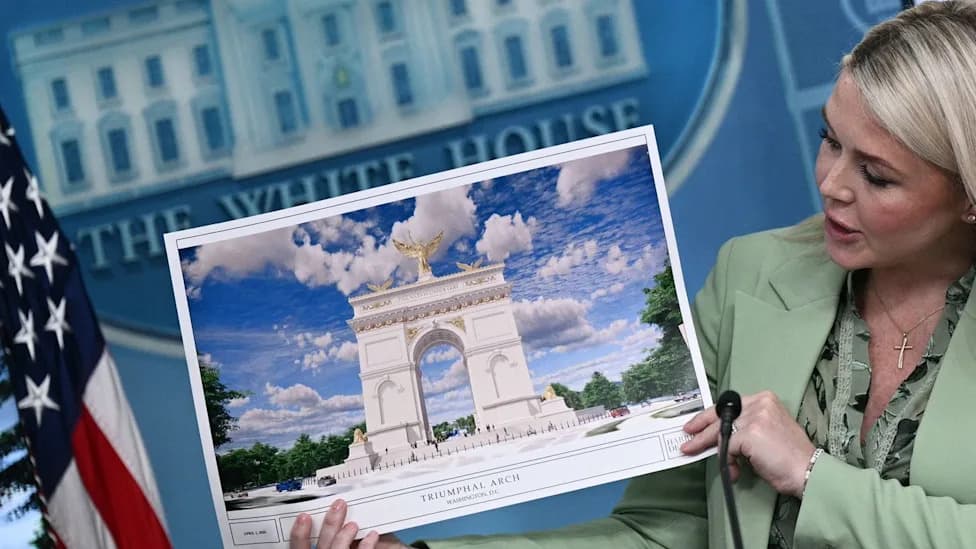
A rendering of the proposed triumphal arch. Photo: Brendan Smialowski / AFP via Getty Images
President Donald Trump announced Sunday that the proposed 250-foot "Triumphal Arch" planned for the Receptive Circle adjoining the Arlington Memorial Bridge would be converted into a dual-use facility to house drones, station snipers and store ammunition. He framed the move as a national security measure, saying it responds to a request from the U.S. military.
What Trump Said
'At the strong request of the United States Military, and for National Security purposes, I have agreed to convert the magnificent Triumphal Arch...into a top grade Military Complex/Triumphal Arch, to house, store, and have the rapid ability to use large numbers of drones, plus Snipers, on both the roof and plaza areas, and additionally have and hold large quantities of sniper ammunition in storage,' Trump wrote on Truth Social.
Why It Matters
The president's national security framing escalates a controversial civic monument into a defense-related project, raising questions about the arch's purpose, oversight and impact on surrounding historic sites.
Key Concerns
The proposed 250-foot arch would be among the world's largest of its kind, prompting objections from preservationists and urban planners. Critics warn the structure could block views of existing national symbols, alter sightlines across the memorial landscape and complicate airspace and approach patterns for nearby airports.
The New York Times reported this week that the National Park Service (NPS) is fast-tracking a final review of the project ahead of a likely approval in November. The NPS's own August report warned that construction could have adverse effects on multiple nearby monuments and landmarks.
Developing story: Further updates will be posted as additional details become available.
Help us improve.