Key findings: A Guardian probe found widespread pricing mismatches at 7‑Eleven and Circle K between 2023 and 2025, with many stores failing state price-accuracy inspections. Small overcharges on snacks, drinks and fuel add up for low-income and time-pressed shoppers. Regulators cite limited resources while experts call for sustained federal and state enforcement to deter repeat violations.
Investigation: 7‑Eleven and Circle K Routinely Charge More Than Posted Prices
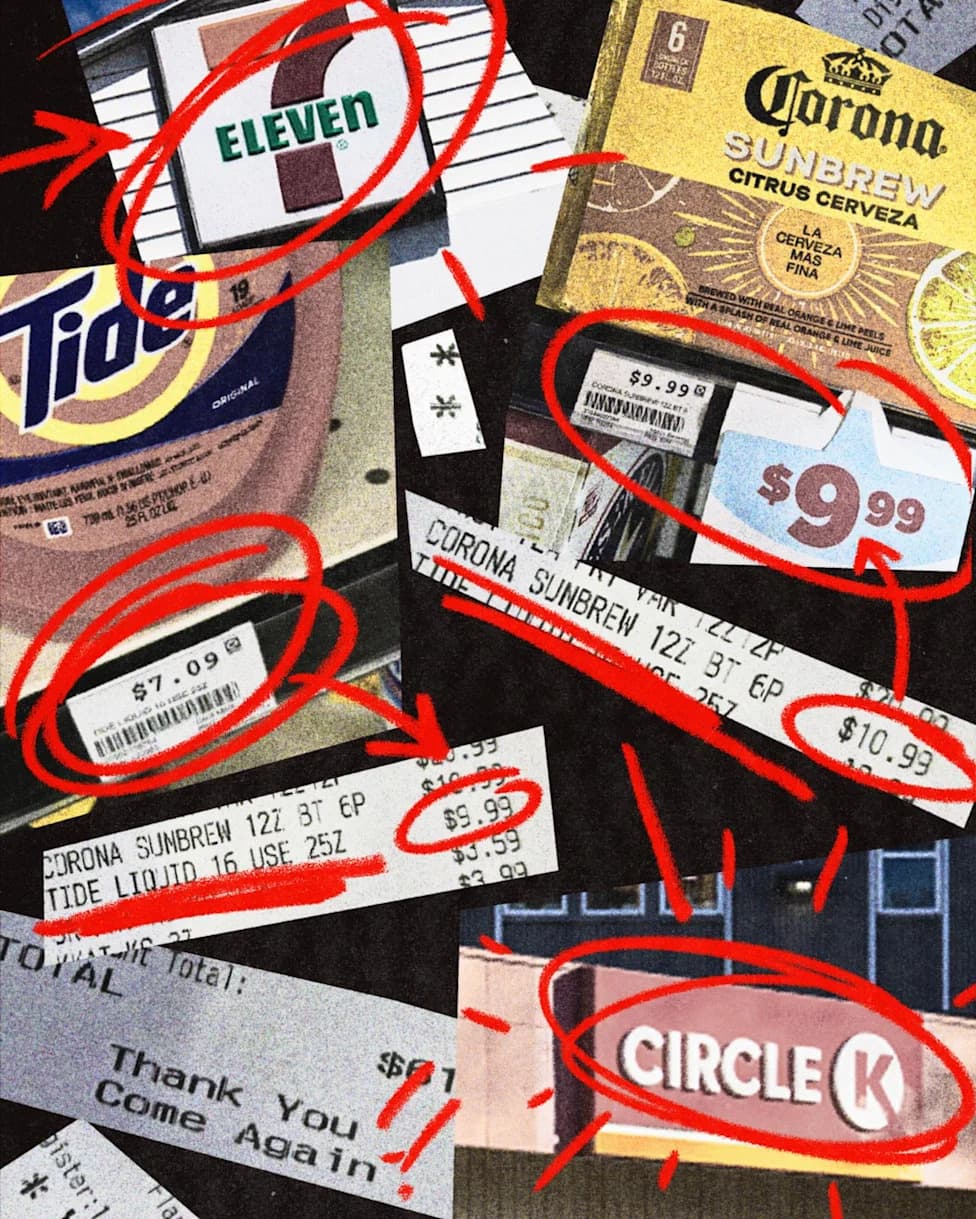
Illustration: Guardian Design / Getty Images
Marco Cruz pulled into a Circle K in McAllen, Texas, at 1:20 a.m. on a mild November night in 2025 looking for a late snack. A pack of beef and jalapeño cheese sticks was labeled $3.99 on the shelf but rang up as $4.19 at the register. When he asked the clerk to honor the shelf price, the employee refused and, Cruz says, threatened to call the police. He left and later filed a complaint with the Texas attorney general.
Widespread Price Discrepancies
A Guardian investigation found Cruz's experience is far from unique. The country's two largest convenience-store chains, 7‑Eleven and Circle K, frequently charge customers more at checkout or at pumps than prices shown on shelves or roadside signs. State inspections between 2023 and 2025 revealed high failure rates: Circle K failed price-accuracy checks 35% of the time in Florida, 62% in North Carolina and 82% in Columbus, Ohio. 7‑Eleven failed 47% of inspections in Colorado and Utah and 79% in Ontario County, New York.
Inspections sometimes revealed multiple overcharges in a single visit. In February 2025, a 7‑Eleven in Casa Grande, Arizona, rang up 12 of 25 sampled items at higher prices than the shelf tags showed — a 48% error rate. Examples included small but persistent increases: 10 cents on Pickle Bites, 40 cents on a KitKat bar and a $1.00 jump on a pack of Wrigley’s gum.
Why It Matters
For shoppers already strained by high inflation, rising fuel costs and tightened household budgets, even modest overcharges add up. Convenience stores are heavily used by shift workers, seniors and people with limited transport — groups less able to absorb repeated small losses. A 2026 Morning Consult report places both chains in the "low‑income tier," and industry data shows convenience stores sell about 80% of the gasoline purchased in the U.S., amplifying the impact of inaccurate pump pricing.
“We expect to pay what we see on the shelf,” Cruz said. “Even if that already doesn't seem like a good deal.”
Industry Response and Regulatory Gaps
Both chains issued brief statements emphasizing their commitment to pricing accuracy but declined interview requests. 7‑Eleven noted the complexity of managing more than 3,000 items per store and said it invests in technology and processes to correct discrepancies. Circle K acknowledged that mismatches can occur between shelf labels and point-of-sale systems and said it works to correct unintentional errors.
Regulators and weights-and-measures officials blame limited staffing and vendor errors in some cases: suppliers sometimes place sale tags that are not updated later, and understaffed stores struggle to keep pace. But officials emphasize that stores remain responsible for accurate pricing. Many states only inspect after consumer complaints, and some — including Illinois, South Carolina and Wyoming — perform no routine retail price-accuracy inspections.
Repeat Violations and Enforcement Challenges
Inspectors and consumer complaints show repeat violations are common. North Carolina recorded a Circle K location that failed multiple follow-up checks and was fined $500, yet discrepancies kept reappearing. Past settlements with large retailers have also failed to eliminate problems: Dollar General, Carquest and Walmart have all faced fines or settlements and later been cited again for pricing errors.
“Unless the Federal Trade Commission or state attorneys general step in aggressively and repeatedly,” said David Friedman, a legal scholar at Willamette University, “these practices are likely to continue.”
What Shoppers Can Do
Consumers who encounter mismatches should document the price with a photo or video, ask for the lower advertised price at the counter, and file complaints with state weights-and-measures offices or attorneys general. Given budget constraints among regulators, public reporting and repeated complaints can trigger follow-up inspections that might otherwise not occur.
Bottom line: Repeated, small overcharges at checkout and at pumps are widespread among major convenience-store chains and disproportionately affect consumers with the least financial flexibility. Experts say stronger, sustained public enforcement is needed to deter these errors and protect shoppers.
Help us improve.