Summary: Electronic shelf labels (ESLs) replace printed tags with digital displays that let retailers change prices instantly. The AFL-CIO Tech Institute warns ESLs can displace labor — citing a Pricer case that saved ~5,200 worker hours per store and extrapolating 44,000–191,000 potential job losses and $1.6B–$6.9B in annual wages across the U.S. States including Maryland, Connecticut, and New Jersey have limited surveillance pricing; New Jersey also paused new ESL installs pending study. No independent evidence yet shows ESLs consistently lower consumer prices, so regulators and shoppers are asking for greater transparency.
Surge Pricing at the Checkout: How Electronic Shelf Labels Could Raise Grocery Costs
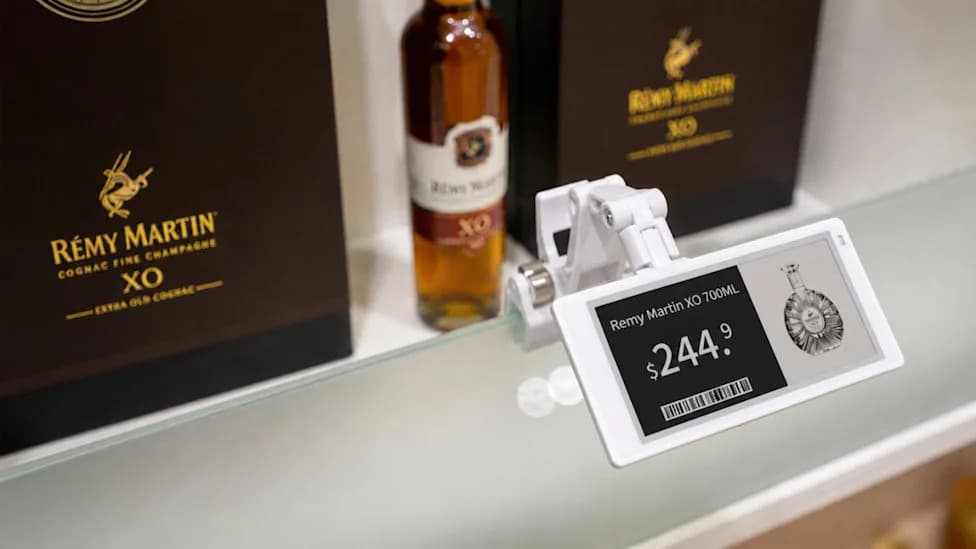
Image: MinewTag
You've probably noticed them by now: small glowing screens where paper price tags used to hang, quietly blinking along grocery aisles. Easy to overlook, these electronic shelf labels (ESLs) are more than a cosmetic upgrade — they can change how prices are set and how stores manage labor.
What Are Electronic Shelf Labels?
Electronic shelf labels replace printed price tags with digital displays that connect wirelessly to a store's pricing system. That connection lets retailers update prices across an entire store almost instantly, which vendors and trade groups present as straightforward modernization: fewer pricing errors, lower printing costs, and faster promotional changes. Major chains, including Walmart, are already adopting them.
Jobs and Wages: The Labor Risk
The AFL-CIO Tech Institute highlights a less-visited consequence: labor displacement. A 2022 Pricer case study found that automating price changes saved roughly 5,200 worker hours at one store annually. The Tech Institute extrapolated that figure across nearly 60,000 U.S. grocery stores using Bureau of Labor Statistics data, estimating a possible loss of 44,000–191,000 jobs and $1.6 billion–$6.9 billion in annual wages.
Those projections depend on uniform adoption and similar operating conditions across a diverse industry — an important caveat — but they underscore that manufacturer and vendor productivity claims imply significant labor implications that are often omitted from the industry’s modernization narrative.
Dynamic Pricing and Surveillance Pricing
Manufacturers and vendors market several advanced features alongside ESLs:
- Dynamic Pricing: Prices for staples can change multiple times per day based on demand, inventory or time of day.
- Surveillance Pricing: Individualized prices based on consumers’ personal data, shopping habits, or inferred income — the grocery equivalent of algorithmic airline fares that change based on perceived urgency.
- Margin Optimization: Tools that promise higher retailer margins and more frequent price adjustments to capture incremental revenue.
State Responses: Maryland, Connecticut, New Jersey
Three states have already stepped in to limit how personal data can be used to set grocery prices:
- Maryland enacted the country's first state ban on surveillance pricing for groceries, requiring prices to remain fixed for at least one business day and prohibiting consumer data from feeding individualized automated pricing systems.
- Connecticut extended its ban to groceries and delivery services and added a disclosure rule: if personal data caused a price increase, the shelf label must state that plainly.
- New Jersey went furthest with the Fair Price Protection Act, banning surveillance pricing (fines up to $50,000 per violation), allowing private consumer suits, and imposing a one-year moratorium on new ESL installations while the state studies their effects. Existing systems may continue operating during the pause.
What We Know — And What We Don't
No major independent study has demonstrated that ESL adoption consistently lowers grocery bills for consumers. Industry groups point to faster markdowns and better promotional accuracy as potential benefits, but evidence that cost savings are passed on to shoppers — rather than captured as higher margins for retailers — is missing.
What Consumers and Regulators Should Ask
Until retailers provide transparent, independent evidence that ESL-driven efficiencies reduce prices for shoppers, policymakers and consumers have reason to ask pointed questions: Are dynamic or individualized prices fair? Do labor savings translate into lower consumer prices or mainly into higher retailer profit? How transparent are the algorithms deciding prices?
Bottom line: ESLs can modernize price management, but they also enable pricing practices and labor changes with significant social and economic implications. Greater transparency, independent study, and careful regulation are needed before these blinking tags become the default for grocery pricing.
Help us improve.