The University of East Anglia ran a 15-year experiment on red flour beetles (Tribolium castaneum) to test whether female access to multiple mates affects genomic health. After 156 generations, lines where females could choose among five males carried fewer harmful mutations and resisted inbreeding better than single-pair lines. Neutral mutation rates and overall genetic diversity were similar between groups, suggesting sexual selection can purge deleterious variants without reducing diversity. Authors highlight potential conservation benefits of restoring natural mate choice.
More Mates, Fewer Mutations: 15-Year Beetle Study Shows Sexual Selection Can Reduce Extinction Risk
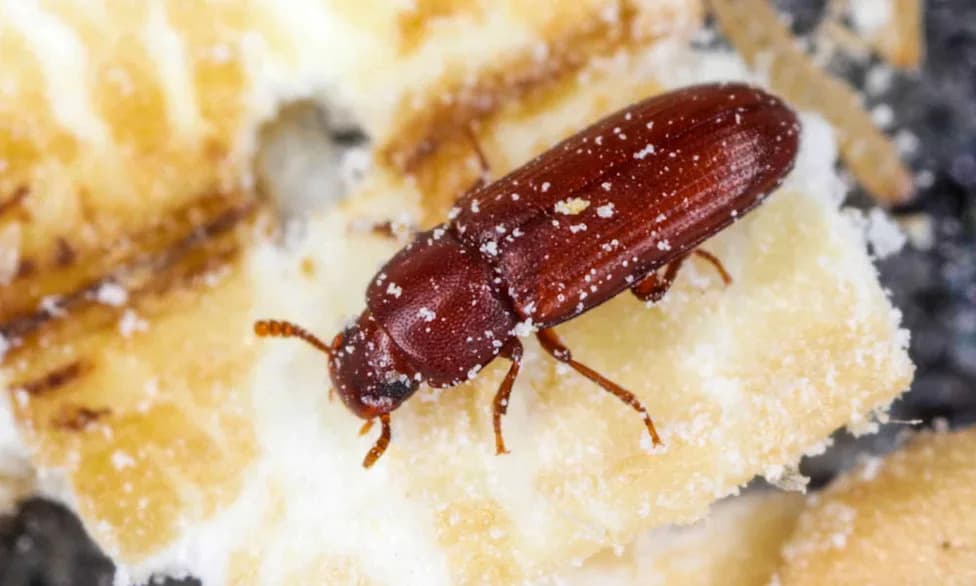
Flour Beetle© Tomasz Klejdysz/Shutterstock.com
For 15 years researchers at the University of East Anglia (UEA) ran a controlled laboratory experiment to test a single evolutionary question: does the number of male partners available to a female influence a population’s long-term genetic health and resistance to extinction?
Their results, published in Proceedings of the National Academy of Sciences (PNAS), come from work with the red flour beetle, Tribolium castaneum. The team maintained experimental populations for 156 generations and compared lines in which each female mated with a single male against lines where each female had five males competing to mate with her.
Experimental Design
Population sizes were kept equal across treatments so that the only systematic difference was whether females had the opportunity to choose and whether males faced competition. To measure genetic outcomes, researchers sequenced DNA from 84 individuals in total—42 beetles from each mating regime—and compared patterns of mutation and genetic diversity between the two groups.
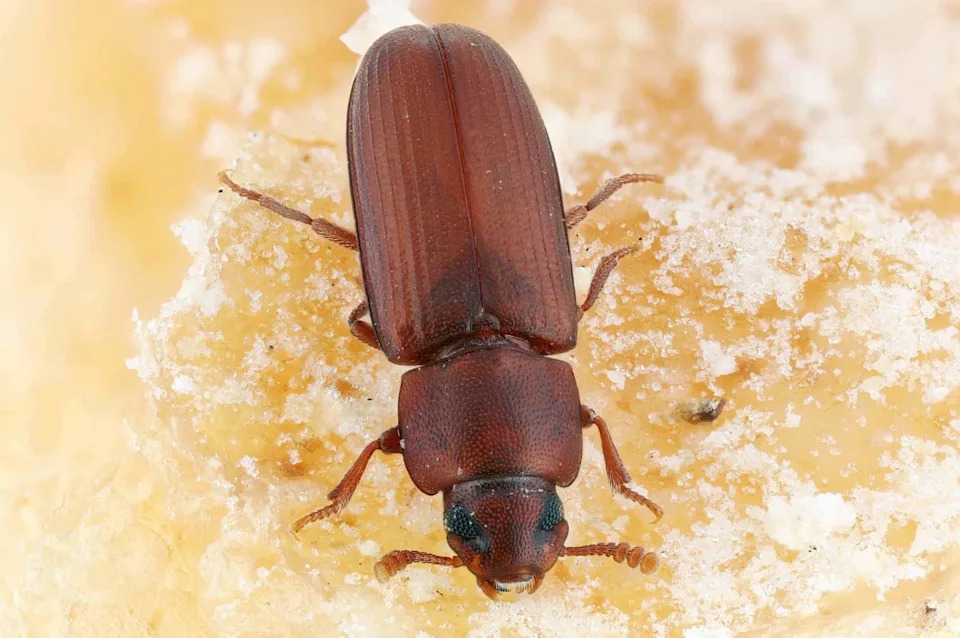
Red flour beetles were the species involved in the study.©Tomasz Klejdysz/Shutterstock.com
Key Findings
After 156 generations, lines where females had access to multiple males carried substantially fewer harmful (deleterious) genetic mutations than single-pair lines. Harmful mutations are DNA changes that can disrupt gene function and increase risk of poor health or death; these were more frequent in the populations where females mated with a single male.
"In simple terms, we found that beetle populations where females could potentially mate with multiple males ended up with healthier genomes," said Dr. Michael Pointer of UEA's School of Biological Sciences. "This genetic advantage appeared to have real-world consequences because populations carrying higher levels of harmful mutations were far more likely to become extinct when subjected to inbreeding."
Notably, the incidence of neutral (harmless) mutations and the overall level of genetic diversity were statistically similar between treatments. That result challenges the concern that intense mate competition necessarily erodes genetic diversity over time.
Inbreeding Test and Interpretation
The team also examined how these lines resisted inbreeding, building on inbreeding experiments from a 2015 UEA study. Populations derived from females that had access to multiple males generally survived inbreeding better. However, the researchers emphasized a key caveat: the critical predictor of survival was the load of harmful mutations a population carried, not merely the mating system. In short, which individuals had "cleaner" genomes mattered most.
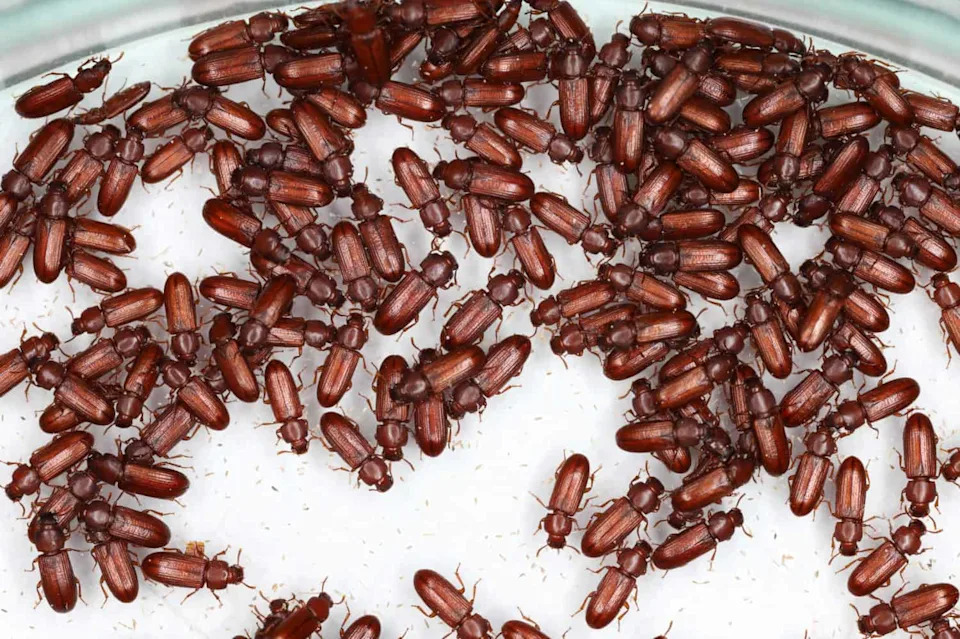
Female beetles who chose among several mates produced offspring with cleaner DNA.©Tomasz Klejdysz/Shutterstock.com
"Over many generations, this process acts like a biological quality-control system, helping purge damaging mutations from the population," Pointer added. The new study provides strong genomic evidence supporting that mechanism.
Conservation Implications
Professor David Richardson, the study’s senior author, pointed out that many endangered populations are small and inbred, allowing harmful mutations to accumulate and increasing extinction risk. He suggested that conservation programmes—both in the wild and in captivity—should consider restoring more natural levels of sexual selection. Allowing female choice and some level of male competition could help populations purge deleterious variants naturally and improve long-term survival prospects.
Why Beetles?
Red flour beetles were chosen because their rapid generation time makes it feasible to test evolutionary hypotheses over hundreds of generations—an approach impossible with larger, longer-lived animals. The practical advantage allowed the team to test whether sexual selection can shape genomic health and influence extinction risk.
Conclusion: The study shows that sexual selection—female choice and male competition—can reduce the burden of harmful mutations without lowering neutral diversity, and that managing mating systems may be a useful tool in conservation biology when applied carefully.
Help us improve.