The NODSSUM project located and mapped thousands of barrels of low-level radioactive waste dumped into the Atlantic between 1949 and 1982. Many barrels are corroded and releasing radionuclides (including cobalt-60, niobium-94, cesium-137 and americium-241) onto the seafloor. The containers have become localized biological hotspots, complicating contamination pathways. Preliminary measurements show strong radioactivity very near sources but rapid falloff with distance; detailed lab analyses will determine biological uptake and long-term impacts.
150,000 Tons of Radioactive Waste Found Corroding and Leaking on the Atlantic Seafloor
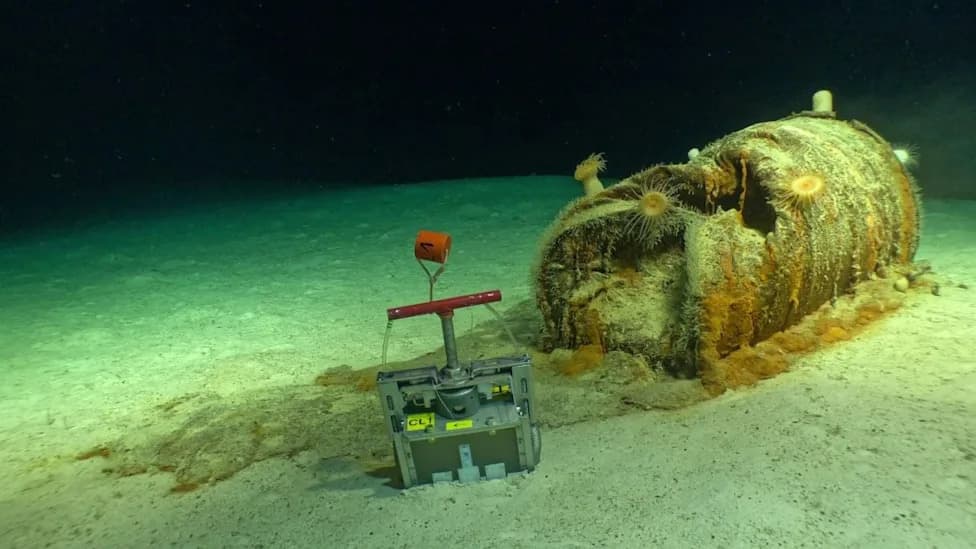
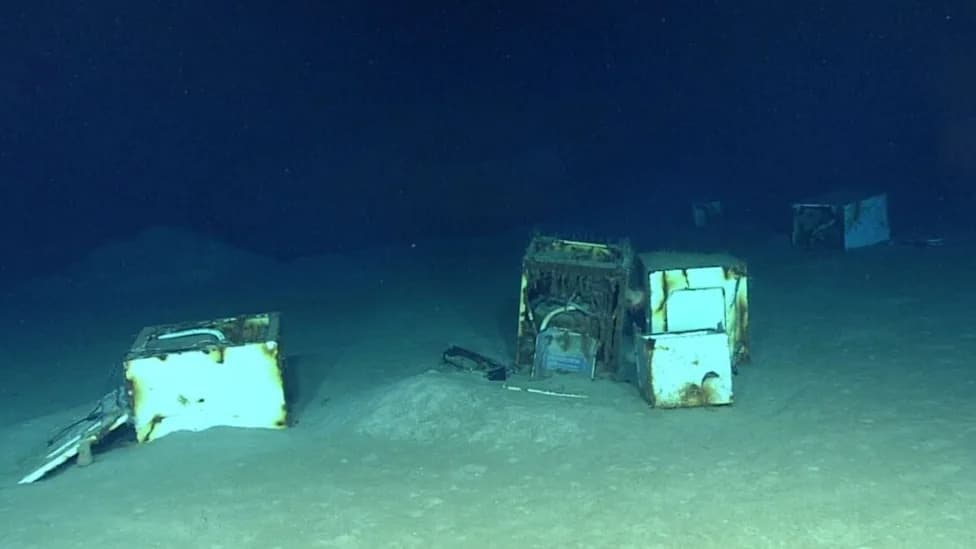
A barrel oozing radioactive waste at the bottom of the Atlantic Ocean. (NODSSUM Campaign, CNRS, French Oceanographic Fleet)
Scientists exploring historic ocean dump sites have discovered that thousands of barrels of low-level radioactive waste, dumped into the Atlantic between 1949 and 1982, are corroding and releasing radionuclides onto the seafloor. The findings come from recent NODSSUM expeditions that mapped and inspected barrel sites and collected sediment, water and biological samples for laboratory analysis.
Historic Disposal and Its Rationale
During the mid-20th century, many European authorities disposed of low-level radioactive waste (LLW) by dumping sealed barrels on the deep Atlantic seafloor, typically at depths of 3,000–5,000 metres. At the time, guidance assumed containers need only remain sealed long enough for short-lived isotopes to decay; any remaining material was expected to disperse slowly into the ocean. Modern International Atomic Energy Agency (IAEA) recommendations call for more robust containment and isolation of LLW for centuries.
Mapping and Manned Inspection
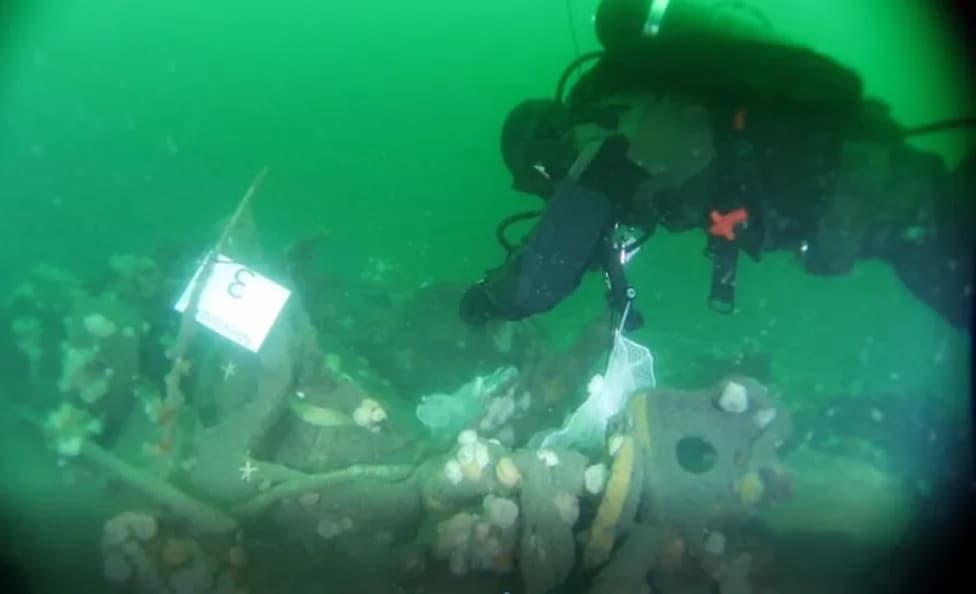
The interdisciplinary NODSSUM (Nuclear Ocean Dump Site Survey Monitoring) project — led by researchers from France's CNRS — first reconnoitred sites in June 2025 aboard the R/V L'Atalante using the autonomous vehicle Ulyx, mapping and photographing the seafloor and locating 3,355 barrels. In May 2026 a follow-up expedition on the Pourquoi Pas? deployed the three-person submersible Nautile for 20 dives, inspecting barrels directly at depths beyond 4,700 metres and collecting in situ samples.
What the Teams Found
Many barrels were found heavily corroded and visibly degraded, with material seeping onto adjacent sediment. Shipboard detectors recorded radionuclides traceable to the dumped waste, including cobalt-60 and niobium-94; elevated levels of cesium-137 and americium-241 were also measured. Older inventories indicate the barrels also contained plutonium isotopes and tritium, some of which persist for decades to millennia.
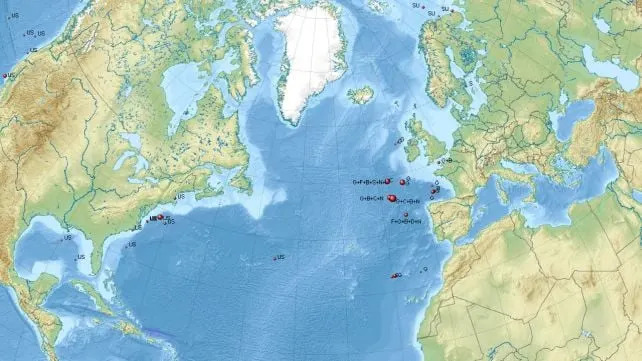
A map of oceanic nuclear waste dump sites. (Masaqui/Wikimedia Commons,CC BY-SA 3.0)
Unexpected Ecology: Barrels as Biological Hotspots
Rather than lying in barren sand, many barrels now serve as artificial hard substrates on the otherwise sparse seafloor, attracting anemones, sponges, sea cucumbers, fish and crustaceans. Crabs in particular have been observed sheltering around the containers. This ecological colonization complicates risk assessment because organisms live in close contact with corroding waste.
Sampling and Preliminary Results
Nautile teams collected sediment, water, organisms and microbial community samples at five barrel sites and compared them with nearby rocky habitats. Preliminary shipboard readings show strong radioactive signals very near some barrels, but activity drops sharply with distance — a pattern consistent with previous deep-sea studies such as the investigation of the Komsomolets submarine wreck, where concentrations fell off within metres. The NODSSUM team reported no contamination of Nautile or its instruments and judged radiation levels encountered to be manageable under standard protection procedures.
What Comes Next
Laboratory analyses are under way to determine whether radionuclides are being taken up and retained by seafloor organisms and to assess longer-term ecological and geochemical impacts. The new maps and sample sets give researchers their first comprehensive dataset for tracing how these dumped materials behave in deep-ocean settings and whether they pose wider environmental or human-health risks via food-web transfer or sediment remobilization.
Implications
These results neither imply immediate large-scale danger nor justify complacency. Instead, they highlight a legacy problem from past disposal practices that requires sustained monitoring, careful laboratory study, and informed policy discussions about remediation and future ocean stewardship.
Note: Dates, locations and preliminary findings are based on the NODSSUM project expeditions conducted in 2025–2026. Sample analyses are ongoing.
Help us improve.