Key Finding: In a small trial, a single infusion of a woman’s own temporarily sugar-modified bone marrow cells cut fractures by 94% across the treated group. Participants (10 women, ages 50–75) experienced fewer fractures, nearly doubled hip bone tissue at 4 months, improved wrist microstructure at 2 years, and about one-third less pain. No infusion reactions or cancers were reported over six years. The technique uses a temporary sugar attachment (no gene editing) to help cells home to bone; larger trials are needed.
Single Infusion of a Woman’s Own Modified Bone Marrow Cells Cuts Osteoporosis Fractures by 94%

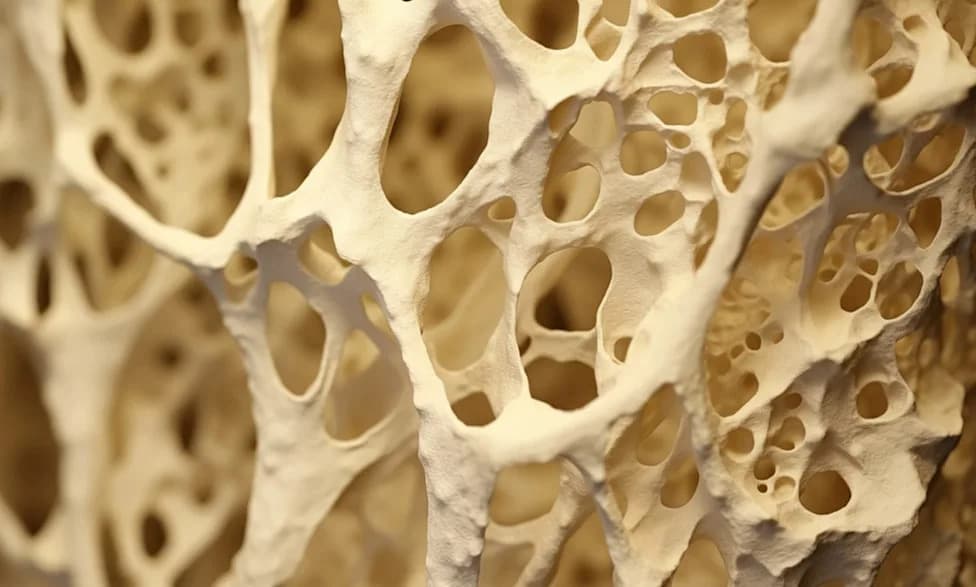
A blurry microscopic view of bone marrow cells, highlighting the detailed and spongy texture. The abstract and scientific illustration provides a close-up look at the cellular structure essential for medical and biological studies.LaurieCu on Magnific
Summary image: A blurred microscopic view highlights the spongy, intricate texture of bone marrow cells and the cellular architecture relevant to bone regeneration research.
A small clinical study reports that a single intravenous infusion of a woman’s own slightly modified bone marrow cells reduced fractures in women with advanced osteoporosis by 94% across the treated group. The approach uses autologous marrow cells that are briefly treated to add a temporary sugar residue that helps the cells home to bone, stimulating new bone formation without gene editing.
How the Treatment Works
Bone is continually rebuilt by two complementary cell crews: one removes old bone and the other lays down new bone. Menopause and declining estrogen tip that balance toward excessive bone loss, leaving the interior (trabecular) bone porous and fragile. Existing medicines mainly slow bone loss or support formation and typically must be taken long term.
Researchers harvested bone marrow from each patient’s hip and expanded the marrow-derived precursor cells in culture. They then briefly treated those cells with a single sugar residue and a natural enzyme so the cells could stick to blood vessel walls inside bone marrow and exit the circulation where they are needed. The sugar attachment is temporary (it naturally wears off within ~48 hours). No genes were edited and no intracellular components were altered.
Study Details and Results
Ten women aged 50–75 with advanced osteoporosis and at least one prior fracture received the autologous, sugar-modified cell infusion and were followed for up to six years. Across the group, fractures fell from eight per year before treatment to one every two years afterward — a 94% reduction when comparing the reported annualized fracture rates. Hip biopsies taken four months after infusion showed nearly double the bone tissue compared with baseline samples. High-resolution wrist scans at two years demonstrated improved internal bone structure. Participants reported roughly one-third less pain and noticeably improved ease with daily movement.
Safety and Caveats
All women went home the day after the infusion. No infusion reactions were reported, and over six years none developed cancer, ectopic bone growth, or other unexpected conditions attributed to the therapy. Important caveats remain: this was a very small, non-randomized study (10 participants) and requires confirmation in larger, controlled trials to establish efficacy, durability, and rare adverse-event profiles.
Takeaway: The results are promising and suggest that a one-time, autologous, temporary sugar modification can direct marrow-derived cells to bone and stimulate meaningful regeneration, but larger trials are needed before clinical adoption.
Broader Potential
Because the method helps repair cells home to damaged tissues, it may have wider applications for regenerative therapies in other organs or injuries that could benefit from targeted cell delivery and tissue rebuilding.
Originally published on Forbes.com.
Help us improve.