The European Commission has proposed the E.U. Kids Act, which would bar children under 13 from social media and require parental supervision for 13–15‑year‑olds. The rules would extend to video platforms, many online games and AI chatbots and could affect roughly 450 million people across 27 member states. The draft calls for mandatory age verification — including an optional E.U. app offering passport uploads, in‑person checks or bank-app linking — and has drawn criticism from digital-rights groups over privacy and centralized gatekeeping.
EU Proposes Sweeping 'Kids Act' to Restrict Children’s Access to Social Media

Bianca Otero/ZUMAPRESS/Newscom
The European Commission has proposed the E.U. Kids Act, a major regulatory effort that would sharply limit children's access to online platforms across the 27-member bloc. The draft seeks to place primary responsibility on platforms to prevent minors from using services designed for adults and to require age verification in many cases.
What the Proposal Would Do
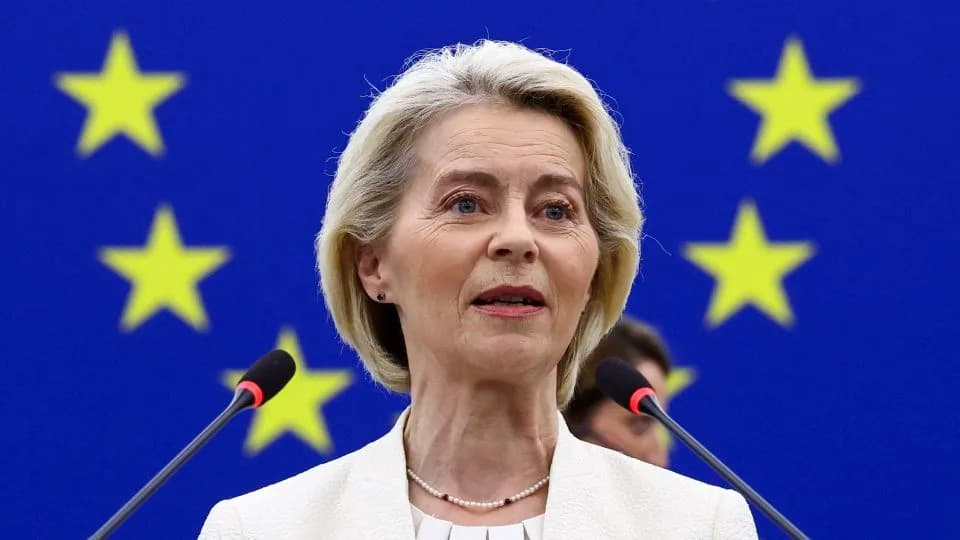
Published last week and announced by European Commission President Ursula von der Leyen in her 2026 State of the Union address, the Kids Act would:
- Effectively ban children under 13 from accessing social media;
- Require parent-supervised accounts for users aged 13–15;
- Apply beyond traditional social networks to include video-hosting sites, many video games, and AI chatbots;
- Require platforms to verify the ages of new account holders and, in some cases, confirm the ages of existing account holders if the provider cannot determine age with a high degree of confidence.
"Because it is not about our minors accessing social media," von der Leyen said. "It is about when and how do we allow social media to access minors."
Age Verification: An E.U. App and Its Options
The proposal acknowledges that mandatory age verification could raise costs for digital-service providers but suggests these could be reduced if companies adopt an E.U.-developed verification solution. According to the Commission, the app would offer several identity checks: uploading a passport or ID card, appearing in person at a designated post office, or connecting an online banking app. The Commission says the tool would store only a one-time age attestation, after which users could present a QR code to confirm their eligibility for restricted sites.
Privacy, Free Speech, and Gatekeeping Concerns
Digital-rights groups warn that centralized age verification and broad restrictions risk concentrating gatekeeping power with regulators and platform operators. The Electronic Frontier Foundation noted that deciding what is "safe" can become a mechanism for limiting access to information and expression.
Critics also raise practical issues: a single verification system could create privacy risks if not implemented with robust safeguards, exclude people without the required documents or banking access, and affect adults who value online anonymity.
Process, Precedent, and Wider Context
The Kids Act would still require approval by E.U. member states and the European Parliament and could take years to come into force. Related moves are already underway: last October, 25 member states signed the Jutland Declaration calling for privacy-preserving age checks, and France moved to ban under-15s from social media before its top court blocked enforcement on privacy and free-speech grounds.
Von der Leyen also signaled broader ambitions to address platform design and harms, saying the Commission will propose a Digital Fairness Act this fall to tackle addictive design features.
What This Means
Many parents and policymakers favor stronger protections for children online. But advocates worry that broad verification mandates and centralized solutions could curtail adults' anonymity and civil liberties, create barriers for marginalized users, and hand significant control over online access to bureaucratic systems and private platforms. The debate is likely to continue as the proposal moves through the E.U. legislative process.
Help us improve.