The Schmidt Ocean Institute's ROV SuBastian found 29 items of human-made litter (27 plastic) across 17 dives into Argentina's Mar del Plata Submarine Canyon in July–August 2025, at depths from 1,120 to 3,820 metres. Notable finds included a Mi Goreng noodle packet at ~1,920 m and a nylon rope with a hook at ~1,949 m. Researchers suspect much of the debris originates from offshore vessels, particularly fishing boats, and observed marine organisms already colonising some pieces. The team plans broader surveys to determine how widespread deep-sea litter is.
Mi Goreng Packet and Other Plastic Found Nearly 2 km Down in Mar del Plata Submarine Canyon
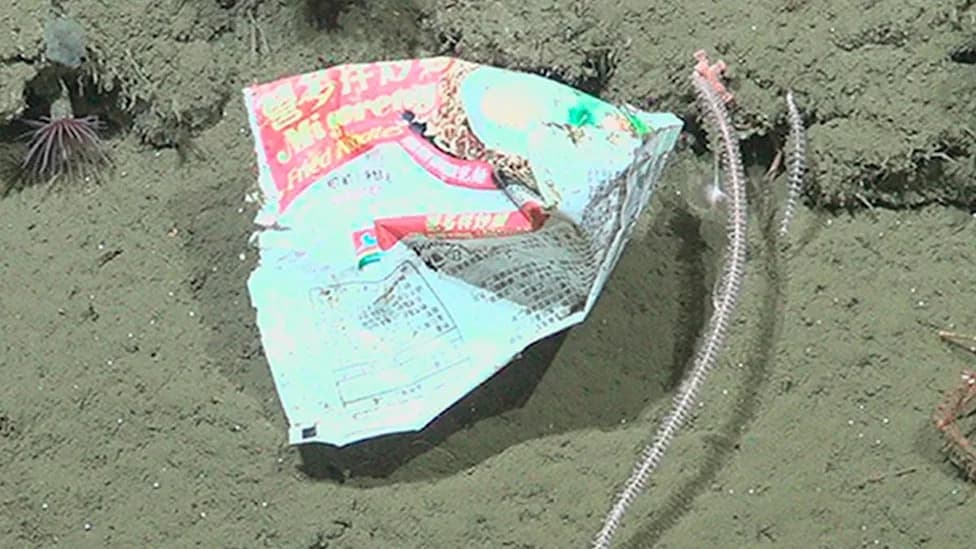
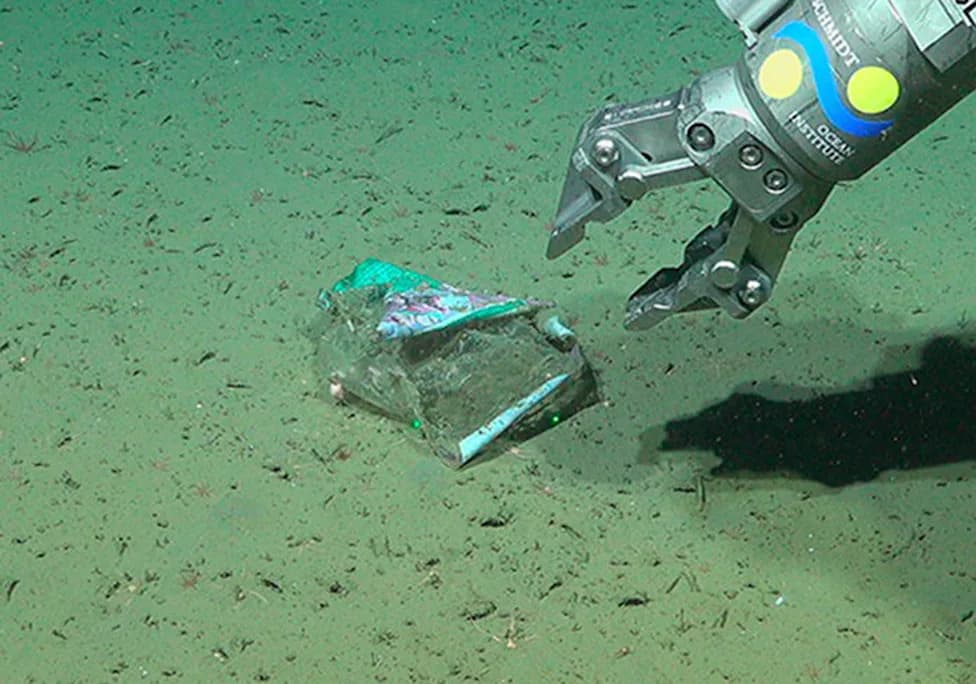
A Mi Goreng noodle packet was just one of 27 pieces of plastic trash found in Mar del Plata Submarine Canyon. (Schmidt Ocean Institute/ROV SuBastian, CC BY 4.0, expedition FKt250712/Teso et al., PLOS One, 2026)
During a 2025 research expedition, the Schmidt Ocean Institute's remotely operated vehicle SuBastian discovered human-made litter deep inside Argentina's Mar del Plata Submarine Canyon — including a brightly coloured Mi Goreng instant noodle packet resting on the rocky seafloor at about 1,920 metres.
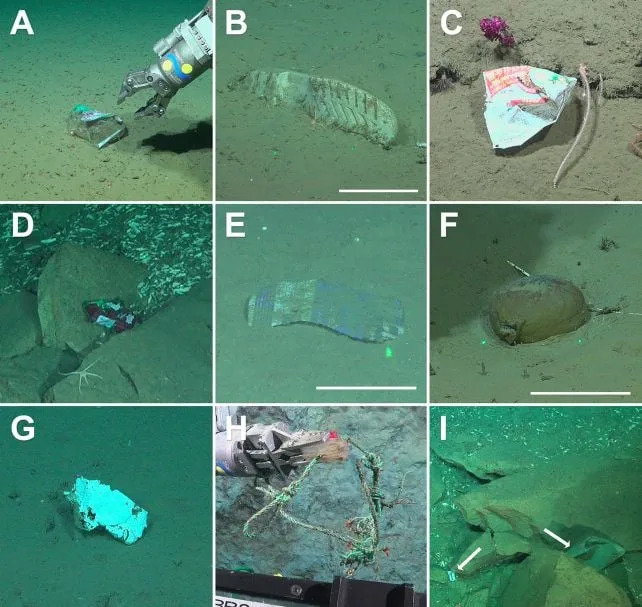
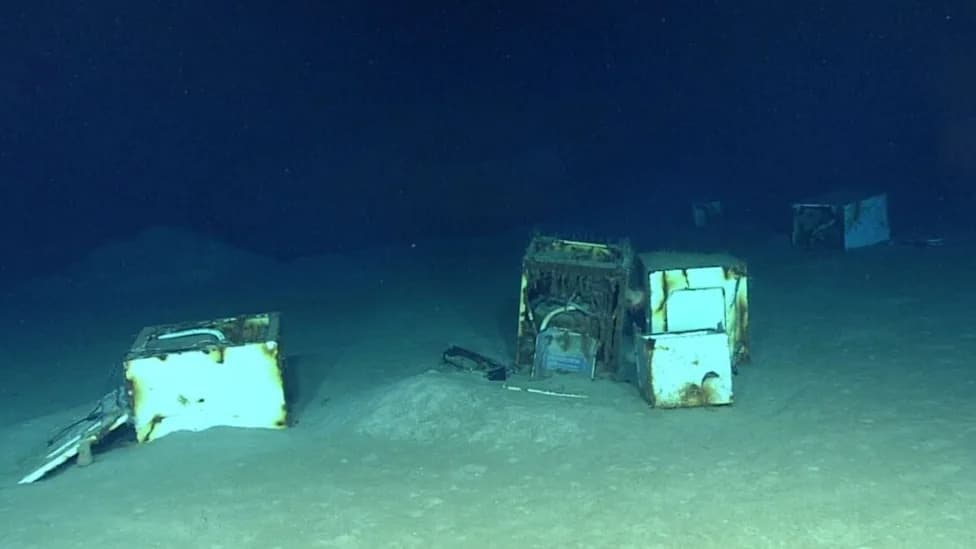
Some of the plastic trash found on the seafloor, including food packaging, a rubber boot, and rope. (Schmidt Ocean Institute/ ROV SuBastian, CC BY 4.0, expedition FKt250712/Teso et al.,PLOS One, 2026)
Expedition and Findings
Between July and August 2025, researchers launched SuBastian from the research vessel Falkor (too) for 17 ROV dives across the canyon. The team documented 29 pieces of human-made litter — 27 of them plastic — at depths ranging from 1,120 m to 3,820 m (3,675–12,533 feet). Items included food wrappers, a plastic bag, a discarded cup, a nylon rope with a hook (recorded at 1,949 m), and even a rubber boot.
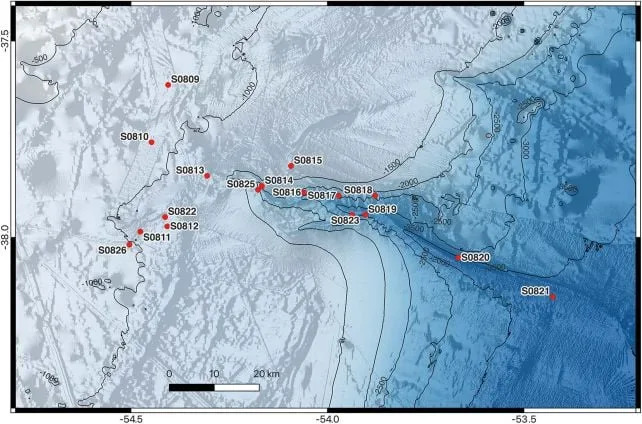
A map of the 17 dives. (Teso et al.,PLOS One, 2026)
Why the Canyon Matters
Submarine canyons act as conduits that funnel water, organic material and sediment from the surface into the deep sea, often creating biodiversity hotspots. The Mar del Plata Canyon sits offshore where the warm Brazil Current meets the cold Malvinas Current — a dynamic region likely to concentrate materials transported by currents. That same channeling appears to trap debris.
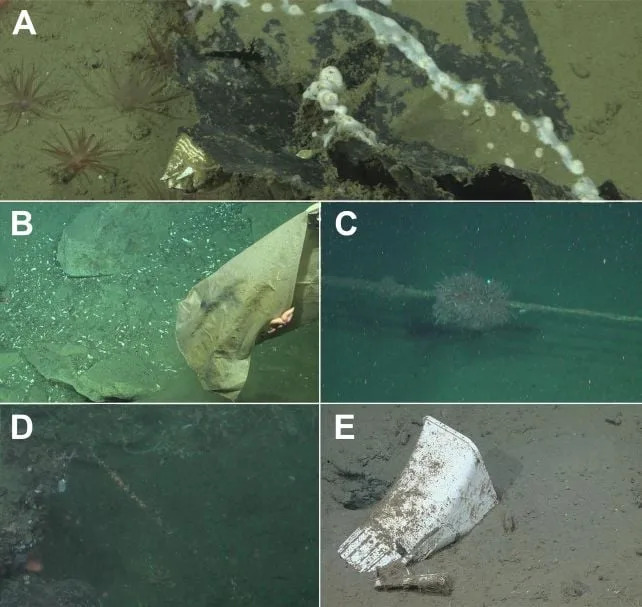
Some of the marine life making a home in the trash. (Schmidt Ocean Institute/ROV SuBastian, CC BY 4.0, expedition FKt250712/Teso et al.,PLOS One, 2026)
Possible Sources
Mar del Plata lies hundreds of kilometres offshore and is detached from the continental shelf, making direct coastal dumping an unlikely source. Researchers from the Grupo de Estudios del Mar Profundo de Argentina (GEMPA) note that the composition of the debris — ropes, fishing-style gear, shelf-stable food packaging — is more consistent with waste from offshore vessels, particularly fishing boats.

Subscribe to ScienceAlert's free fact-checked newsletter
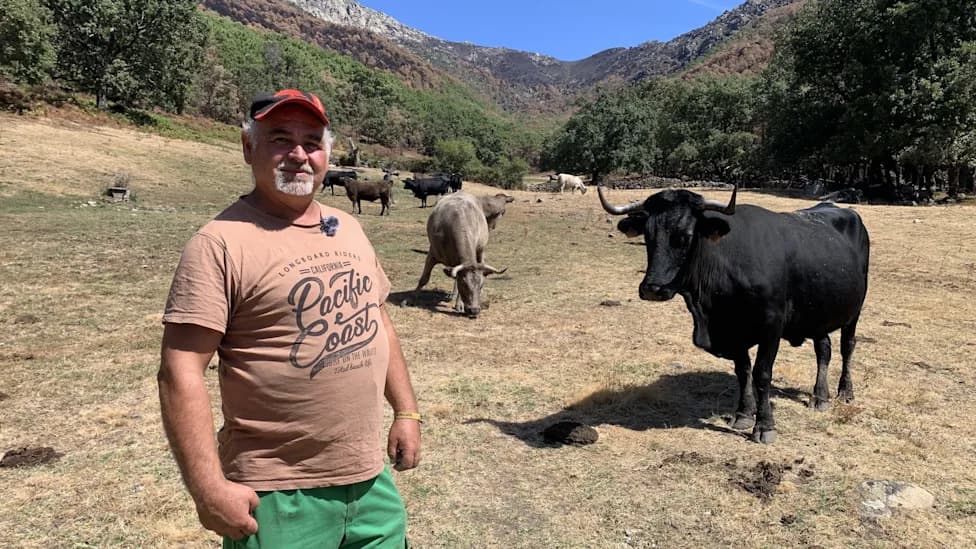
"The main goal of the expedition was to study deep-sea benthic biodiversity," said marine biologist Diego Urteaga (GEMPA). "However, the presence of marine litter was so evident that we felt it was important to document it and share our observations with the scientific community."
Biological Interactions and Ecological Concerns
Some of the items were already being used by local fauna: arthropods sheltering under a black plastic sheet, sea stars colonising a plastic bag, and polychaete worms inhabiting a length of rope. While animals sometimes exploit artificial substrates, researchers warn that long-term ecological consequences are poorly understood. Colonised litter can create artificial habitat, potentially altering community structure and aiding the transport of organisms beyond their natural ranges.
Relative Litter Density and Next Steps
Although litter was found on 10 of the 17 dives, density varied and was relatively low compared with some other submarine canyons directly connected to coastal sources. In canyons with strong coastal inputs, researchers have recorded 50–80 items per kilometre; on the single Mar del Plata transect where density was calculated, the team recorded fewer than three items per kilometre.
Investigators emphasize that 29 recorded items underestimate total litter: smaller objects or debris hidden beneath sediment could have been missed by the ROV's cameras. The team plans to expand surveys into additional canyons off Argentina to assess how widespread deep-sea litter is and to better place Mar del Plata in a regional context.
Publication and Context
The findings are published in PLOS One (Teso et al., 2026) and were documented with imagery from Schmidt Ocean Institute / ROV SuBastian (CC BY 4.0, expedition FKt250712). The study underscores how far-reaching marine litter has become and highlights the need for improved waste management at sea and stricter practices among offshore operators.
Note: The expedition's primary objective was biodiversity research; documenting litter was an important secondary outcome that may inform future conservation and policy efforts.
Help us improve.