The marbled salamander has returned to Middlesex Fells after nearly a century thanks to a decade-long reintroduction and habitat restoration effort led by Zoo New England and partners. From 2016–2024, 529 juveniles were released; in 2023 larvae were recorded hatching in Fells vernal pools for the first time in over 90 years. Recent surveys found breeding adults, so releases ended in 2024 while monitoring continues.
After 529 Releases, Marbled Salamanders Make a Comeback in Middlesex Fells
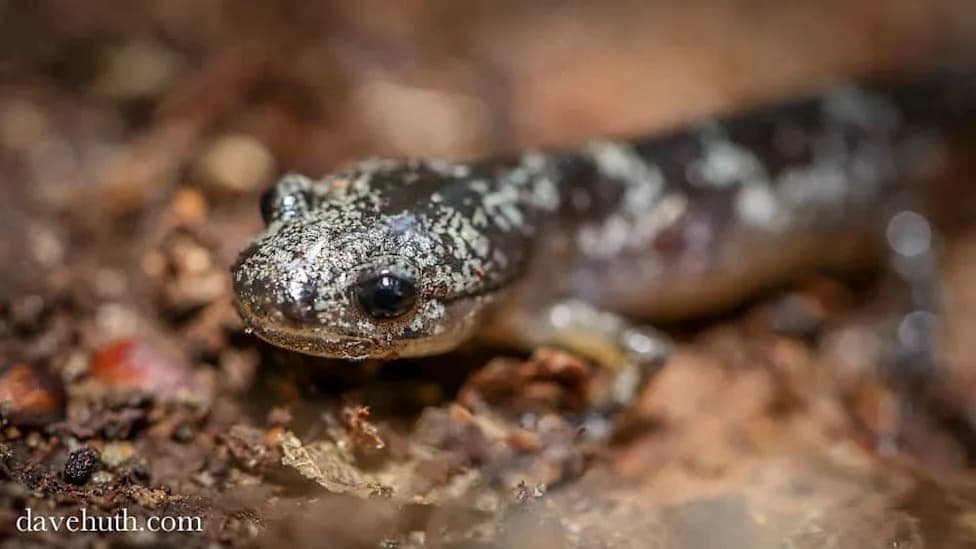
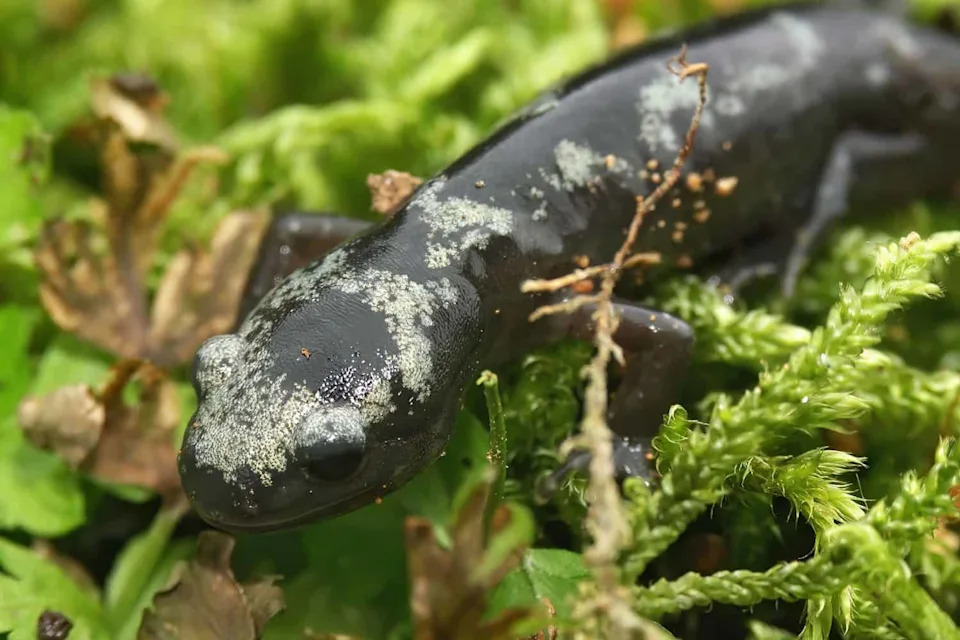
head of a salamander with big eyes, small legs, and speckled light pattern on dark body© Dave Huth/CC BY-NC 2.0
Conservation work led by Zoo New England has helped marbled salamanders (Ambystoma opacum) return to Middlesex Fells Reservation in Massachusetts after nearly a century of local absence. Between 2016 and 2024, a coordinated reintroduction and habitat-restoration program released 529 juveniles and monitored their survival, movement and breeding.
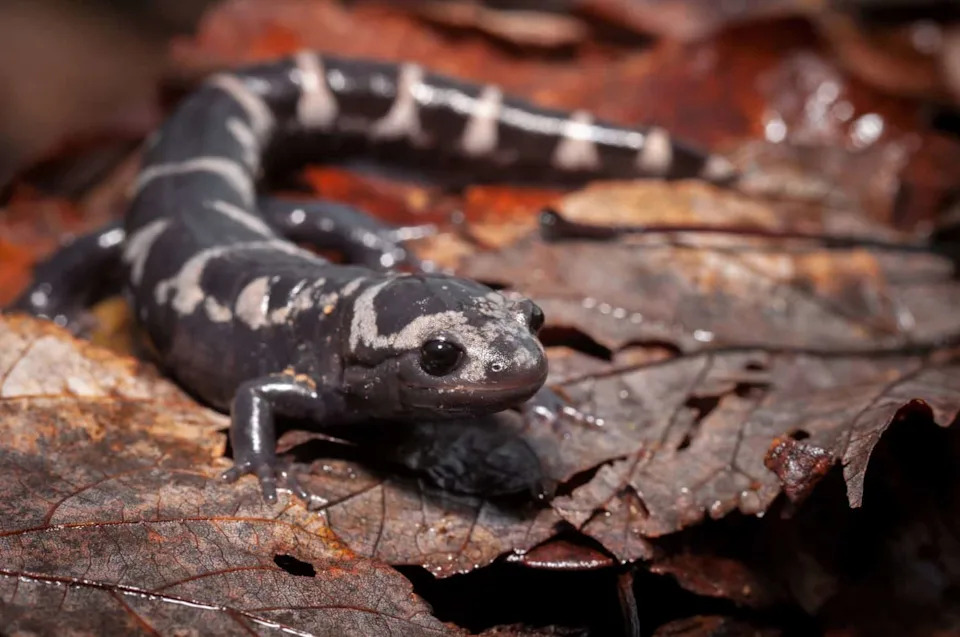
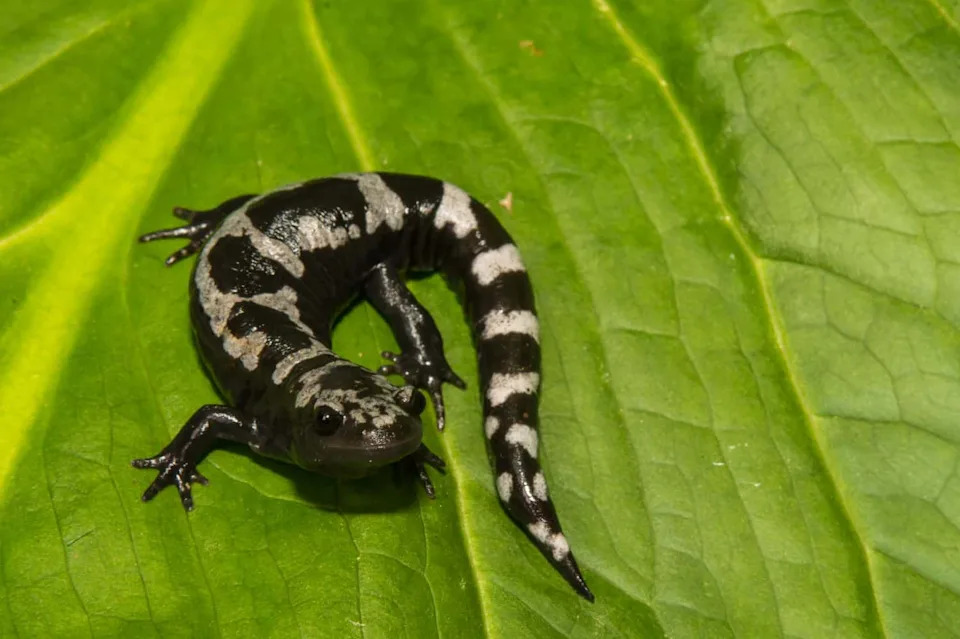
Adult marbled salamanders are once again being found in Middlesex Fells in Massachusetts.©Mike Wilhelm/Shutterstock.com
A Long-Awaited Return
Marbled salamanders were once common in the Fells, but urbanization, habitat fragmentation and loss of vernal pools led to their local disappearance by the 1930s. Beginning in 2016, Zoo New England partnered with MassWildlife, Friends of the Fells and local schools to restore habitat and reintroduce juveniles collected from healthy populations in western Massachusetts.
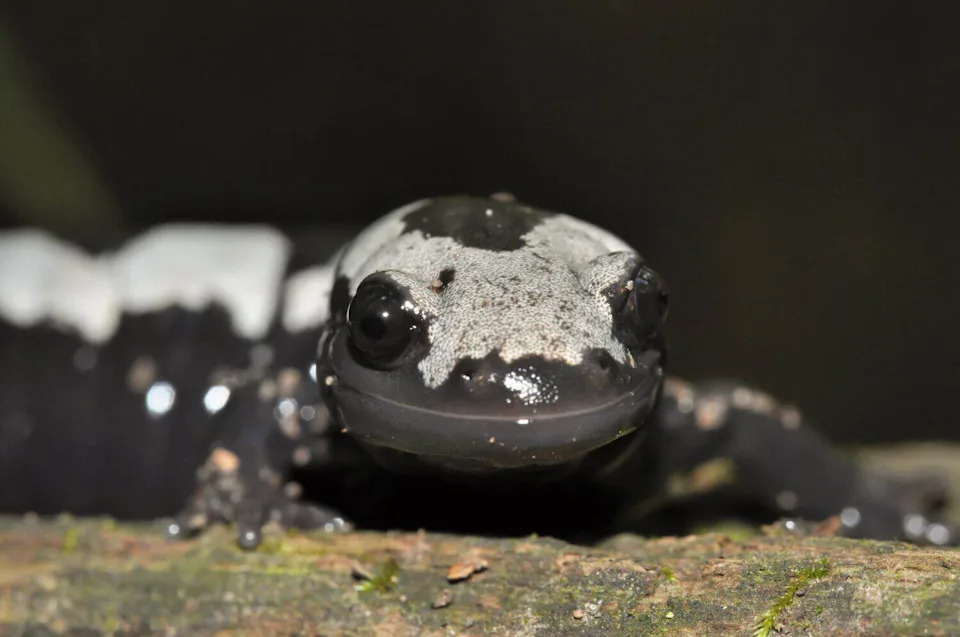
Marbled salamanders were brought back to Middlesex Fells after years of relocating juvenile salamanders from western Massachusetts to the Fells.©Mike Wilhelm/Shutterstock.com
How the Program Worked
The multi-year effort focused on boosting early survival and reducing genetic risks. Newly hatched larvae were collected from source pools, raised to juvenile stage, and then released into carefully selected sites in the Fells. Juveniles with similar genetic backgrounds were distributed across locations to limit inbreeding. Releases favored areas with protected, low-predator vernal pools to maximize chances that eggs and larvae would survive to adulthood.
Juvenile marbled salamanders have not been released in Middlesex Fells since 2024.©Wirestock Creators/Shutterstock.com
Signs of Success
In 2023 researchers documented marbled salamander larvae hatching in Middlesex Fells vernal pools for the first time in more than nine decades — the clearest indication that the population was reproducing locally. During a recent post-rain survey, Zoo New England staff observed 15 adult marbled salamanders at breeding pools, including individuals using a vernal pool not previously recorded as suitable.
Marbled salamanders went locally extinct due to urbanization, deforestation, and habitat fragmentation.©Jay Ondreicka/Shutterstock.com
“The recent sightings show us that our reintroduction efforts have worked, and that salamanders are persisting at this site even though we have not released salamanders here since 2024,” said Matthew Kamm, Associate Director of Field Conservation at Zoo New England.
Why Releases Stopped
Because the salamander population demonstrated natural reproduction and persistence, active releases ended in 2024. Conservationists will continue seasonal monitoring and outreach, but human intervention to maintain population numbers is no longer considered necessary at this site.
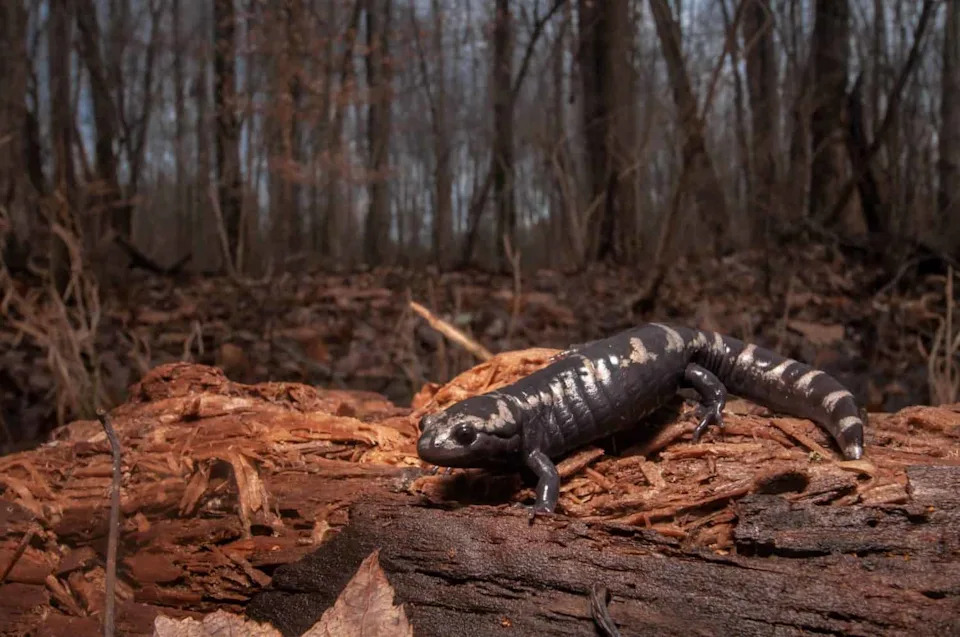
Marbled salamanders still face threats of drought, habitat loss, predation, and more.©Mike Wilhelm/Shutterstock.com
Ongoing Challenges
Although marbled salamanders are listed as a species of least concern globally, local populations remain vulnerable. Key threats include climate change, drought, habitat loss and fragmentation, disease and predation. The Fells project demonstrates that restoring connected, protected habitat and applying careful release strategies can reverse local extinctions — but ongoing monitoring and habitat protection remain essential.
Community Role
Local schools, volunteers from Friends of the Fells, and state partners played important roles in collection, release and monitoring. Their involvement underscores that collaborative, community-driven conservation can produce measurable results.
What’s next: continued monitoring, habitat maintenance, and public education to ensure the restored population remains resilient to future threats.
Help us improve.