The Sanxingdui site yielded an axe-shaped object, K7QW-TIE-1, whose metallographic analysis indicates a composition of over 90% iron and roughly 7% nickel with even nickel distribution—consistent with meteoritic iron. If confirmed, it would be one of only 13 meteoritic iron finds in China and the earliest such object recorded in Southwest China. Recovered from a sacrificial pit, the implement may have held ritual significance and provides new insight into regional Bronze Age metallurgy.
Bronze‑Age Axe at Sanxingdui Likely Made From Meteoric Iron
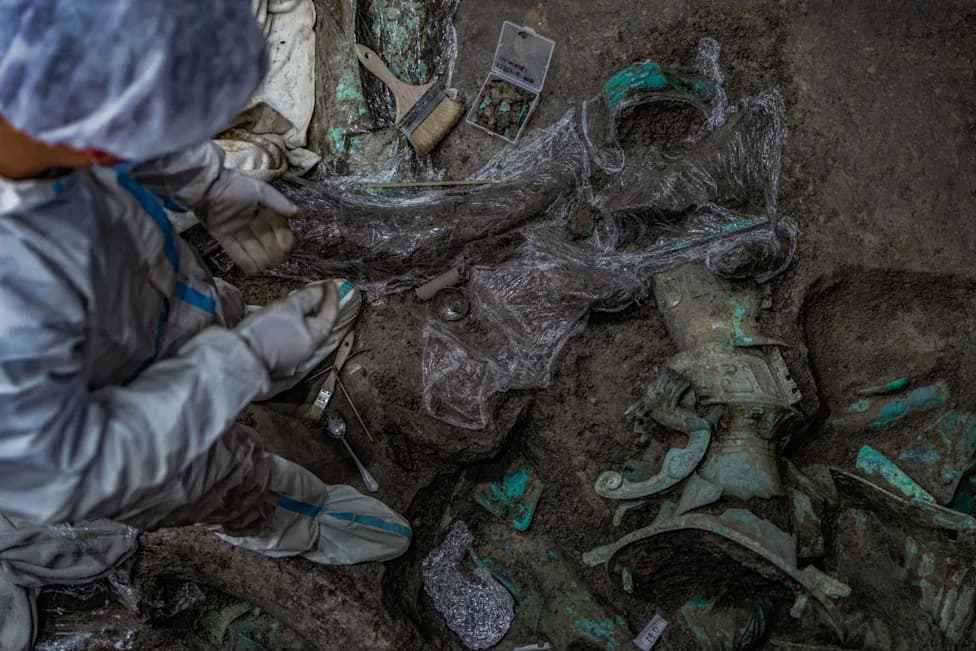
This Ancient Weapon Is Not of This EarthVCG - Getty Images
The Sanxingdui archaeological complex in Guanghan, China, is famous for its unusual bronze masks, figurines and deep sacrificial pits. A recent metallurgical study examines a fragmented, axe-shaped implement from Pit No. 7 and presents evidence that the object was fashioned from meteoritic iron rather than smelted terrestrial iron.
Scientific Findings
Researchers analyzed the three-piece artifact catalogued as K7QW-TIE-1 using metallographic techniques. The object showed little evidence of heavy cold-working and a composition measured at over 90% iron with roughly 7% nickel. Crucially, the nickel is distributed evenly through the metal, a chemical signature consistent with meteoritic iron and uncommon for Bronze Age artifacts in the region, where iron-smelting had not yet been developed.
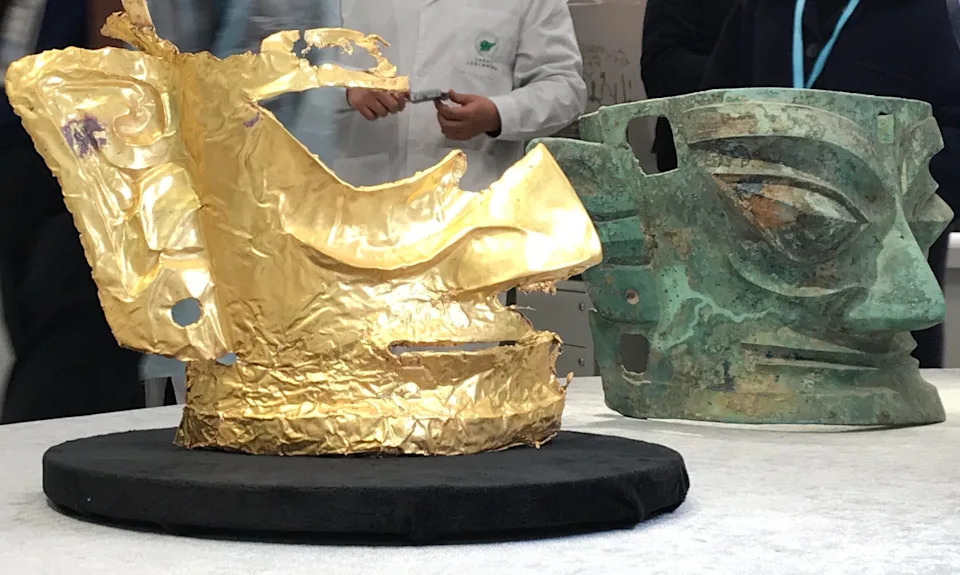
A broken gold mask found in a sacrificial pit at the Sanxingdui siteVCG - Getty Images
The study concludes that the composition and microstructure are consistent with a meteoritic origin for K7QW-TIE-1.
Context and Significance
If confirmed, K7QW-TIE-1 joins a very small group of meteoritic iron objects recorded in China. It would be one of only 13 such finds nationwide and the earliest example identified so far in Southwest China. Most other Chinese meteoritic objects combine iron and bronze; the Sanxingdui axe and a knife from a Xinjiang cemetery (dated to about 3000 B.C.E.) are notable for being monometallic, made solely of meteoritic iron.
The item was recovered from a sacrificial pit, which raises the possibility that it had ritual or symbolic value beyond any practical function. Although the axe bears no obvious decorative elements, cultures elsewhere in the ancient world, including Egypt and Anatolia, treated celestial metal as special and used it for ceremonial objects. The Sanxingdui residents may likewise have attributed special status to metal known or believed to come from the sky.
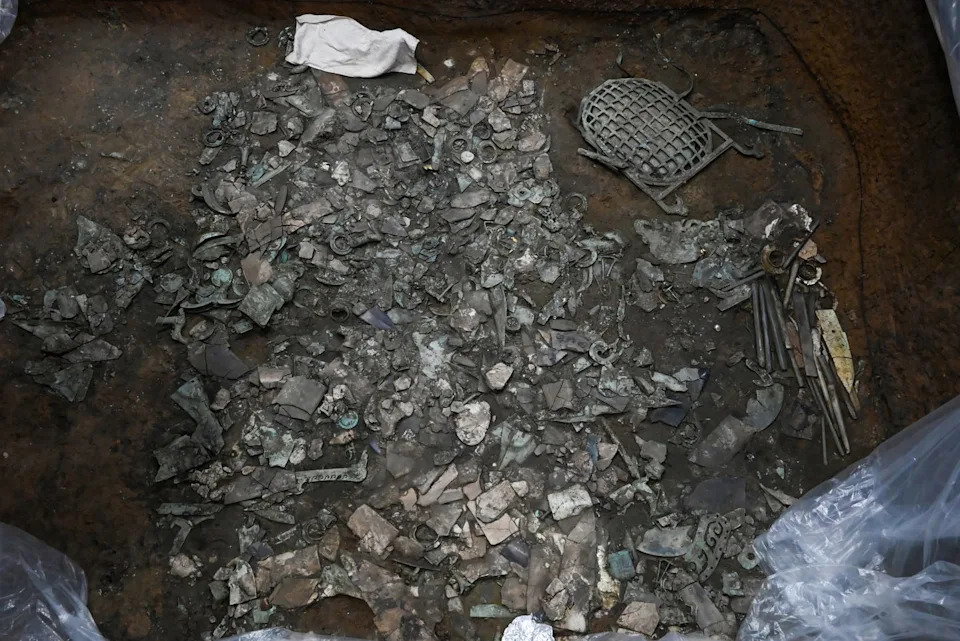
A vast assemblage of artifacts uncovered within Sanxingdui Pit No. 7, photographed in 2022VCG - Getty Images
Implications and Next Steps
Beyond the intriguing cultural questions, the find fills a gap in the metallurgical record of the region and highlights differences between Southwest China and Central Plains practices during the Bronze Age. The artifact does not yet reveal its precise use; further analysis, contextual study of the pit assemblage and comparisons with other early metal finds will be needed to clarify whether K7QW-TIE-1 was a tool, a ritual implement, or both.
In short, the study strengthens evidence that meteoritic iron was used selectively in ancient China and adds a new, enigmatic piece to the story of Sanxingdui and early metallurgy in the region.
Help us improve.