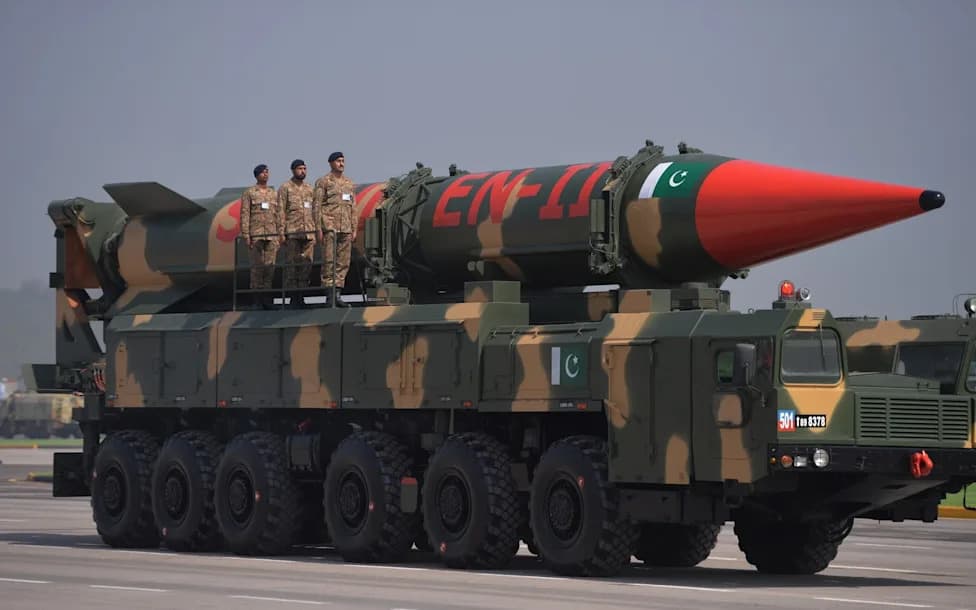
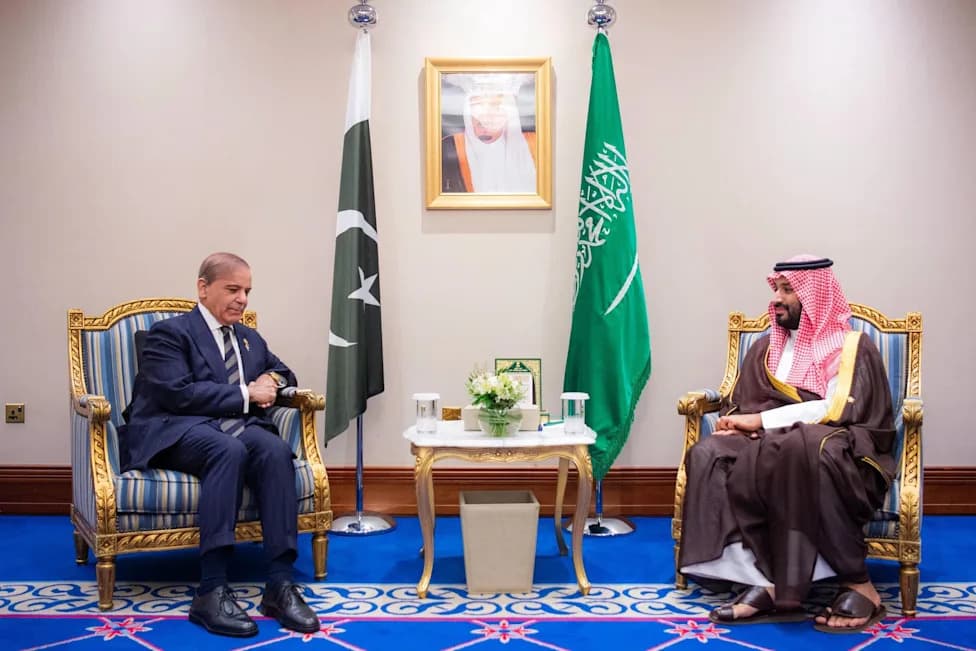
Pakistan’s attempt to serve as both a Saudi defence partner and Washington’s channel to Iran is under pressure as renewed Saudi-Houthi fighting tests a new trilateral defence pact. Islamabad has relayed a Saudi warning to Iran and its army chief spoke with Iran’s foreign minister to push for de-escalation, while officials say no military response is planned. Analysts warn Pakistan lacks the mediation track record of Qatar and that further escalation could turn it from mediator into a direct combatant, straining already stretched forces.
Pakistan's Tightrope: Mediator Role Strained as Saudi-Houthi Fighting Tests Defence Pact
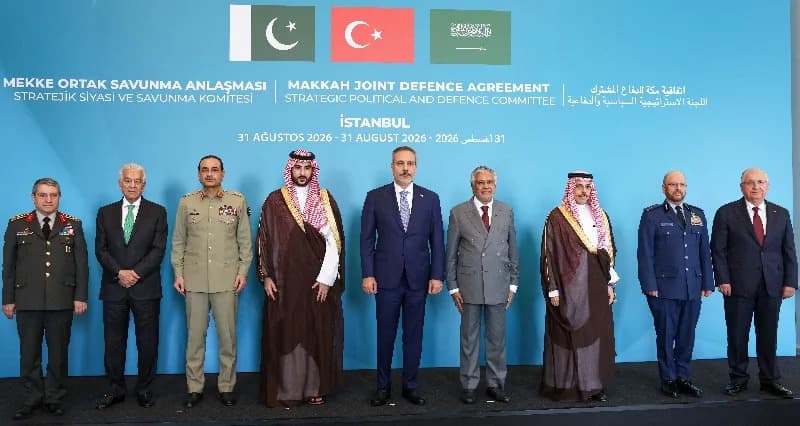
Turkey's Foreign Minister Hakan Fidan, Pakistan's Deputy Prime Minister and Foreign Minister Mohammad Ishaq Dar, Saudi Arabia's Foreign Minister Prince Faisal bin Farhan Al Saud, Turkey's Defence Minister Yasar Guler, Turkish Chief of General Staff General Selcuk Bayraktaroglu, Pakistan's Chief of Defence Forces and Chief of Army Staff Field Marshal Asim Munir, Pakistan's Defence Minister Khawaja Muhammad Asif, Saudi Arabia's Defence Minister Prince Khalid bin Salman, and Saudi Arabia's Chief of General Staff General Fayyadh bin Hamed Al-Ruwaili pose before the first committee meeting under the joint defence accord, the "Mecca Joint Defence Agreement", in Istanbul, Turkey, August 31, 2026. REUTERS/Murad Sezer
ISLAMABAD/DUBAI, Sept 11 – Over the past year Pakistan has tried to walk a narrow diplomatic line: acting as a defence partner to Saudi Arabia while serving as Washington’s informal channel to Tehran. The recent escalation between Yemen’s Iran-backed Houthi forces and Saudi military units is putting that balancing act under growing strain and testing the limits of a new trilateral defence pact.
A Direct Test Of The Defence Pact
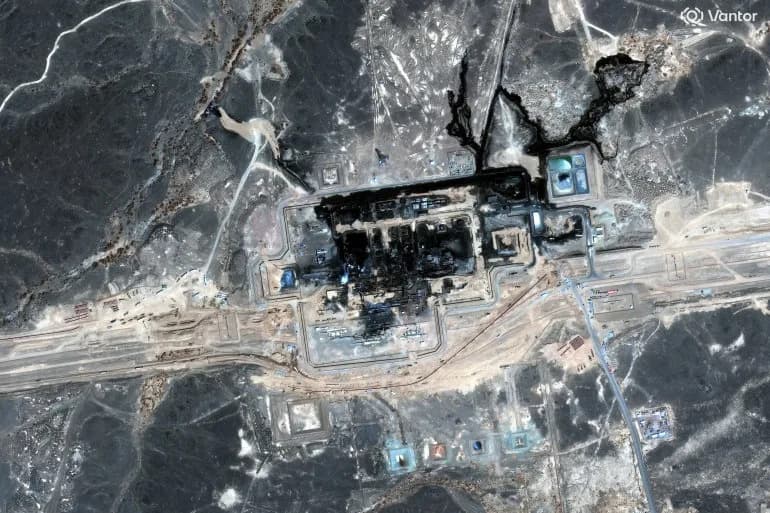
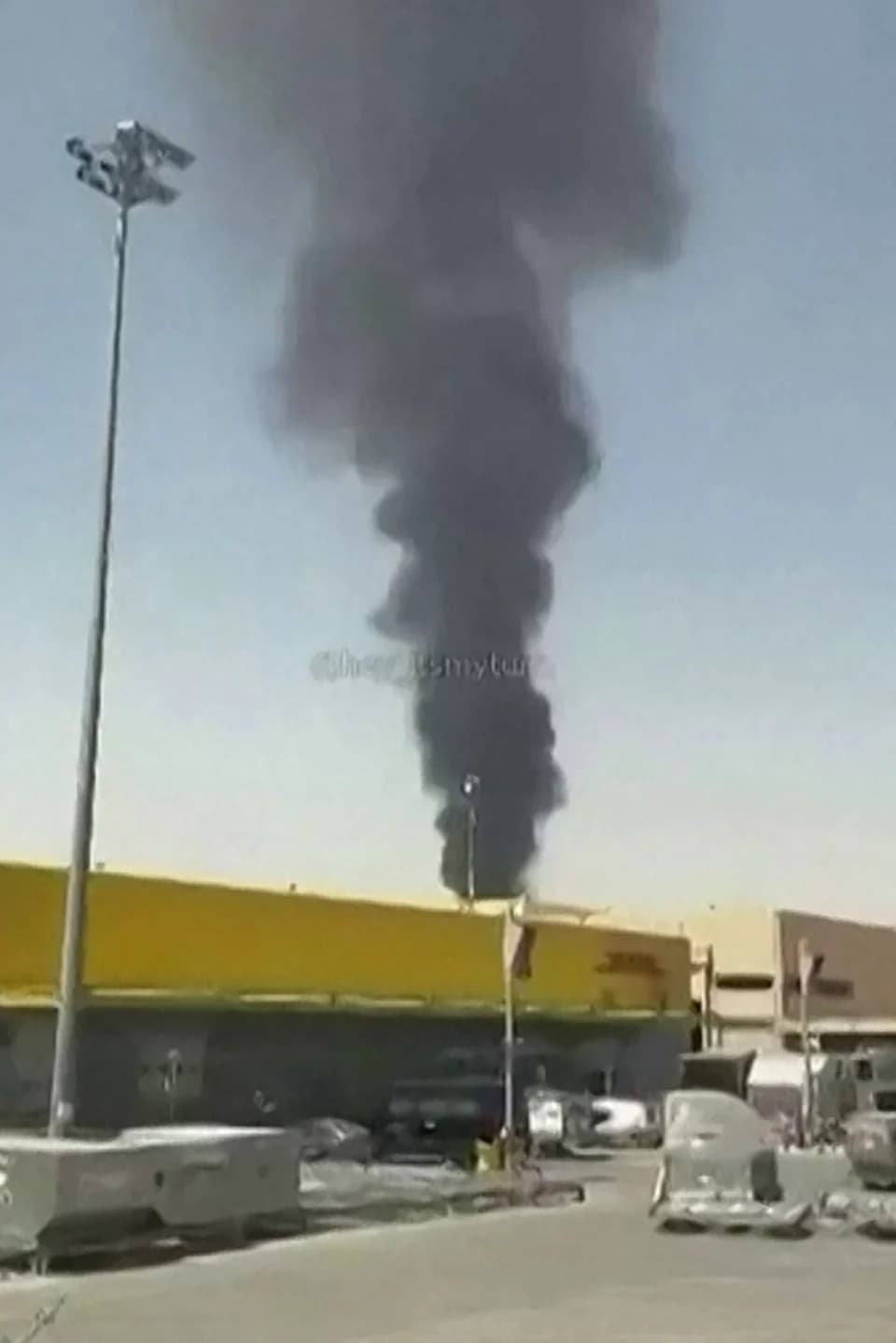
The clashes mark the first serious challenge to the mutual defence agreement signed last month by Pakistan, Saudi Arabia and Turkey, which states that an armed attack on any member should be treated as an attack on all. Pakistan’s officials warn that Houthi operations near the Saudi-Yemen border could draw Islamabad into conflict more readily than the earlier Iranian strikes on Saudi energy infrastructure.
Diplomacy And Warnings
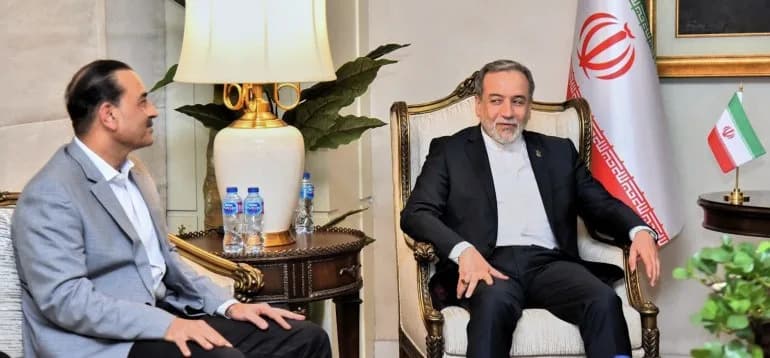
This week Pakistan relayed a Saudi warning urging Iran to restrain its Houthi allies, according to Saudi, Pakistani and Iranian sources. Pakistan’s army chief, Field Marshal Asim Munir, spoke with Iran’s Foreign Minister Abbas Araqchi to discuss “ways to restore diplomatic efforts to de-escalate on all fronts,” a Pakistani source said.
Foreign ministry spokesman Sajjad Haider Khan stated that no military response to the Houthi attacks is currently under consideration and reiterated Pakistan’s preference for restraint, dialogue and diplomacy. Iran has publicly expressed appreciation for Pakistan’s mediation, though some Iranian sources say they privately question Islamabad’s negotiating experience compared with Gulf mediators such as Qatar.
Strategic And Economic Stakes
Defence agreements with Gulf states are a key element of Pakistan’s strategy to secure economic support and investment after years of economic strain. At the same time, Pakistan depends on oil and gas shipments that transit the Strait of Hormuz and the Red Sea—sea lanes that Iran and the Houthis have demonstrated they can disrupt—giving Islamabad strong incentive to avoid alienating Tehran.
Military Commitments And Constraints
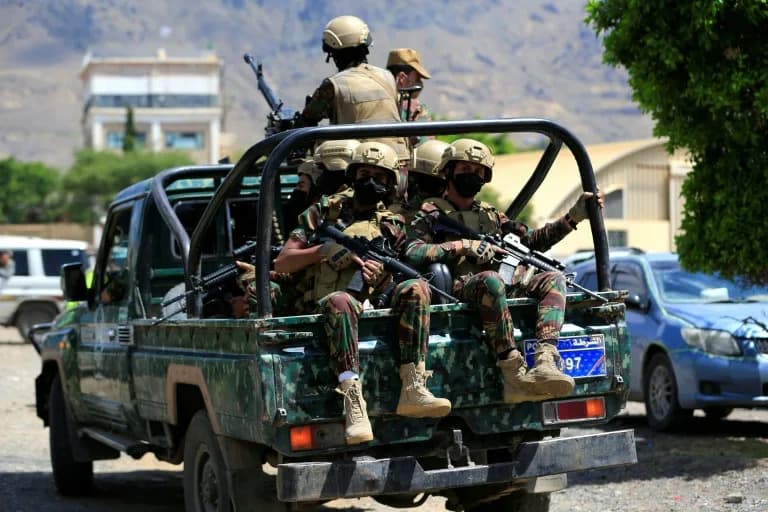
Pakistan has already deployed thousands of personnel and a squadron of fighter jets to Saudi Arabia under earlier arrangements, and Pakistani soldiers have reportedly been posted near the Saudi-Yemen border. With forces also committed along a tense frontier with India and engaged against multiple insurgencies in western provinces, Pakistani commanders say their forces are stretched—making further Gulf commitments politically and operationally daunting.
Analysts’ Views: Mediator Or Combatant?
Some analysts argue Pakistan’s ties to both Riyadh and Washington are precisely why Tehran continues to engage Islamabad: it can carry messages Washington or Riyadh want conveyed. Others warn that deeper involvement—such as air-defence or intelligence support—could shift Pakistan from a mediator into a combatant, risking a wider regional confrontation.
Looking Ahead
Islamabad appears to be recalibrating its posture, limiting the scope of some defence talks with other Gulf states and emphasising diplomacy. The immediate challenge will be to maintain that role without becoming drawn into the conflict—an outcome that would carry significant strategic and domestic risks for Pakistan.
Reporting: Mubasher Bukhari, Parisa Hafezi, Asif Shahzad, Rick Noack and Ariba Shahid. Editing by Rick Noack and Saad Sayeed.
Help us improve.