Researchers used AI to reconstruct how two 5th‑century B.C.E. Etruscan tombs in Tarquinia manipulated sight, sound, and movement to shape funerary ritual. Tomba del Gallo creates an intimate, banquetlike continuity with the dead through plastered walls and narrowing architecture. The larger Tomba dei Demoni Azzurri produces longer reverberations and a startling, fear‑inducing encounter dominated by a blue‑skinned demon—two contrasting ritual philosophies orchestrated through design.
How AI Uncovered the Etruscans' Sensory Trick: Inside the 2,500‑Year‑Old Tomb of the Blue Demons
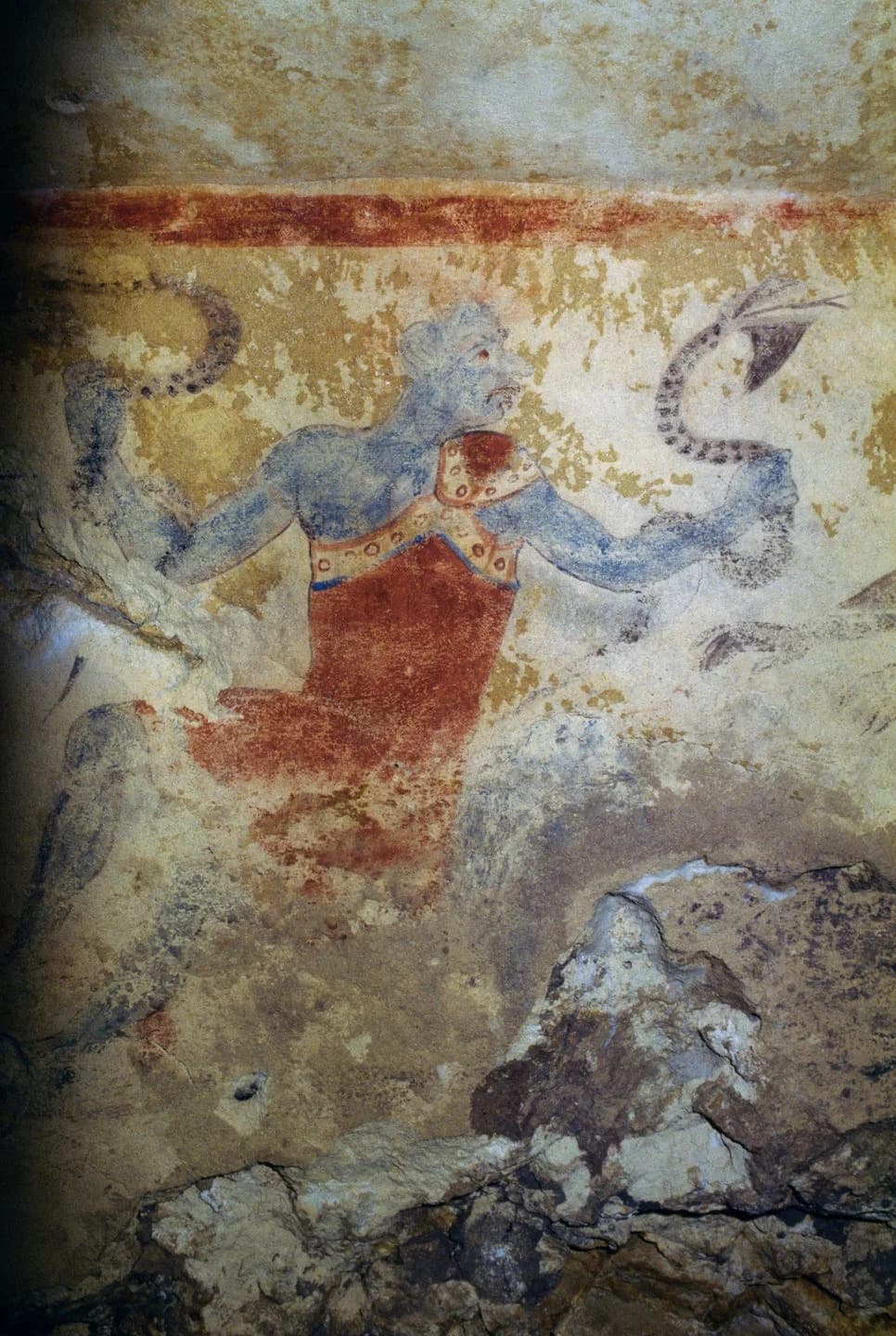
An Ancient Demon Tomb Was Built to Haunt MournersDEA / ARCHIVIO J. LANGE - Getty Images
Transitioning from life to the underworld was a deliberately physical, sensory experience for ancient Etruscans who entered the dim passages of family tombs. These funerary spaces were never intended as mere storage for the dead; as visitors moved deeper into darkness, guided only by candlelight and incense, perception was altered. Painted dancers and musicians could seem to move, echoes swelled and contracted, and a fearsome demon might appear to lunge from the wall.
AI Reconstructs an Ancient Ritual Architecture
Researchers using an AI algorithm trained to model sensory events have reconstructed how visitors to two 5th‑century B.C.E. tombs in the Monterozzi necropolis at Tarquinia (northwest of Rome) would have seen and heard the spaces. The study, by Maurizio Forte (Duke University) and Jacqueline Ortoleva (University of Oxford) and published in the Journal of Archaeological Method and Theory, shows how architecture, materials, and lighting together produced powerful ritual effects.
"Through contrasting sensory strategies, each tomb...shapes in different ways how bodies move, visual focus, and, interestingly, how sound is structurally experienced," the authors write. "Both of the studied tombs functioned as sonic, visual, and spatial environments."
The Two Tombs: Continuity Versus Rupture
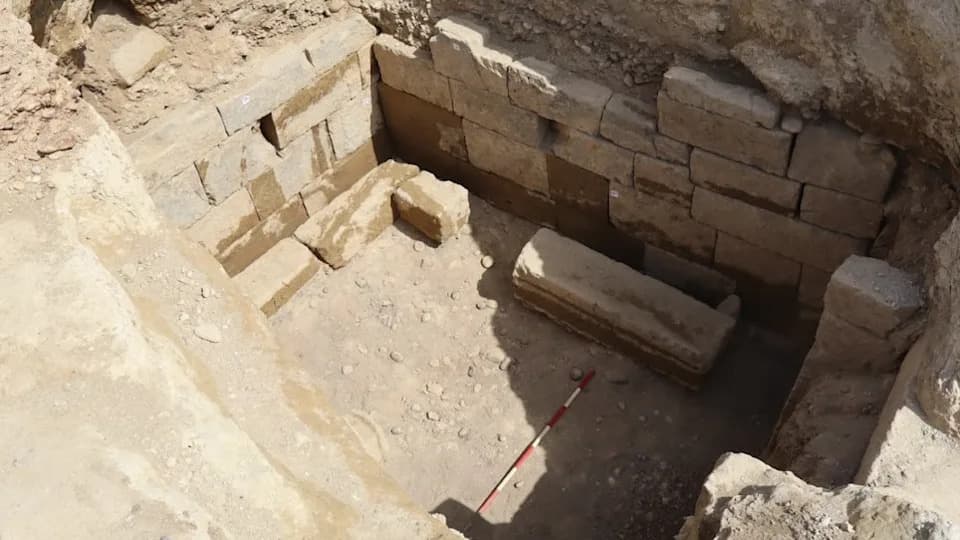
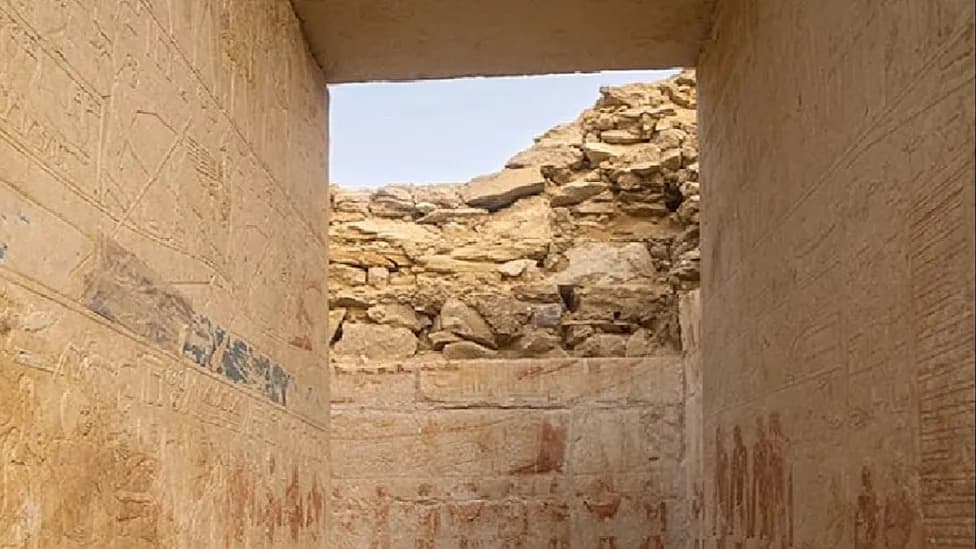
Tomba del Gallo (circa 450–400 B.C.E.) is relatively small and intimate. Cut from limestone and finished with plaster, its burial chamber was painted with banquet scenes, masked dancers, and musicians. Plaster reflects sound, so the chamber's coated surfaces lengthened reverberation beyond what its size would suggest. The sloped entrance passage (dromos) narrows at the threshold, concentrating echoes and forcing visitors to slow, focus, and feel a sense of continuity between the living and the painted banquet. Lighting in the dromos was likely provided by beeswax or tallow candles, while incense burned in the main chamber; flickering flame could make mural figures seem to shift.
By contrast, the larger Tomba dei Demoni Azzurri (the "Tomb of the Blue Demons," c. 450–420 B.C.E.) was designed to produce sudden rupture. Its proportions generate long reverberations—comparable, in acoustic character, to those heard in large ritual halls—and AI simulations show especially prolonged echoes near a banquet mural and shorter reverberation near the wall of painted demons. Archaeologists found charred animal bones in the dromos consistent with cult sacrifices, and looting has removed many human remains and grave goods over time. The tomb's most striking image, a blue‑skinned, red‑eyed demon draped in red and gold and clutching tentacles, would have dominated attention in the combined visual and auditory trance of the space.
How Architecture Made Rituals Tangible
The study argues that Etruscan tomb designers orchestrated sight, sound, and movement to generate specific psychological and ritual outcomes: Tomba del Gallo emphasizes remembrance and controlled communion with ancestors, while Tomba dei Demoni Azzurri aims at disorientation and emotional rupture—an encounter with an aggressive underworld presence. By combining archival work on architecture and mural placement with AI models that simulate acoustic and visual dynamics, the researchers recreated how these spaces guided bodily movement, focused visual attention, and structured auditory experience.
These findings illuminate how the Etruscans used built space itself as a medium of ritual, turning the transition to the afterlife into a tangible, sensorially driven passage for mourners and initiates alike.
Study: Maurizio Forte and Jacqueline Ortoleva, Journal of Archaeological Method and Theory.
Help us improve.