The Return to Vulci project has excavated the "Tomb of the Stone Chamber," a monumental Etruscan burial dating to the seventh century B.C. Despite past looting, archaeologists recovered weapons, chariot parts, gold and bronze plates, high‑quality ceramics and a near‑complete banquet service—some vessels still in place. Imported items, such as a bronze tripod from Rhodes, underscore long‑distance connections. The tumulus may rival Vulci’s giant Cuccumella; the site has been re‑covered for protection and further study will resume in 2027.
Monumental 2,700‑Year‑Old Etruscan Tomb Unearthed at Vulci — Gold, Chariot Parts and Near‑Complete Banquet Set Found
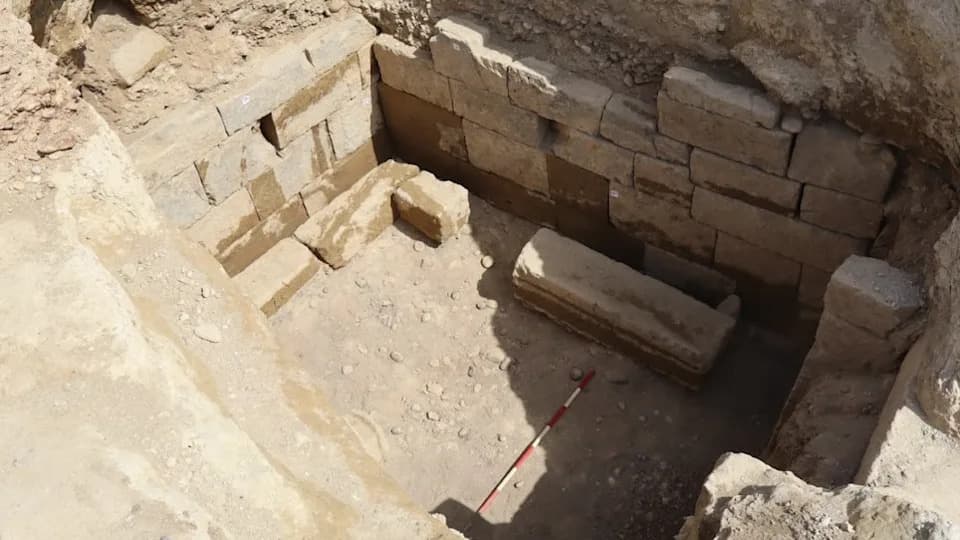
Archaeologists found the Tomb of the Stone Chamber in a cemetery in the ancient Etruscan town of Vulci. | Credit: © Return to Vulci Project
Archaeologists with the Return to Vulci project, working with Italy’s Superintendency of Archaeology, Fine Arts and Landscape for the Province of Viterbo and Southern Etruria (SABAP-VT-EM), have uncovered a monumental 2,700‑year‑old Etruscan tomb north of Rome. Nicknamed the Tomb of the Stone Chamber, the burial—dated to the seventh century B.C.—yielded an extraordinary assemblage of grave goods despite evidence of historical looting.
The Discovery
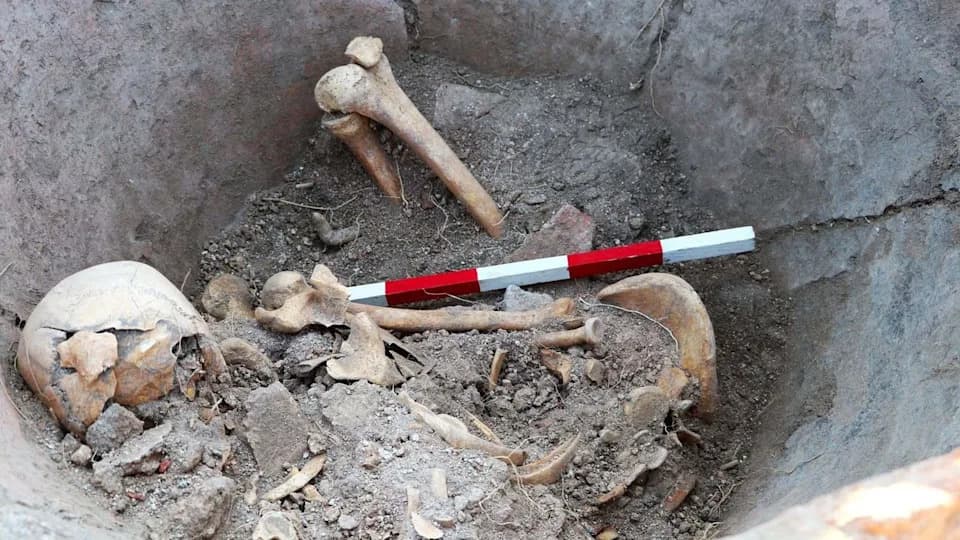
The team excavated the tomb during fieldwork this summer and documented the stone walls of three burial chambers. Beneath collapsed chamber roofs archaeologists found weapons, gold and bronze plates, parts of a chariot, high‑quality ceramics, jewelry, clothing and a rare pair of women’s shoes. A near‑complete banquet service was recovered, with several vessels remaining in their original positions.
Rare Imports and Status Indicators
In side chambers the team recovered rarer imported items, including a bronze tripod produced on the island of Rhodes. The combination of chariot components, weapons, luxury metalwork and fine pottery led project co‑director Christian Mazet of the British Museum to call the burial "a tomb of the very highest rank."
"This is the burial. We are absolutely certain of it," said Christian Mazet, reflecting on the scale and quality of the finds.
Historical Context
The discovery builds on survey work begun in 1889 by French archaeologist Stéphane Gsell, who identified a circular tumulus at Vulci but lacked the resources to fully excavate it. Gsell estimated the tumulus at about 102 feet (31 meters) in diameter and called it a "new Cuccumella"—a reference to the giant Cuccumella tumulus at Vulci, which measures roughly 230 feet (70 meters). Initial measurements by the Return to Vulci team suggest the newly excavated tumulus could rival Cuccumella in scale, and may be even larger.
Significance and Next Steps
Vulci is already renowned for wealthy Etruscan burials discovered in the 19th century. Because the Etruscan language remains only partly understood, monumental burials like this one are crucial for learning about social hierarchy, trade connections and material culture in pre‑Roman central Italy. The tomb and mound have been re‑covered to protect them, and further investigation and conservation work is scheduled to resume in 2027.
Location: Vulci necropolis, northwest of Rome.
Date: Seventh century B.C. (~2,700 years old).
Artifacts: Weapons, chariot parts, gold and bronze plates, high‑quality ceramics, near‑complete banquet set, jewelry, clothing, rare women’s shoes, imported bronze tripod from Rhodes.
Preservation: Tomb re‑covered; research to continue in 2027.
Help us improve.