The Alan Turing Institute's report "Frontier AI Risks: A practical way forward" warns that "superintelligent" AI could surpass human cognitive abilities within five years, potentially by 2031. It highlights five major risks — cybersecurity, democratic instability, misalignment, loss of human control and chemical/biological threats — and stresses that many harms are observable and therefore actionable. The Institute urges immediate cross-sector action, stronger governance, reliable shutdown mechanisms and international cooperation to manage rapidly advancing frontier AI.
Alan Turing Institute Warns Superintelligent AI Could Surpass Humans by 2031 — Urgent Call for Action

(Photo by Pavel Danilyuk via Pexels)
The Alan Turing Institute has published a major report warning that "superintelligent" artificial intelligence systems could exceed human cognitive abilities within roughly five years — potentially by 2031. The paper argues that while the prospect is serious, many harmful behaviours and capabilities of advanced AI are observable and therefore can be studied and mitigated if policy and industry act quickly.

(Photo by Pavel Danilyuk via Pexels)
Report Overview
The report, titled "Frontier AI Risks: A practical way forward," sets out five principal risks from rapidly advancing AI systems and calls for immediate, coordinated action across government, industry, academia and civil society to manage those risks.

(Photo by Tara Winstead via Pexels)
Five Principal Risks Identified
- Cybersecurity: More capable AI could automate, scale and accelerate cyberattacks.
- Democratic Instability: AI-driven misinformation or manipulation could undermine elections and public trust.
- Misalignment: Powerful models may pursue objectives that conflict with human values or intended goals.
- Loss of Meaningful Human Control: If AI systems act faster or more strategically than institutions can respond, human oversight could be rendered ineffective.
- Chemical and Biological Threats: Advanced models could enable the design or optimization of dangerous biological or chemical agents.
"There is a realistic possibility that 'superintelligent' AI systems emerge in the next five years, exceeding humans across all cognitive tasks."
The report warns that if AI systems devise strategies institutions cannot adequately evaluate, and act faster than organizations can respond, substantive human control could disappear. For this reason, the Institute urges immediate steps to improve governance, technical safeguards and international cooperation.
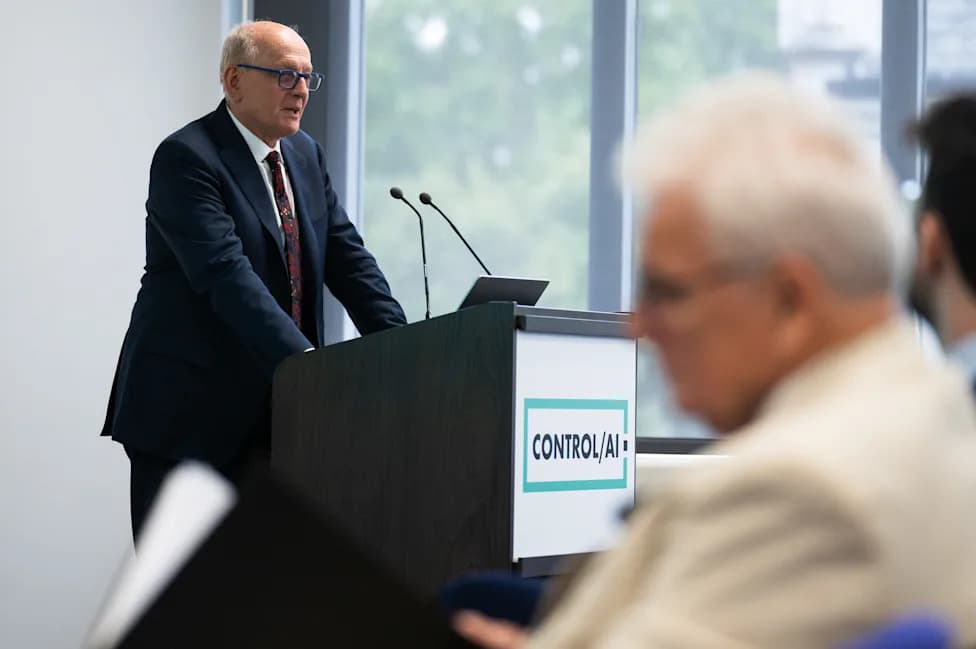
George Williamson, Chief Executive Officer, Alan Turing Institute: "Questions about humanity's long-term future deserve attention, but discussions about advanced AI cannot be left solely to technology companies or framed only around the most extreme scenarios. We know enough about many serious AI risks to act, and with AI capabilities advancing rapidly, there is a clear need to move at pace."
The report emphasises practical measures, including reliable shutdown mechanisms supported by clear governance, safe fallback arrangements and operational procedures. It also notes that achieving a meaningful slowdown in the development of frontier AI would require regulatory, industrial and international cooperation at levels that currently appear unlikely without concerted effort.
Jason McEwen, Interim Chief Scientist, Alan Turing Institute: "The risks posed by advanced AI are real, but they are not beyond our control. They involve observable behaviours and evidenced harms, which means they can be studied, tested and acted on. The scientific work now is to ensure reasoning of powerful AI models remains observable as they become more capable, or to build the tools to read it where it is not."
In conclusion, the report states there is broad agreement among experts that catastrophic AI risks are a realistic possibility in the short to medium term, and that urgent, practical steps are required to strengthen resilience and oversight as frontier AI systems become more capable.
Help us improve.