Marine aviators moving from the AV‑8B Harrier to the F‑35B must overcome deeply ingrained hover and landing habits that can be detrimental in the newer jet. The F‑35B automates many control tasks but supplies vastly more sensor data, increasing cognitive demands. Pilots say the most effective remedy is focused simulator time and repetitive, deliberate practice to replace old reflexes with F‑35‑specific techniques.
Ex‑Harrier Pilots Must 'Unlearn' Muscle Memory To Master The F‑35B
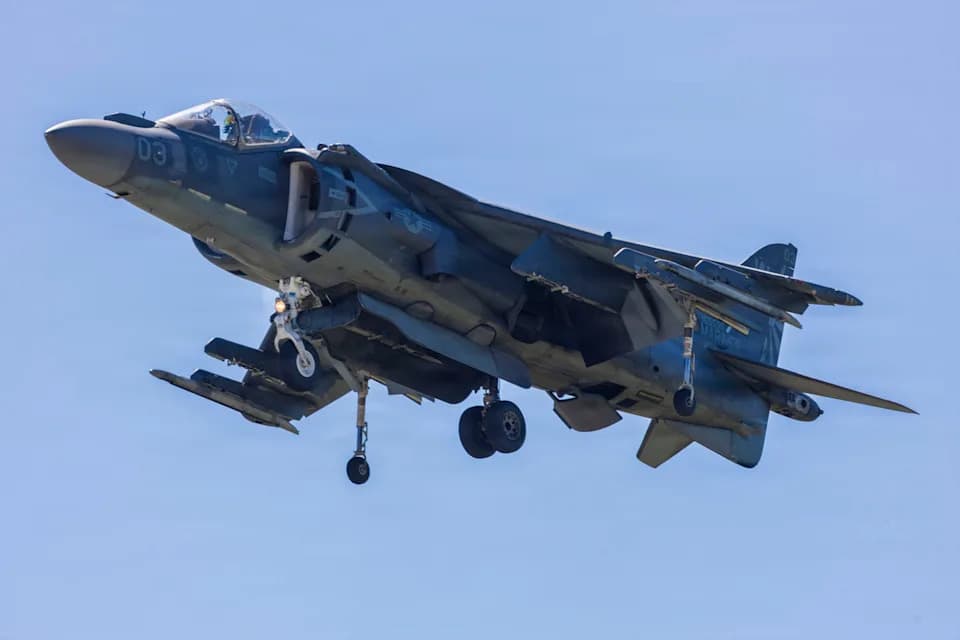
A US Marine Corps AV-8B Harrier II with Marine Attack Squadron (VMA) 223, Marine Aircraft Group 14, 2nd Marine Aircraft Wing, flies over Marine Corps Air Station Cherry Point, North Carolina.U.S. Marine Corps photo by Lance Cpl. Bryan Giraldo
Marine aviators transitioning from the retired AV‑8B Harrier to the F‑35B Lightning II report a steep retraining curve: years of Harrier muscle memory and shipboard hover techniques can be counterproductive in the newer jet. While the F‑35B automates much of the physically demanding flying, it also delivers a far larger stream of sensor and mission data that pilots must learn to manage.
Why Harrier Training Creates Deep Habits
The Harrier required constant manual inputs: directional control, a hand throttle and a nozzle lever that vectored thrust. Pilots practiced precise box‑pattern adjustments — left, back, right, forward — pausing after each tiny correction to keep the aircraft steady while hovering over a moving ship. That approach, honed over hundreds of hours, creates fast, automatic reactions under stress.
How The F‑35B Differs
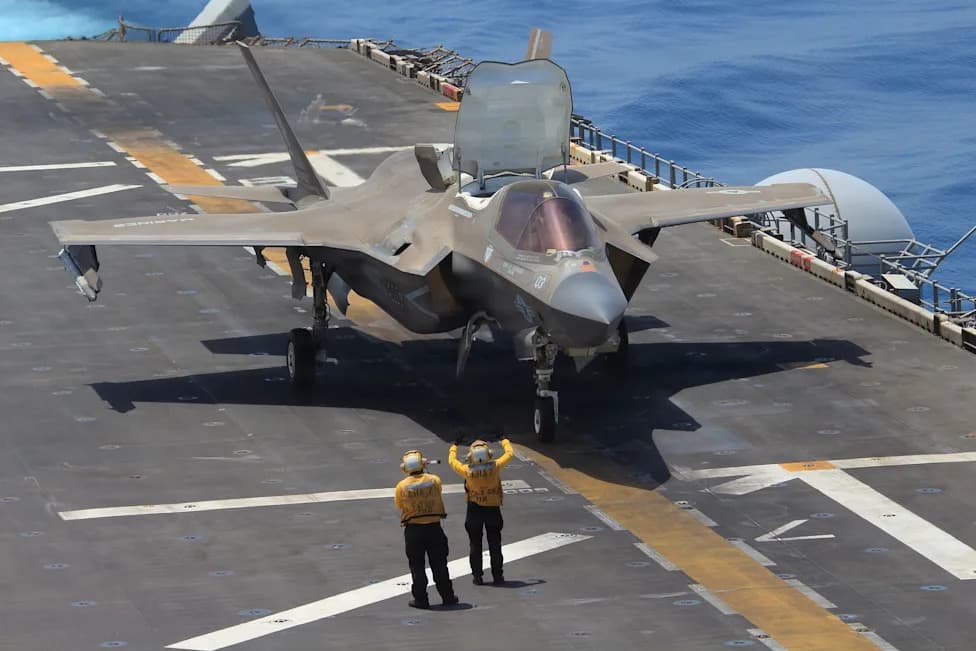
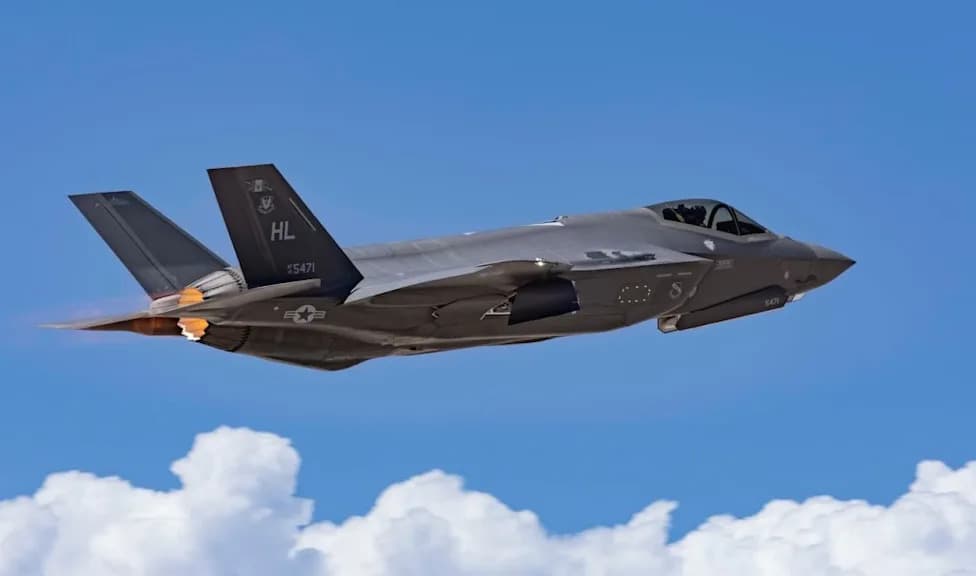
By design, the F‑35B automates many of the fine control tasks that occupied Harrier pilots. Its advanced flight‑control and speed‑management systems can maintain a stable hover and even match the speed of a ship, reducing the need for continuous manual inputs. But because the F‑35 reacts differently to pilot inputs, instinctive Harrier corrections — for example, pulling back and adding power to arrest an approach — can instead cause the F‑35 to accelerate or climb.
The Real Challenge: Information Overload
Beyond flight controls, the F‑35 is a high‑performance sensor and networking platform. It fuses onboard sensors with data from other platforms into a single battlefield picture. That dramatically expands tactical options — air‑to‑air engagement, suppression of enemy air defenses, and shared situational awareness with ground forces — but also raises cognitive load. "I'm one person with one human brain," Maj. Travis Theimer, XO of VMFA‑211, said, noting that juggling air‑to‑air, air‑to‑ground, escort and mission‑command duties can cause items to "fall out of your scan."
How Pilots Adapt
Former Harrier aviators say the fix is disciplined repetition: simulator time, focused practice on approach‑and‑hover techniques, and progressive flight hours in the F‑35B. "When you get on brainstem power, you just go to muscle memory, and the muscle memory was counterintuitive to what the F‑35 actually did," Theimer said. Officers emphasize deliberate training that breaks old reflexes and builds new habits around the F‑35's automation and information flows.
Operational Impact
The Marine Corps retired its last operational Harrier squadrons this year, reassigning many pilots to F‑35 units. The transition is not simply technical; it is cultural and cognitive: pilots must learn when to trust automation, how to prioritize fused sensor data, and how to integrate new capabilities into classic Marine aviation roles such as close air support.
Quote: "They were probably riding a unicycle, and now they're transitioning to a bike," said Lt. Col. Michael Jones, CO of VMFA‑211, describing the shift from hands‑on flying to an aircraft that demands more tactical decision‑making.

Correction: Sept. 7, 2026 — This story was updated to correct a quote from Maj. Travis Theimer, who said that when pilots manage too many duties at once, "things start to fall out of your scan."
Help us improve.