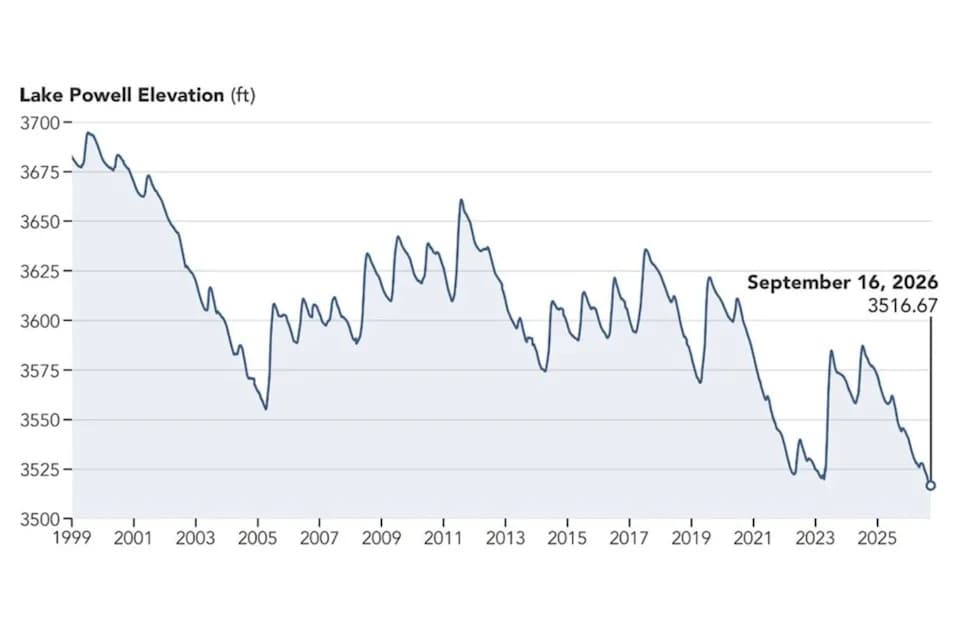
Lake Powell is approaching a critical elevation: 3,490 ft—known as the minimum power pool—below which Glen Canyon Dam can no longer generate electricity. Years of drought and a hot, weak 2026 snowpack have forced emergency water transfers and risk both mechanical damage from cavitation and the onset of "dead pool" below 3,370 ft. Officials are weighing costly engineering options, while cities, utilities and farmers pursue conservation, reuse, and alternative energy to cope.
Lake Powell Nears Critical Threshold: What Falling Levels Mean for Hydropower and the Southwest
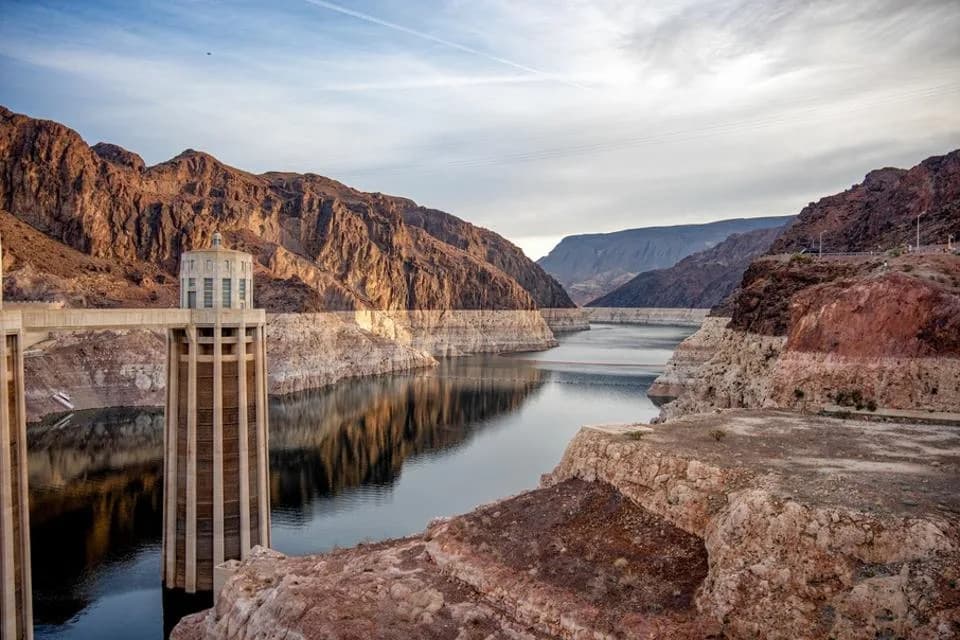
Hoover Dam's Power Crisis Is Getting WorseGetty Images
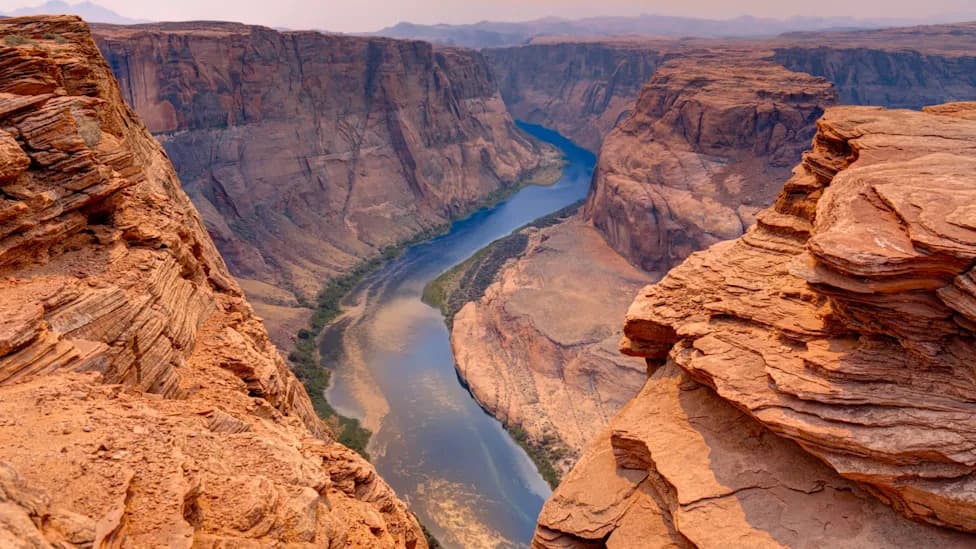
From the rim of Lake Powell there is no blinking alarm to announce when a critical threshold has been crossed. No chart on the canyon wall will tell you the moment the system stops functioning as intended. Instead there is a single elevation to watch: 3,490 feet above sea level.
Engineers call that elevation the minimum power pool. When Lake Powell sits above it, water can flow through Glen Canyon Dam's penstocks, spin turbines, and produce electricity for the Southwest. Drop below it, and the dam loses the very mechanism that justified much of its construction. The river still wants to move; the infrastructure simply runs out of engineered ways to make it do so.
Why Lake Powell Matters
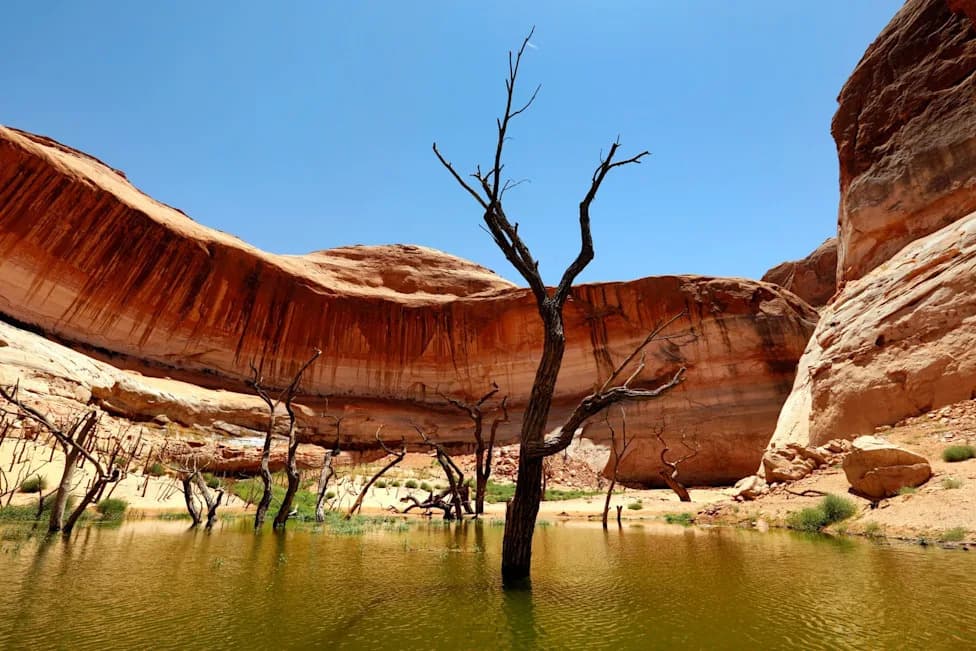
Glen Canyon Dam and Lake Powell sit near the system's center, upstream of Hoover Dam and Lake Mead. Together their reservoirs store the water that cities, farms, and power plants across the Colorado River Basin rely on. Since 2000 the basin has been mired in a megadrought, made hotter and drier by climate change. A weak 2026 snowpack and an extreme heat wave pushed the system deeper into crisis: the Bureau of Reclamation began emergency operations, and Hoover Dam's hydropower output is expected to fall by roughly 40% of its maximum capacity in 2026.
How The Dams Work—and Why Design Differences Matter
On paper, Hoover and Glen Canyon operate similarly: stored water drops through penstocks, spins turbines, and produces electricity before continuing downstream. In practice, small design differences—especially how water can leave each reservoir—are now proving decisive.
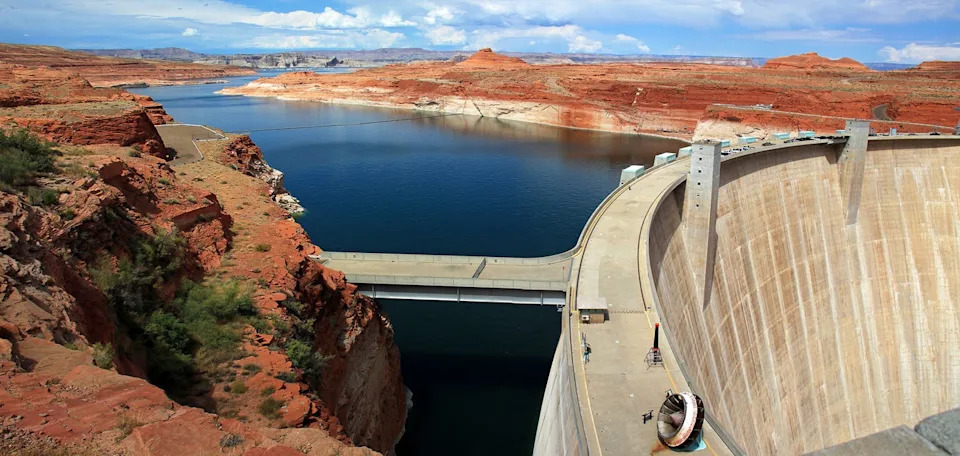
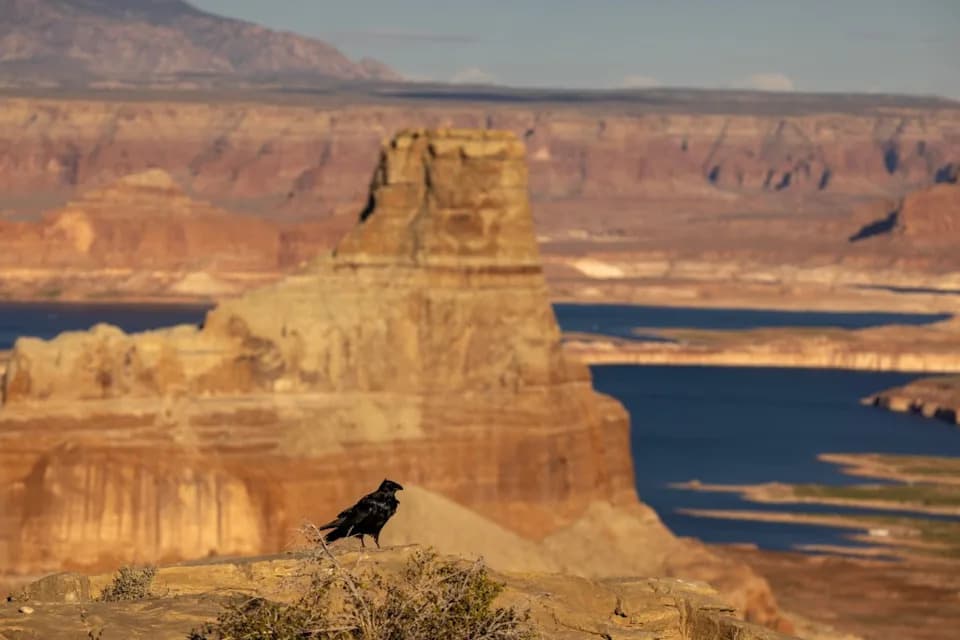
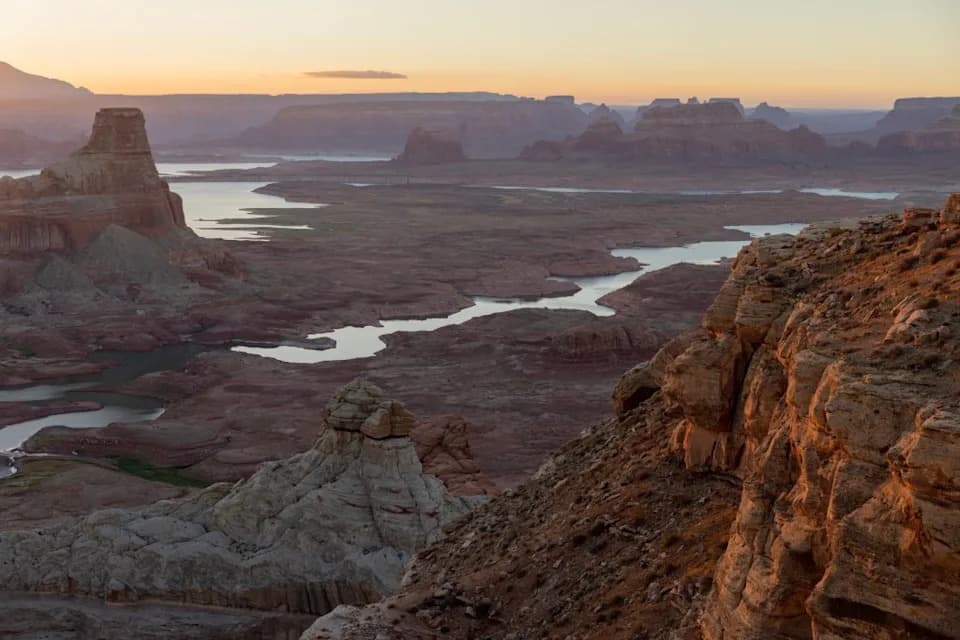
What looks like a vast reservoir is actually a shrinking margin of safety. As Lake Powell declines, one of America's most ambitious water projects is entering unfamiliar territory.Getty Images
Lake Powell has three principal exits:
- Penstocks — the only route that produces power when submerged.
- Spillways — high on the dam, intended for flood events and used rarely.
- River Outlets — four lower tunnels that bypass generators and can release water without producing electricity (together able to move about 15,000 cubic feet per second).
Two Immediate Hazards
As Powell declines, two linked problems emerge. First, downstream disruption: the river outlets were not designed for continuous operation or to carry the same volumes as the penstocks, which changes downstream flows and management options. Second, mechanical risk: as water levels drop, turbines and outlets can begin entraining air. When bubbles collapse they can cause cavitation, sending shock waves that pit metal and fracture concrete—potentially destroying costly machinery.
"When those water bubbles collapse, they send off shock waves, and those shock waves can destroy concrete and metal," said Jack Schmidt, director of the Center for Colorado River Studies. "This is a situation that has been calculated, but it's never been tested because we've never been this low."
Below minimum power pool lies dead pool—around 3,370 feet—when the reservoir would fall beneath the outlets and gravity no longer moves water through existing passages. Water could remain in the reservoir but be effectively trapped.
Emergency Measures Under Way
As of June 2026 Lake Powell was approximately 3,528 feet—only a few dozen feet above minimum power pool. In April 2026 the Bureau of Reclamation announced emergency transfers: releasing between 660,000 and 1,000,000 acre-feet from Flaming Gorge Reservoir on the Green River while withholding roughly 1.48 million acre-feet that would otherwise move from Powell to Mead. In short, officials are borrowing water within the system to keep Glen Canyon above the danger zone.
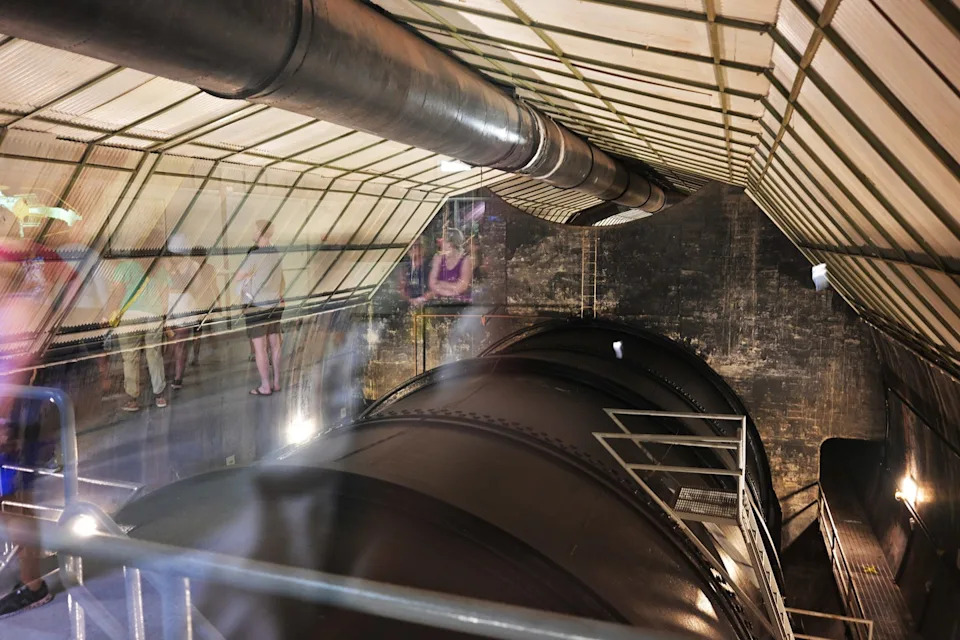
These massive penstocks are the arteries of Hoover Dam's power system, carrying water to the turbines below. If reservoir levels fall too far, they can no longer do the job they were built for.Getty Images
Federal engineers have also proposed major modifications to Glen Canyon Dam—new low-level tunnels, rerouted outlets that could still generate power, or even a full bypass tunnel. Any such fix would likely cost between $500 million and $3 billion, take years to design and build, and pose questions about whether preserving hydropower justifies the expense.
Policy, Politics, And Practical Responses
The crisis is not only physical. The 1922 Colorado River Compact and later regulations were written in a much wetter era. Temporary shortage guidelines negotiated in 2007 are expiring, and states have struggled to agree on replacements. That legal and political strain compounds the hydrologic emergency.
Some communities and utilities are already adapting. Lincoln County Power District in Nevada is investing heavily in solar as it weans off dependence on Hoover. Phoenix is expanding water reuse at the Cave Creek Plant to produce about 7 million gallons per day of purified water by 2027. Farmers are testing low-flow nozzles, shifting to less water-intensive crops, and exploring localized upgrades.
What Comes Next
There are no easy answers. Large-scale transfers from other basins would be legally and financially fraught. Major engineering fixes are expensive and slow. The most politically difficult option—using less water—may ultimately be the most effective.
As Jack Schmidt put it: "It's not that the system is going to collapse this year. But it's very low and it's in a perilous state. If next winter is also dry, then we're in a five-alarm fire drill."
Bottom line: Lake Powell's decline is a wake-up call for the Colorado River Basin—one that blends engineering limits, environmental change, and complex policy choices. The region's ability to adapt will determine whether hydropower, storage and downstream water supplies can be preserved or must be fundamentally reconfigured.
Help us improve.