The Likweli (Colobus congoensis) has been confirmed as a new colobus monkey species in the Democratic Republic of Congo after more than a decade of fieldwork, skeletal comparisons and DNA testing. Researchers recorded 114 sightings (2018–2022) across an estimated 1,700 km² between the Lomami and Congo rivers and recommend the species be listed as endangered because of its small range and threats from agriculture, logging and hunting. Published in PLOS One, the discovery strengthens calls for habitat protection around Lomami National Park and broader conservation corridors in the Congo Basin.
New Colobus Monkey 'Likweli' Confirmed in DR Congo After a Decade of Study
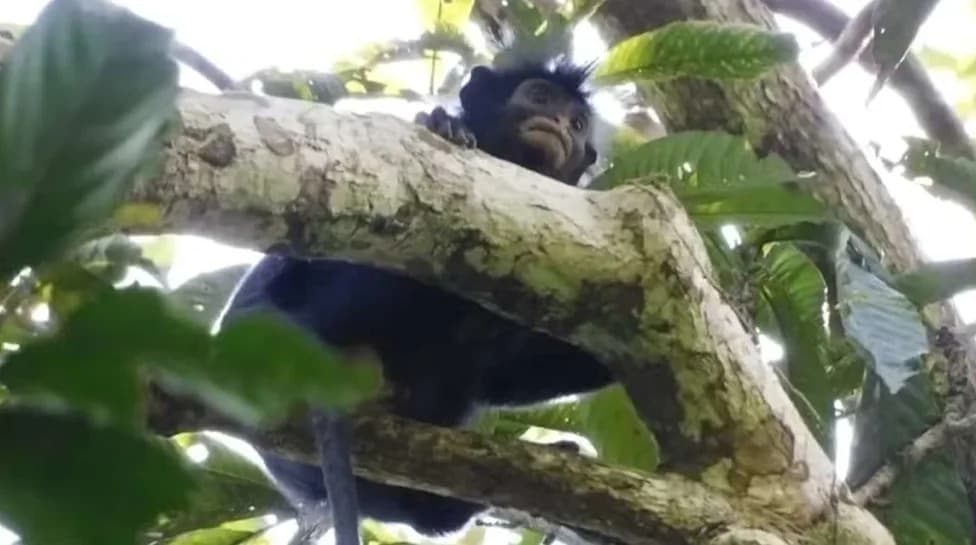
Photo Credit: Hunter College
What began as a curious 2008 canopy photograph of a dark colobus monkey in the Democratic Republic of Congo has, after more than a decade of fieldwork, been confirmed as a species previously unknown to science: Colobus congoensis, locally called the Likweli.
Published in PLOS One, the discovery combines field surveys, skeletal comparisons, genetic analysis and collaboration with local communities. Between 2018 and 2022 researchers recorded 114 observations and mapped the species to a secluded forest block of roughly 1,700 square kilometres (656 square miles) between the Lomami and Congo rivers, near Lomami National Park.
Evidence and Taxonomy
Scientists compared skulls, bones, teeth and fur patterns with museum reference specimens, then validated their anatomical conclusions with DNA testing. The team concluded that the Likweli is not simply a local variant: its closest known relative is Colobus satanas, and the two lineages diverged an estimated 4–5 million years ago, placing the Likweli on a distinct branch of the colobus family tree.
Conservation Implications
Because the species appears confined to a limited range, researchers recommend classifying it as endangered. The primary threats are habitat loss from agriculture, logging and expanding settlements, together with potential hunting pressure as human activity increases. Most documented populations occur in or near Lomami National Park, making protection of that landscape central to the species' survival.
"When a potential new species is discovered, the evidence has to be overwhelming," said Christopher Gilbert, professor of anthropology at the CUNY Graduate Center.
The discovery highlights that even globally important ecosystems such as the Congo Basin can still harbour undocumented species. Formally naming the Likweli makes it easier to prioritise research, secure conservation funding and strengthen policy arguments to protect its habitat. Regional initiatives — including a newly proposed conservation corridor linking protected areas across the Congo Basin — may help safeguard the species and the broader ecosystem services these forests provide.
Local people played a key role: residents recognised the monkey and guided research teams to better understand its distribution and behaviour. For many involved, including co-author and National Geographic Explorer Junior Amboko, the discovery is both scientifically significant and personally meaningful.
Next steps: conduct a formal IUCN assessment, refine population and range estimates through targeted surveys, support community-led conservation, and reinforce protection of Lomami National Park and adjacent forest blocks.
Help us improve.