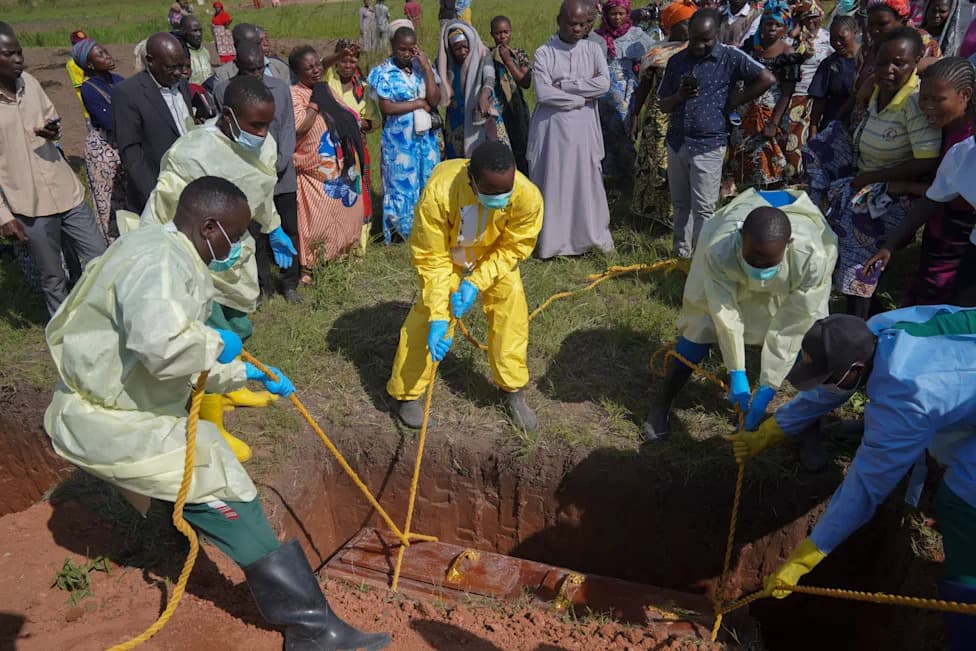
Dr. Jean Kaseya of Africa CDC warns that Congo's contact tracing has identified about 30,000 contacts — far below the roughly 420,000 expected given ~7,000 confirmed Ebola cases. More than 80% of new infections are being found outside existing contact lists, signaling ongoing community transmission. The outbreak, first detected in May, is now the second-largest on record and has spread to 63 health zones across seven provinces. Nearly $2.9 billion was pledged for the response, including $886 million from the United States.
Congo’s Ebola Response Hampered by Major Contact-Tracing Shortfall, Africa CDC Warns
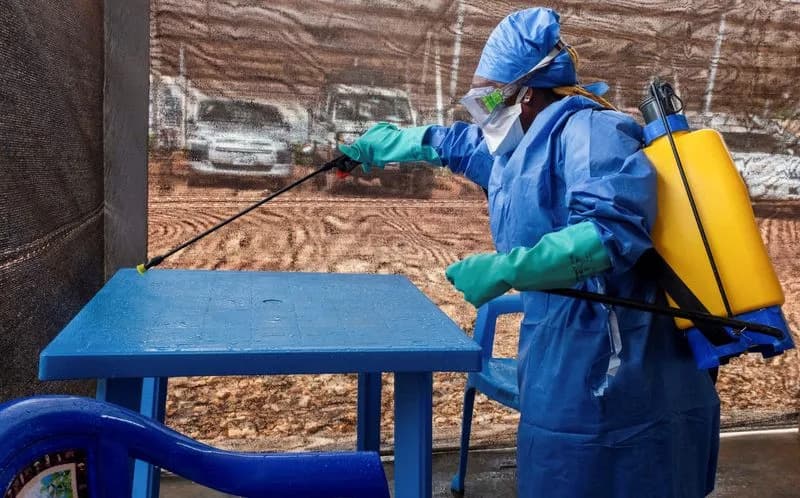
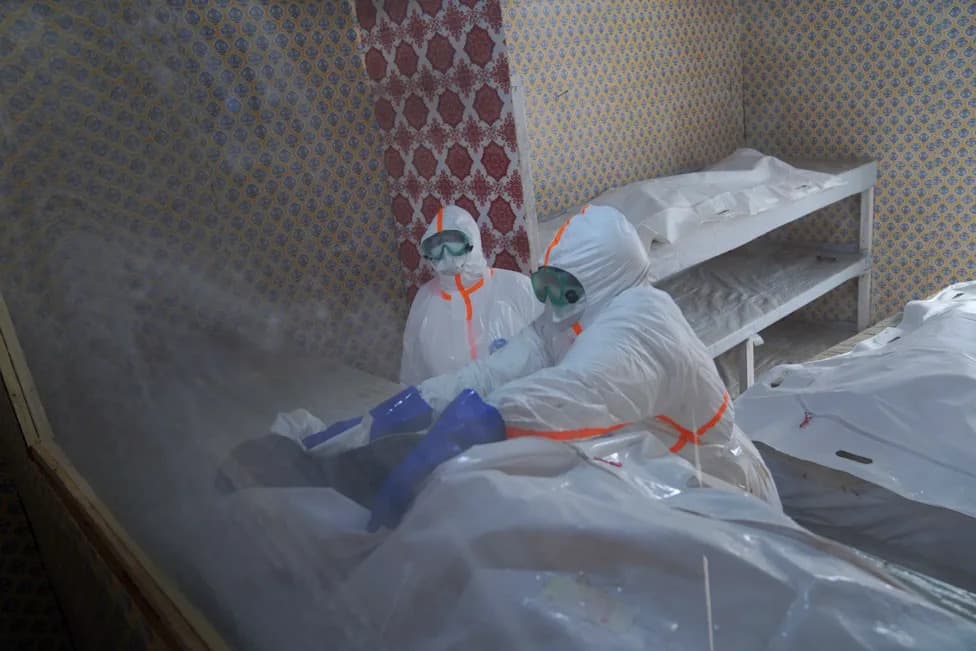
A worker wearing personal protective equipment (PPE) disinfects a desk at the Kitatumba Ebola treatment center run by Medecins Sans Frontieres (MSF), as aid agencies intensify efforts to contain a new Ebola outbreak involving the Bundibugyo species, in Butembo, North Kivu province, Democratic Republic of Congo, September 23, 2026. REUTERS/Gradel Muyisa Mumbere
Health authorities battling the Ebola outbreak in the Democratic Republic of Congo (DRC) have identified roughly 30,000 people who may have been exposed to the virus — a small fraction of the approximately 420,000 contacts expected given about 7,000 confirmed cases, Africa CDC Director-General Dr. Jean Kaseya told reporters on the sidelines of the UN General Assembly in New York.
Outbreak Status
The outbreak, first detected in May, has grown into the second-largest Ebola epidemic on record, trailing only the 2014–2016 West Africa crisis. The World Health Organization reported the virus has spread to two additional health zones — Bulu in Sud Ubangi province and Dungu in Haut-Uele province near the South Sudan border — bringing the total affected health zones to 63 across seven provinces.
What Africa CDC Is Reporting
'But currently, we have just 30,000 people in the contact list,' Kaseya said, warning that the shortfall demonstrates the outbreak remains entrenched in communities despite some positive signs.
More than 80% of newly confirmed cases are being detected in people who were not previously on contact lists, indicating that transmission continues beyond the reach of current surveillance efforts. For every confirmed Ebola case, health teams typically aim to identify roughly 60 direct and indirect contacts; with ~7,000 confirmed cases, that implies an expected contact list of around 420,000 people.
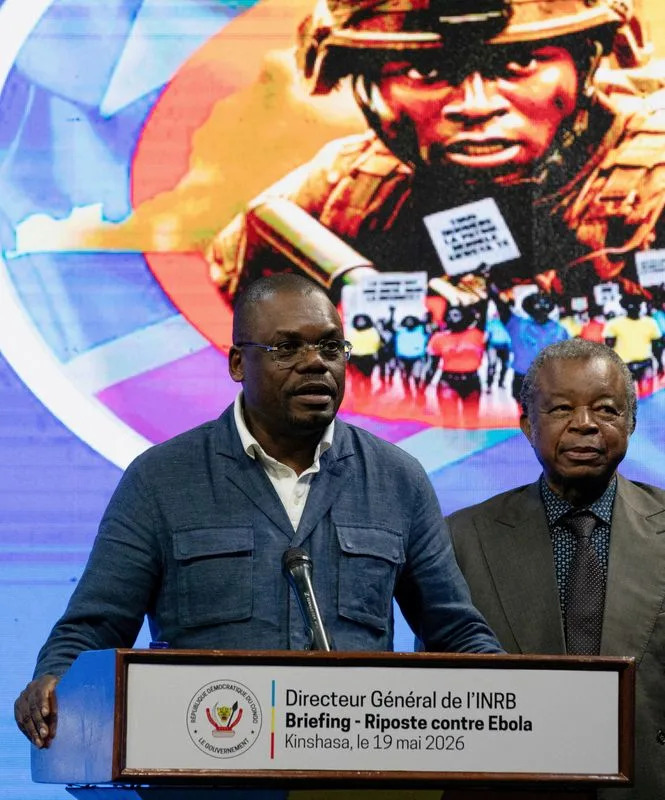
FILE PHOTO: Jean Kaseya, Director General of the Africa CDC, speaks as virologist and Director General of the National Institute for Biomedical Research (INRB), Dr. Jean-Jacques Muyembe-Tamfum, looks on during a press conference on the Ebola response held at the studios of state broadcaster RTNC in Kinshasa, Democratic Republic of Congo, May 19, 2026. REUTERS/Arsene Mpiana/File Photo
Why This Matters
Kaseya said the high share of cases found outside contact lists is evidence of uncontrolled community transmission. He added that if new cases were mostly detected among known contacts, if community deaths fell to zero, and if no new infections occurred among healthcare workers, authorities could be in a position to forecast control — possibly within weeks. For now, he declined to give a timetable, stressing that substantially improved surveillance and follow-up are needed.
Spread, Response And Funding
UN and Congolese officials have noted localized signs of slowing transmission in parts of Ituri, the outbreak's epicenter, and Congo's prime minister described the response as beginning to yield measurable results. International donors pledged nearly $2.9 billion for the Ebola response at a US‑convened meeting in New York, including $886 million from the United States.
Bottom line: The large gap in contact-tracing coverage and the high proportion of cases found outside contact lists highlight persistent, uncontrolled transmission and a pressing need to strengthen surveillance, community engagement and follow-up to contain the epidemic.
Help us improve.