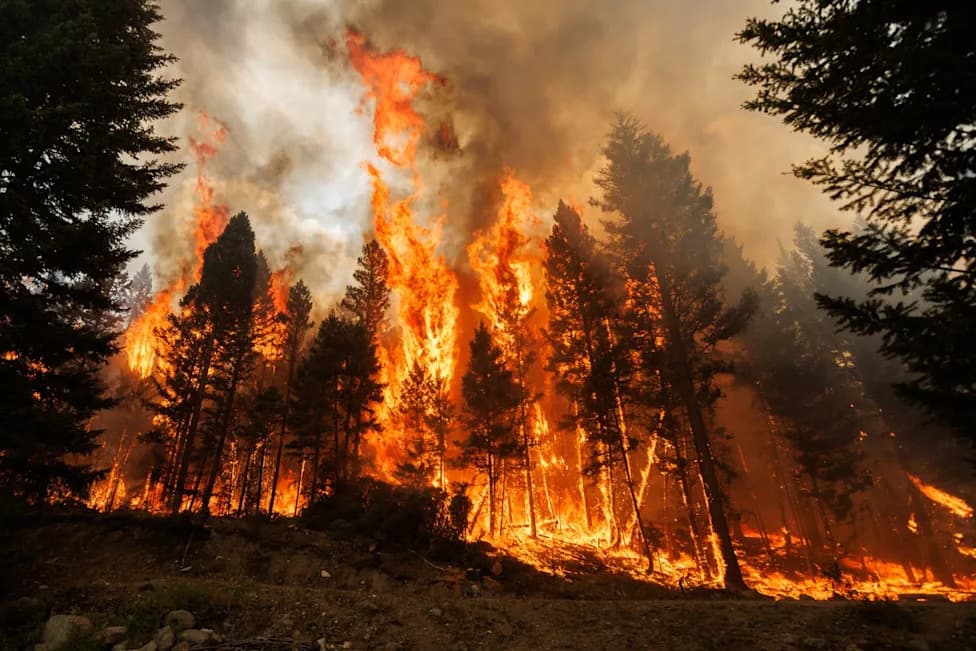
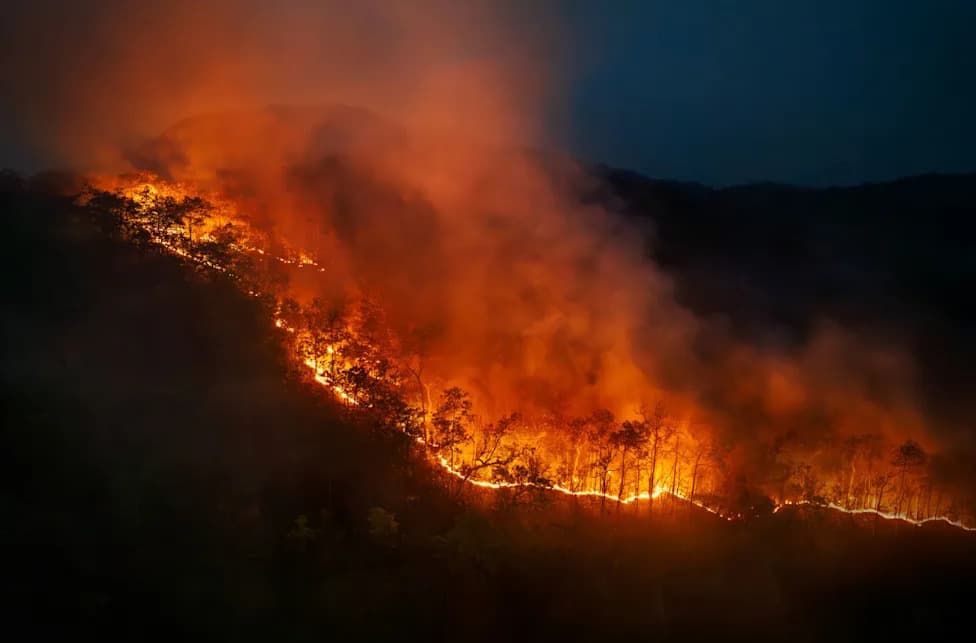
Wildfires Are Intensifying: Hotter, drier conditions and wider swings between wet and dry years are expanding burned area and lengthening the fire season. Federal policy shifts and agency cuts have weakened some health tracking and disaster-cost reporting. Experts say the wildland-urban interface and reduced nighttime recovery for firefighters are increasing community vulnerability, while measures such as defensible space, fire-resistant construction and prescribed burns can help reduce losses.
Wildfires Are Getting Worse — Policy Shifts, Drier Landscapes and a Longer Fire Year
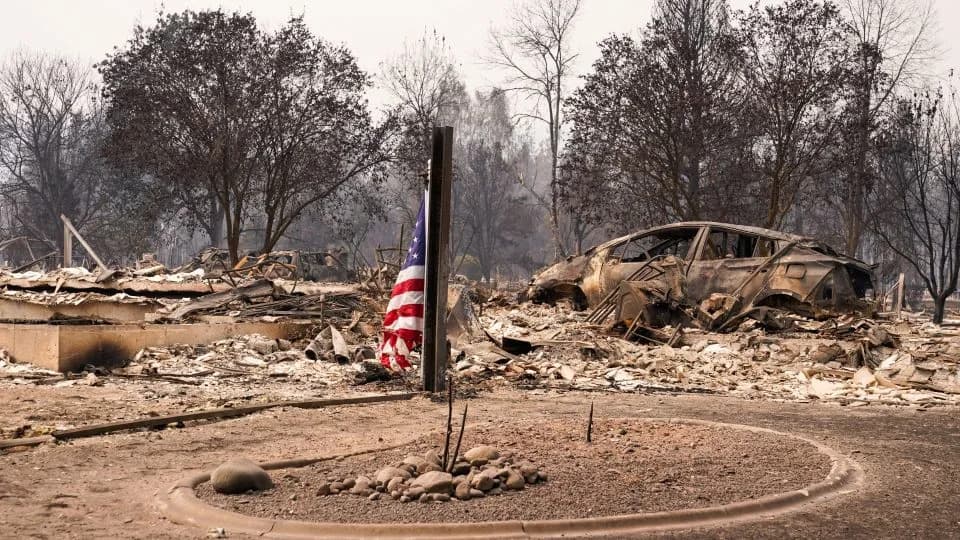
An American flag sits in an incinerated neighborhood in Spokane, Washington, on August 3. - David Ryder/Reuters
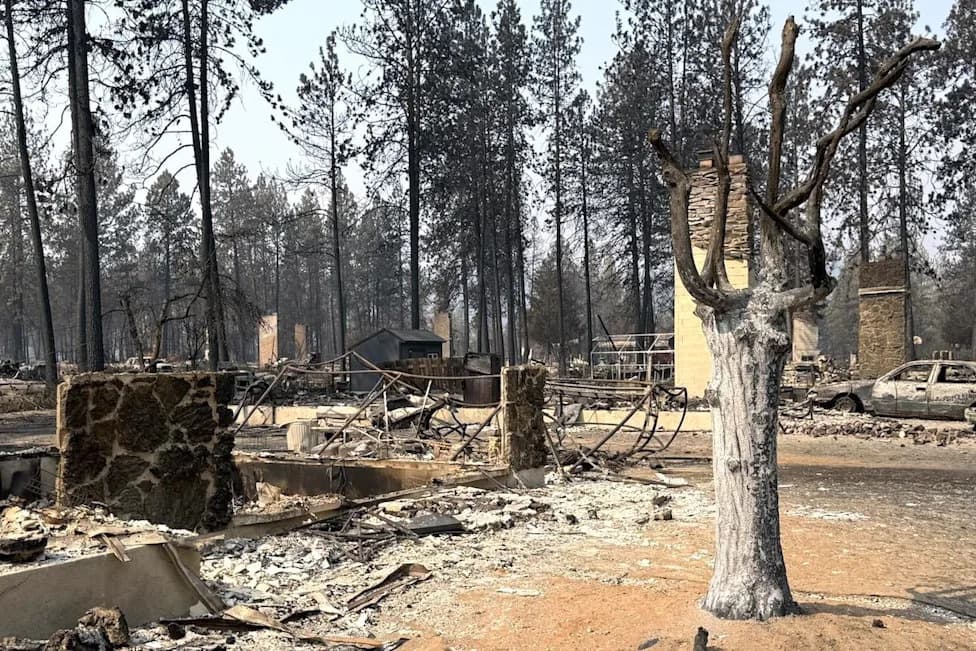
Destructive wildfires have become a recurring reality across much of the United States and beyond as warmer temperatures and more extreme weather patterns make intense fire seasons increasingly common. This summer, Spokane, Washington, saw entire neighborhoods destroyed and tens of thousands forced to evacuate; similar blazes have leveled homes in Utah and Colorado and produced dramatic scenes across Europe, while smoke from Canadian fires has drifted into the U.S.
Policy Shifts and Gaps In Federal Tracking
President Donald Trump, who has described climate change as a "hoax," has moved to withdraw the U.S. from international climate efforts and reduce domestic programs aimed at cutting emissions. He has suggested — without clear basis — that Canada should compensate the U.S. for smoke that has "poisoned" American air, despite the fact that neither country fully controls cross-border winds or the spread of fires.
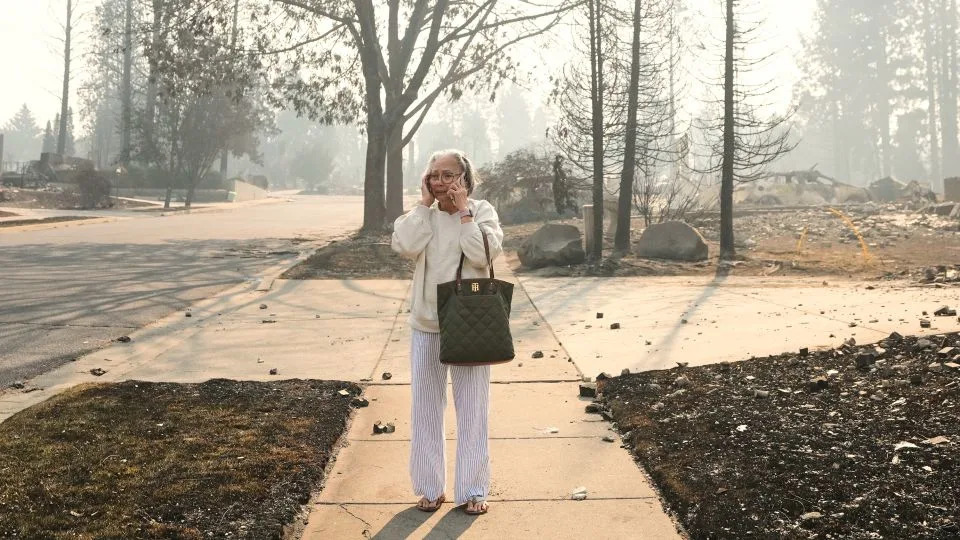
Miriam Sim, 76, reacts as she walks through the burned remains of her neighborhood after a wildfire hit the northern part of Spokane, Washington, on Monday, Aug. 3. - Lindsey Wasson/AP
According to reporting in The New York Times, the Environmental Protection Agency (EPA) has effectively dismantled an office that was studying the effects of wildfire smoke on human health. Cuts at the National Oceanic and Atmospheric Administration (NOAA) have also disrupted federal tracking of disaster costs; a nonprofit has tried to fill that gap. Early in the President's second term, wildfires affecting greater Los Angeles were estimated to have caused roughly $63 billion in damages.
Separately, the administration has proposed reorganizing the patchwork of agencies that deploy wildland firefighters by creating a new U.S. Wildland Firefighting Service. Congress has pushed back, seeking more study and declining to fund the proposal as envisioned by the administration.
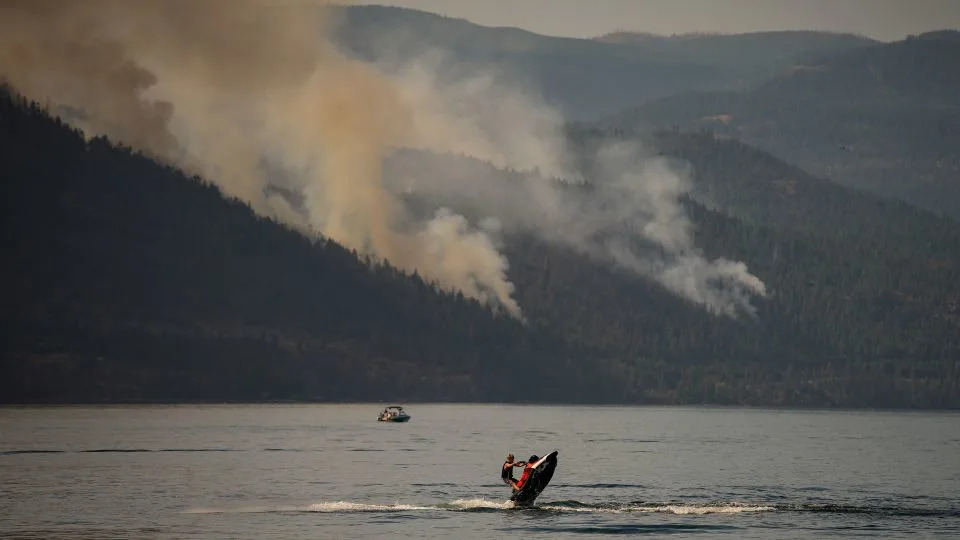
A person rides a personal watercraft on Okanagan Lake, in Lake Country, British Columbia, as the Quilpituk Creek wildfire burns on the mountainside across the lake near Fintry, on August 3. - Darryl Dyck/The Canadian Press/AP
What The Data And Experts Say
Across the U.S., the amount of land burning has increased. Through early August this season, the burned area in the U.S. was roughly 50% above the last-decade average — and that last decade was already well above historical norms. Similar trends are visible worldwide: Canada, parts of Europe and other regions have seen some of their worst fire seasons on record.
Warmer air increases evaporation and dries soils, trees and brush. Reservoirs such as Lake Mead and Lake Powell are at historically low levels, and these drier conditions prime landscapes to burn. Climate-driven variability — a pattern of very wet years followed by extremely hot, dry years — also produces abundant vegetation one year and highly combustible fuels the next.
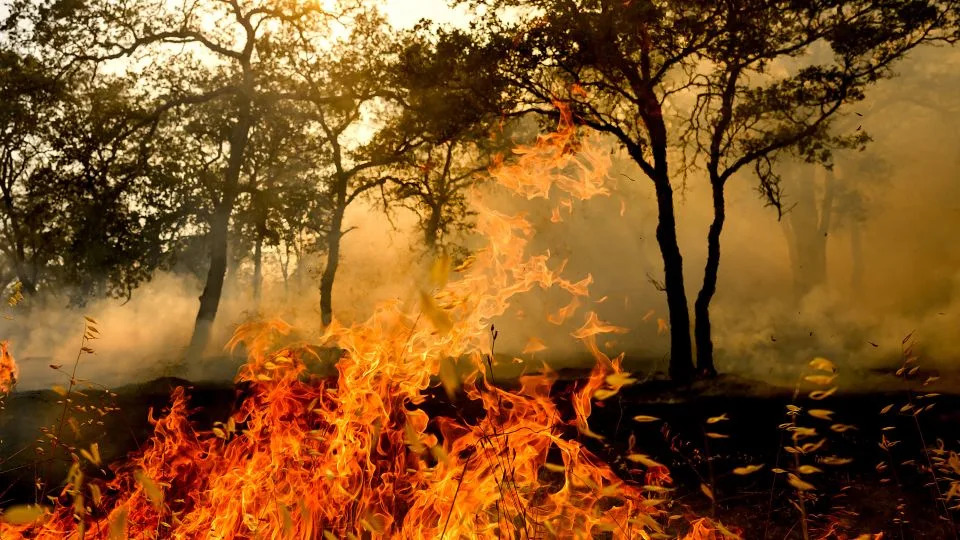
Flames consume vegetation as the Gann Fire burns near Copperopolis, in Calaveras County, California, on Tuesday, Aug. 4. - Noah Berger/AP
Why Communities Are More Vulnerable
Millions of Americans live in the "wildland-urban interface," where homes and developments meet forests and other wildlands. As housing expands into these areas, more communities are exposed to flames and ember showers that can carry fire from house to house. Many natural-fire processes are beneficial to ecosystem health, which is why land managers use prescribed burns. But controlled burns produce smoke and require favorable conditions — increasingly scarce under current climate trends — so they are more difficult to implement at scale.
Practical Ways To Reduce Risk
Experts recommend a combination of measures to reduce losses: better building materials and codes, defensible landscaping, natural fire breaks, and more proactive forest management including carefully planned prescribed burns. Homeowners can reduce vulnerability with non-flammable siding and roofing, cleared vegetation near structures, and community-level planning to limit contiguous fuels.
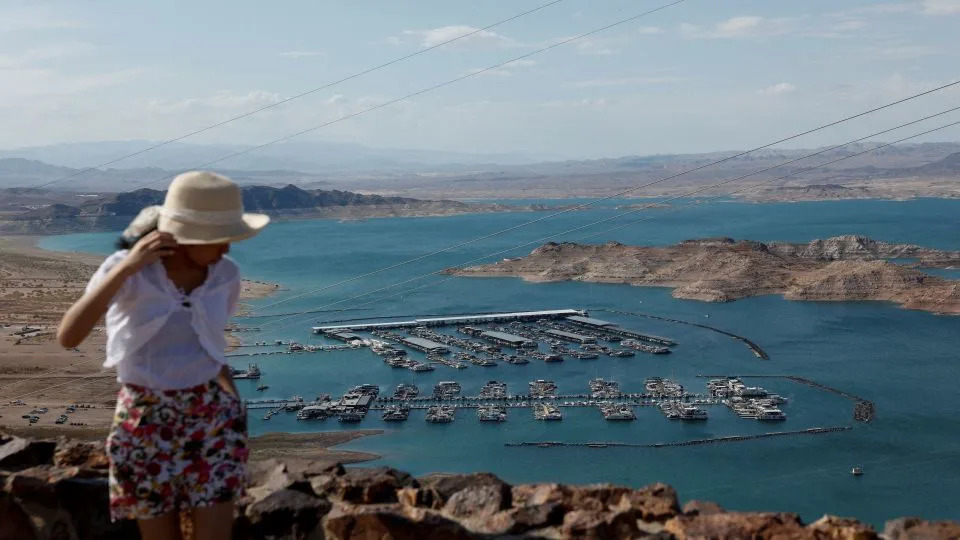
A person stands at an overlook above Lake Mead near Boulder City, Nevada, on July 21, 2026. - Caroline Brehman/Reuters
Frontline Perspective: Interview With Brandon Miller
I spoke with Brandon Miller, CNN's lead meteorologist and climate-crisis reporter, about this season's fires and what to expect going forward. The following is an edited summary of that conversation.
How does this fire season compare with others?
Miller: It's above average across most of the U.S. — roughly 50% above the decade-long norm for area burned so far. That last decade was already elevated compared with earlier decades, so the long-term trend is clearly upward.
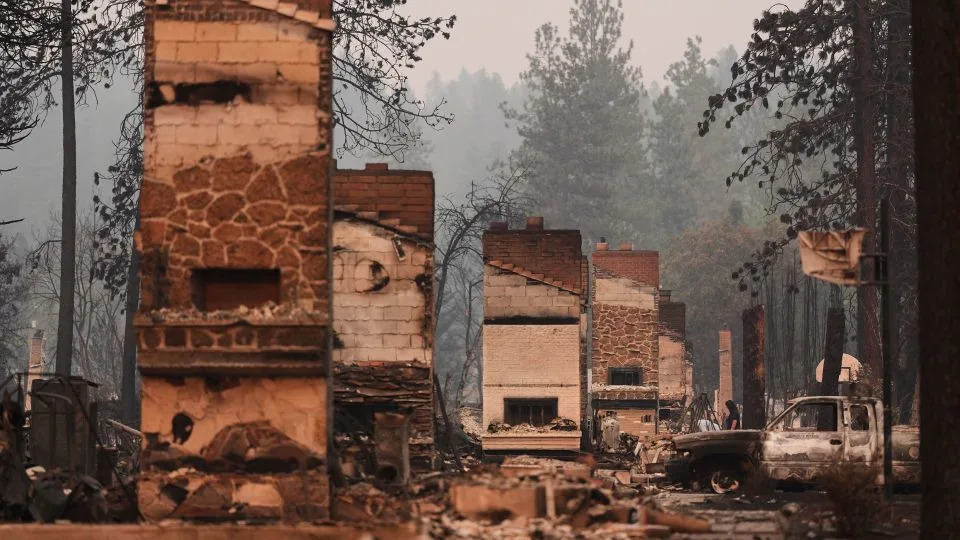
Chimneys are the only structures remaining in a residential neighborhood after a wildfire hit the northern part of Spokane, Washington, on August 3. - Lindsey Wasson/AP
How does the U.S. compare to the rest of the world?
Miller: The problem is global. Canada has had multiple top years for burned area, and much of Europe has seen record summer heat and widespread fires. In the U.S., Oregon and Washington have led in large fires this season, though California often leads in other years. The locations shift, but the total burned area and frequency continue to rise.
Does climate change cause every fire?
Miller: No single ignition can usually be blamed on climate change — humans have always sparked many fires, and natural causes (like lightning) remain important. But climate change substantially increases the likelihood that any ignition will become a large, destructive wildfire by drying fuels and extending fire seasons.
What has changed for firefighters?
Miller: Historically, crews relied on cooler nights to make significant fireline gains. Warming has reduced that nighttime recovery window, turning what used to be a daytime problem into a 24-hour emergency in many cases. That makes containment harder and more dangerous.
Images From This Season
Photo captions: Miriam Sim walks through the burned remains of her Spokane neighborhood; chimneys stand as solitary reminders of destroyed homes; flames burn near Copperopolis, California; a plume from the Quilpituk Creek wildfire is visible across Okanagan Lake in British Columbia; and a depleted Lake Mead illustrates the drying trend that contributes to greater fire risk.
Bottom Line
Wildfire risk is increasing because of a combination of hotter, drier conditions and more people living where forests burn. Policy decisions, agency funding and forest-management practices all affect how well communities can prepare and respond. While practical steps by homeowners and managers can reduce losses, scientists warn that longer seasons and shrinking windows for suppression make future fire seasons harder to control.
Help us improve.