Governor Gavin Newsom’s $3,500 "MyFirstEV" rebate will allocate about $135 million in state funds to first-time EV buyers, applying to new cars under $50,000 and used vehicles under $25,000. Critics say the program largely helps better-positioned buyers while many lower-income households and renters remain excluded. The rebate comes amid slowing EV sales after federal tax-credit changes and rising public skepticism about a 2035 gas-car ban.
Newsom’s $3,500 “MyFirstEV” Rebate Draws Fire — $135M From Taxpayers, Critics Say Priorities Are Misplaced
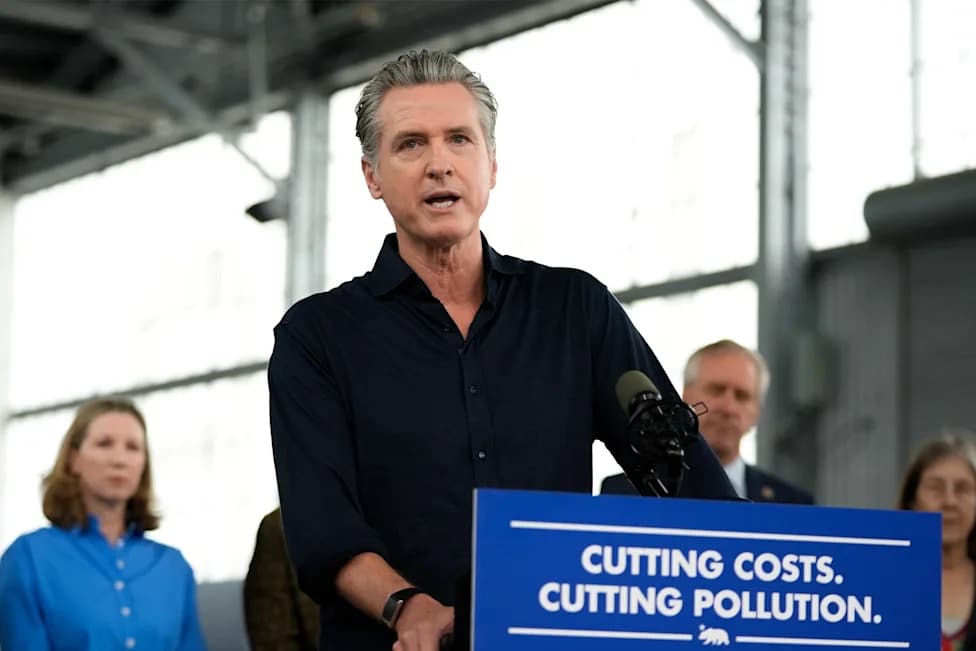
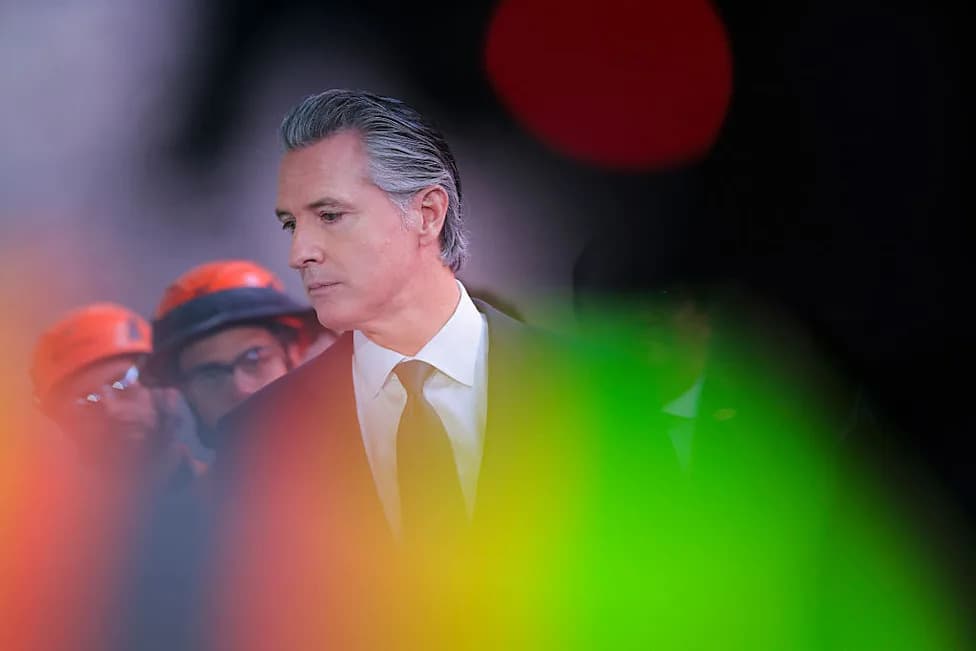
Gavin Newsom speaking at a podium with a sign that reads
Governor Gavin Newsom has announced a $3,500 "MyFirstEV" rebate aimed at first-time electric-vehicle buyers — a program critics say will direct roughly $135 million in state funds toward immediate discounts for a relatively small group of purchasers.
Supporters frame the rebate as California’s answer to recent federal tax-credit rollbacks and as a way to keep the state on track with its zero-emissions goals. Detractors argue the timing and targeting are problematic, saying the program diverts money from urgent state needs while providing limited benefits to lower-income households.
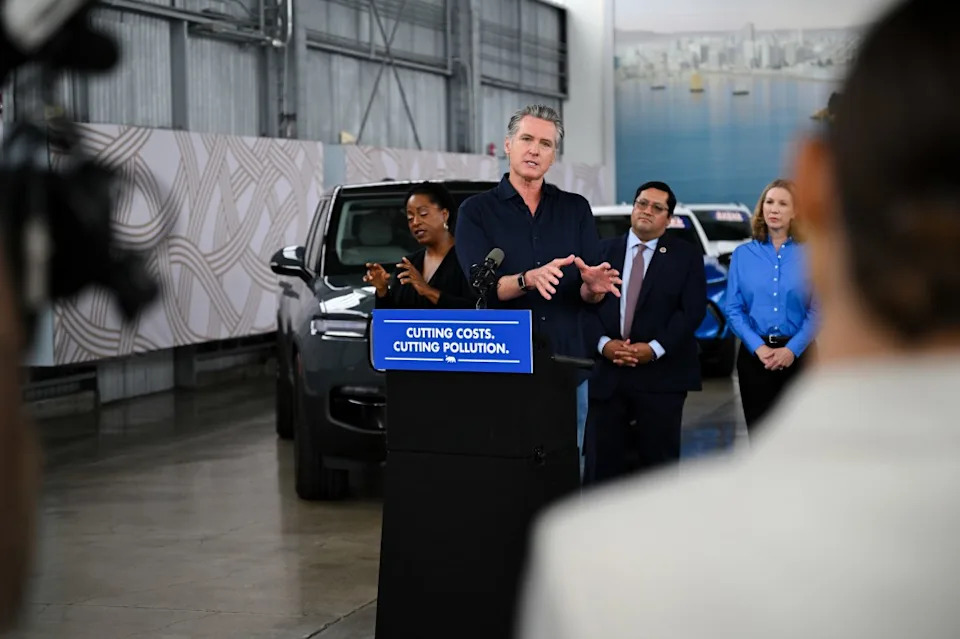
Once again, Gov. Gavin Newsom is dipping into Californians' wallets to bankroll an electric-vehicle handout — this time a $3,500 "MyFirstEV" rebate for first-time buyers. Anadolu via Getty Images
Who Benefits — And Who Doesn’t
The rebate applies to first-time buyers of new EVs priced under $50,000 and used EVs under $25,000. That eligibility window means many lower- and middle-income households could still struggle to afford the balance of an EV’s price, plus higher insurance and charger installation costs. Apartment renters, who often lack access to dedicated charging, are largely excluded.
Critics say a broad tax base is subsidising a narrow slice of better-positioned buyers — a dynamic that raises equity and priority questions given California’s other pressing needs.
Market Context And Political Dimensions
Market conditions complicate the picture. Federal EV tax credits expired at the end of 2025, EV sales cooled and dealer inventories grew. Several major automakers reported large write-downs and delayed or scaled-back EV plans, prompting critics to question the long-term value of subsidising a segment manufacturers appear to be retrenching from.
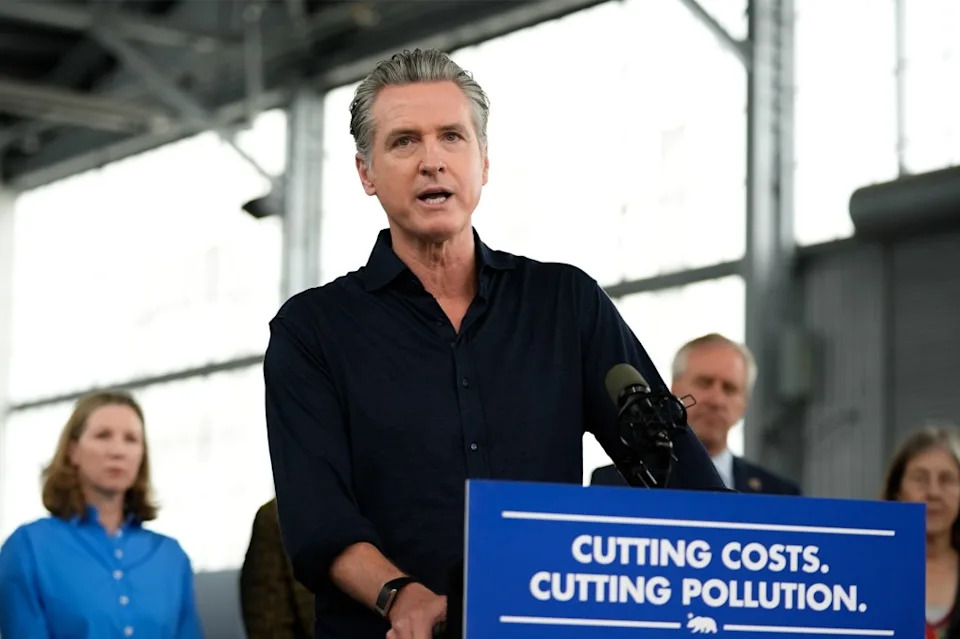
Newsom has positioned the rebate as both a climate-policy stand and a rebuke to federal changes. Observers note the program also plays to a national audience and could bolster the governor’s profile if he pursues broader political ambitions.
Public Opinion And Oversight Concerns
Public opinion appears divided. A July 2026 Public Policy Institute of California poll found that 66% of adults and 65% of likely voters opposed Newsom’s planned 2035 ban on new gas-powered cars, with opposition having increased since 2021 and now including roughly half of Democrats.
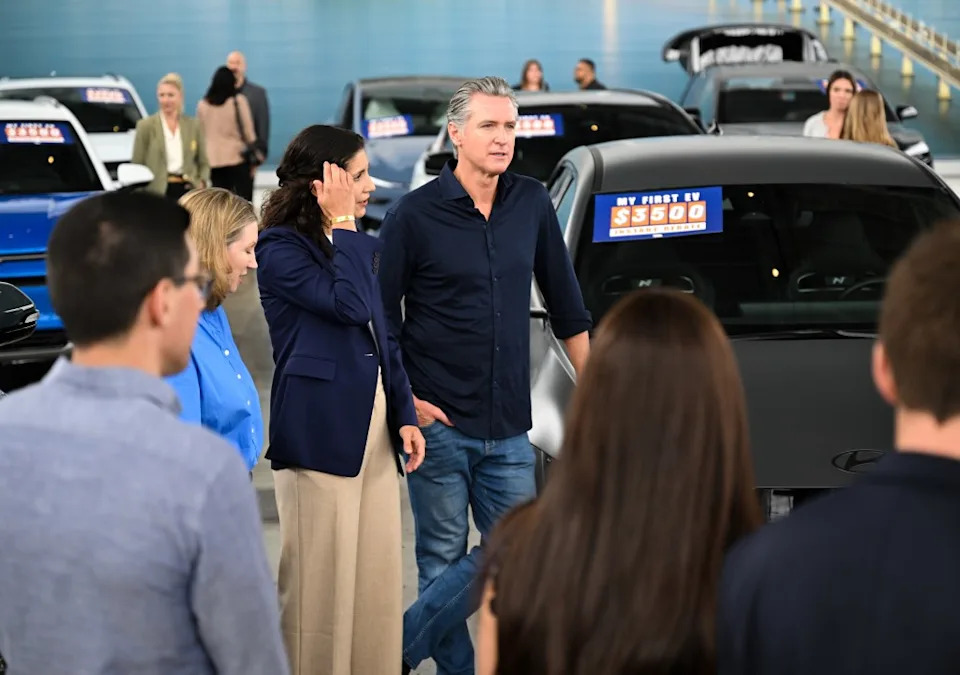
Governor Gavin Newsom (right) announces new savings for California car buyers and a major milestone in the state's clean energy future at the Bridge Yard Facility in Oakland, California, on Friday, August 7, 2026. (2026 Anadolu) Anadolu via Getty Images
Separately, state auditors previously documented about $20 billion in fraudulent pandemic unemployment payments processed through the Employment Development Department. Critics point to other contested spending items — including reports of public funds used for legal defense services and a high-profile diaper-distribution initiative — as evidence that large programs sometimes lack sufficient oversight.
Bottom Line
Supporters argue the rebate could lower barriers to EV adoption for some buyers and help sustain California’s clean-vehicle goals. Critics counter that the $135 million price tag diverts scarce resources from housing, wildfire response, road repair and other immediate needs, while primarily benefiting a limited group of buyers at a time of market uncertainty.
Richie Greenberg is a political commentator based in San Francisco.
Help us improve.