The Rhône Glacier in southern Switzerland lost over 4 metres of ice in one month after a succession of heatwaves, melting at roughly 10 cm per day since mid‑June. GLAMOS researchers report both surface melting and internal erosion as meltwater carves cavities beneath the ice. Poor winter snowfall and repeated early heatwaves have made 2026 particularly severe; the lower glacier could disappear within 5–10 years if current trends continue.
Heatwaves Strip More Than 4 Metres From Switzerland’s Rhône Glacier in One Month
How heatwaves are reshaping Switzerland's glaciers
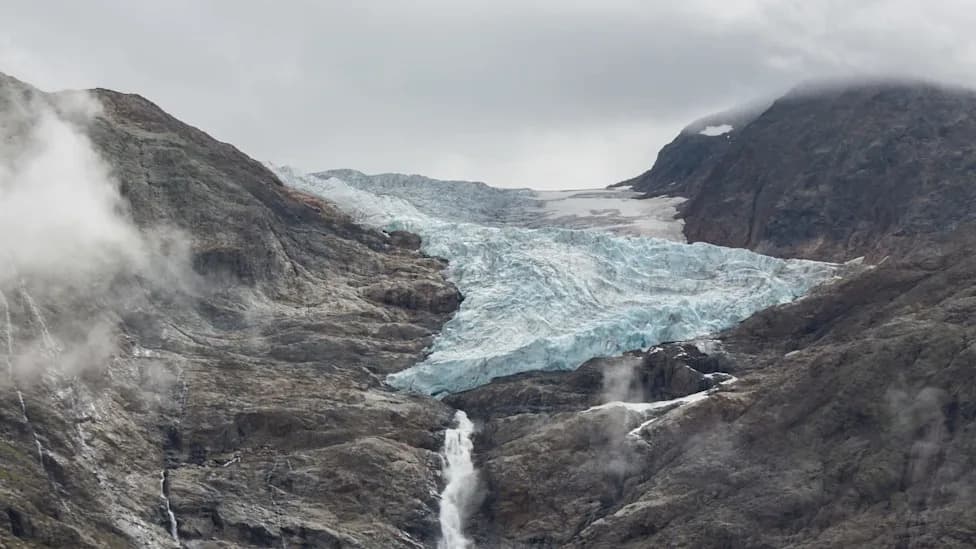
The Rhône Glacier in southern Switzerland has lost more than 4 metres of ice in a single month as successive heatwaves swept across Europe, underscoring the growing impact of rising temperatures on Alpine ice.
Rapid Loss Driven by Surface and Subsurface Melt
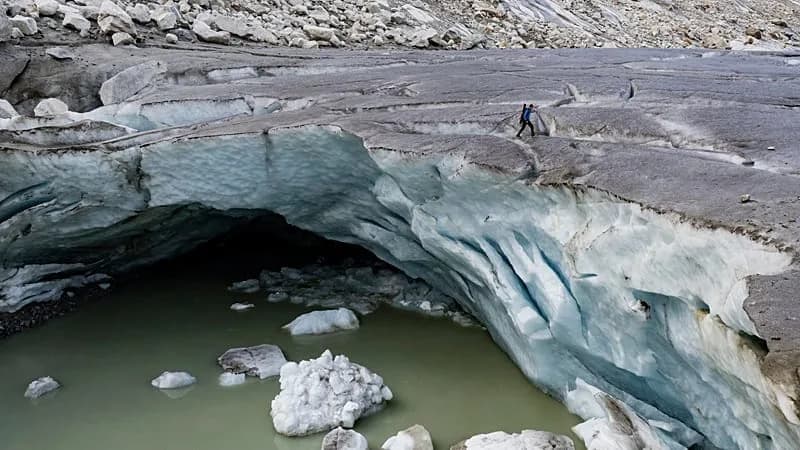
Measurements from Switzerland's Glacier Monitoring Service (GLAMOS) show the glacier has been melting at an average rate of around 10 centimetres per day since mid‑June. Researchers report that the ice is disappearing not only at the surface but also from below, where flowing meltwater is carving large cavities that hollow and destabilize the glacier from the inside.
Matthias Huss, glaciologist and head of GLAMOS, said: "This is a collapsing pit. The stream flowing beneath the glacier has carved out a large cavity, which then collapsed. In recent years we have seen more and more cases of glaciers melting from below as well as from above. These processes are eroding the glaciers from within and further accelerating melting."
Field measurements illustrate the speed of the loss: Huss reported that since his last visit two weeks earlier the glacier had lost 1.40 metres, roughly equivalent to the reported daily average of 10 cm. Since his first visit in mid‑June, about 4 metres of ice have disappeared between two reference points on the glacier — an alarming change over a matter of weeks.
Landscape Transformation and Future Outlook
The glacier's rapid retreat is reshaping the valley. GLAMOS scientists warn that, if current trends continue, the lower sections of the Rhône Glacier could vanish within 5–10 years, leaving permanent ice only at higher, colder elevations with more snowfall.
Researchers emphasise that this year's extreme melt followed a winter with below‑average snowfall, which left the glacier without the protective snow cover that normally slows summer melt. Early heatwaves in May and June, followed by further spells of intense warmth in July, compounded the problem and made 2026 an unusually severe year for glacier loss.
Glaciologists will continue to monitor the Rhône Glacier through the summer. The latest data underline an accelerating trend of ice loss across the Swiss Alps and highlight the mounting challenges glaciers face in a warming climate.
Help us improve.