The Supreme Court has declared the right to safe, demarcated footpaths a fundamental right, spotlighting decades of vehicle-centric urban planning in India. Despite roughly 45 million people walking to work daily and 63% of trips on foot in some cities, pavements are often broken, blocked or discontinuous, contributing to high pedestrian fatalities. Experts say lasting change requires street redesign, lower speed limits, better governance and inclusive amenities like shaded routes and seating.
India’s Forgotten Pedestrians: How Cities Failed Walkers — And What the Supreme Court Wants to Fix
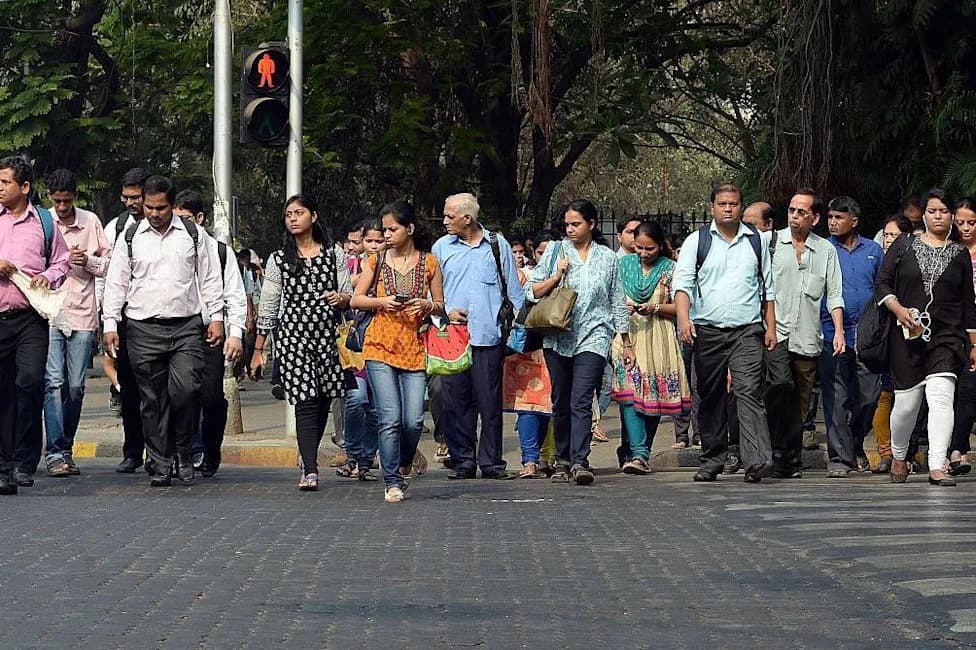
Around 45 million people walk to work every day, according to census-based estimates [AFP via Getty Images]
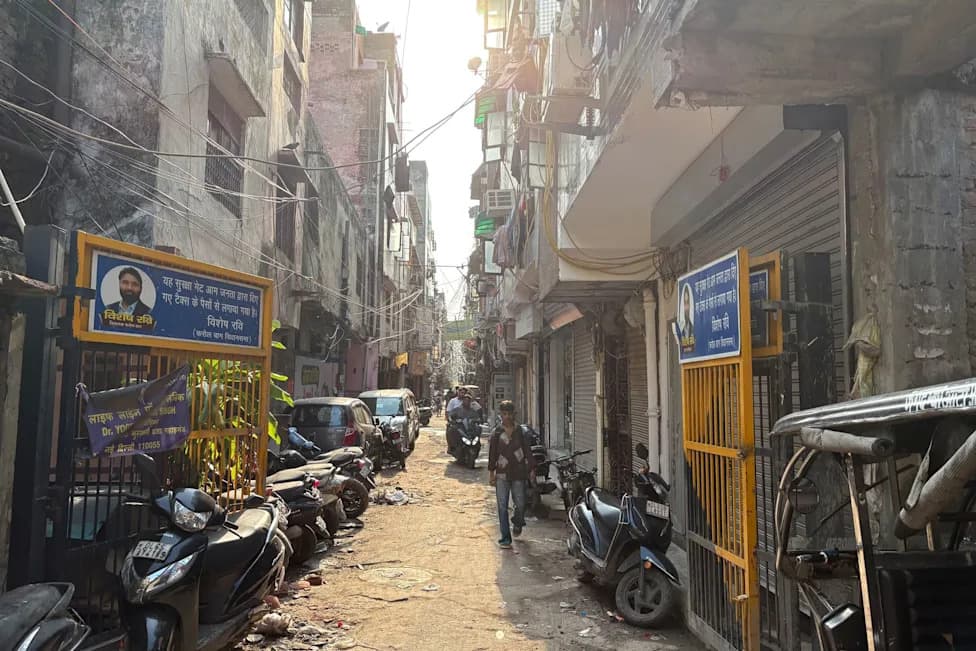
For much of my life, walking in Indian cities felt less like a guaranteed right and more like navigating an obstacle course. Wide pavements in Kolkata vanish under hawkers; Delhi's roads often seem engineered for cars alone; and in Gurugram footpaths can end in rubble, be blocked by parked vehicles or construction, or sit uncomfortably high above the carriageway.
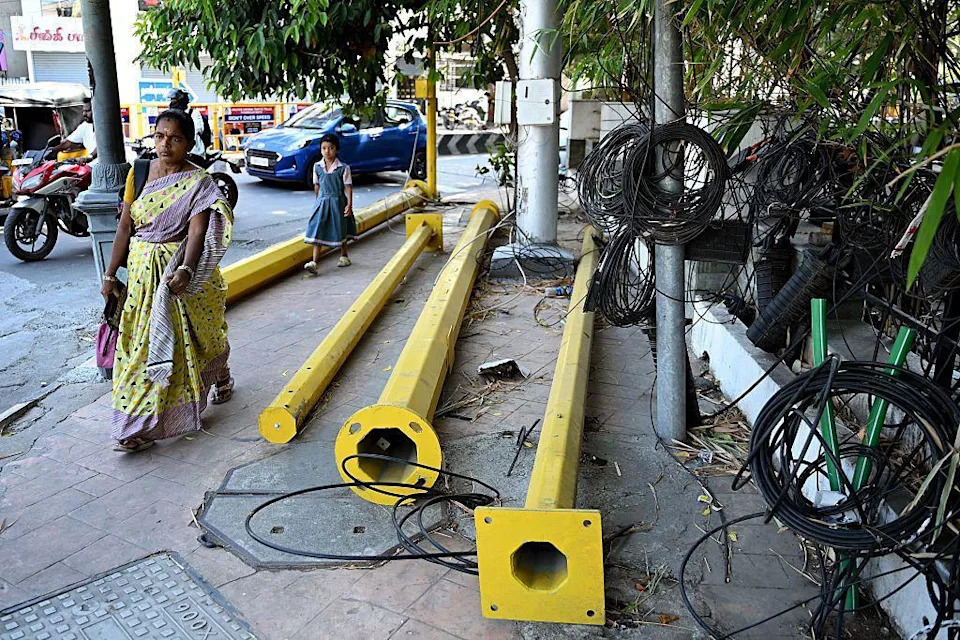
A woman walks past poles and wires strewn across a footpath in Chennai [AFP via Getty Images]
So when India's Supreme Court declared in June that the right to walk safely on designated footpaths is a fundamental right, it felt less like judicial activism and more like overdue common sense. The ruling forces a rethink of decades of vehicle-centric planning and exposes a persistent urban inequality: those who walk the most are often the least protected.
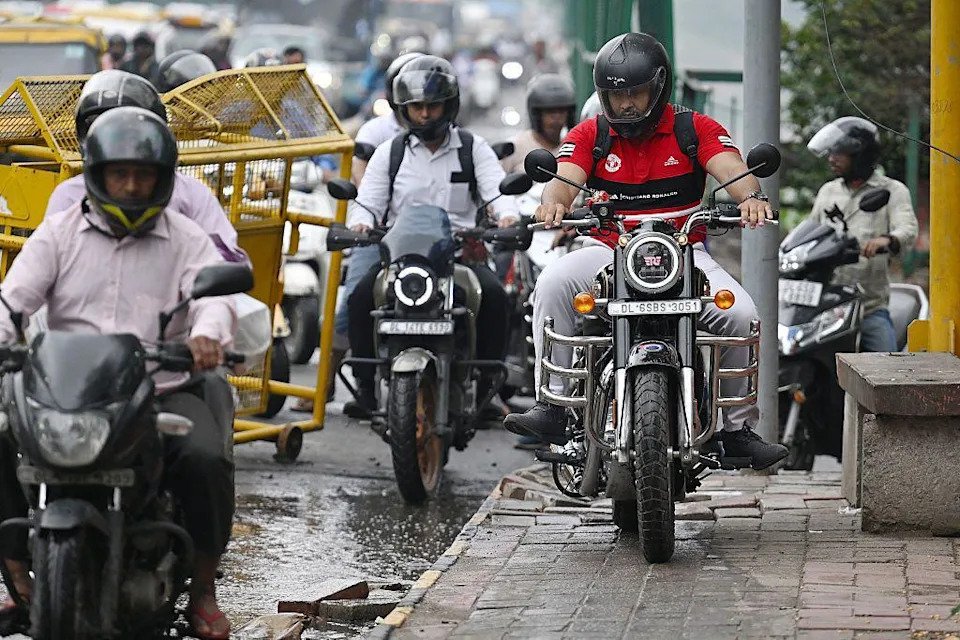
Motorcyclists riding on a pedestrian footpath along a bridge in Delhi [AFP via Getty Images]
Why Walking Matters
Walking is the most democratic form of transport. Census-based estimates put about 45 million people walking to work daily, compared with roughly 5.4 million who commute in private cars, jeeps or vans. A 2019 survey in selected cities found that 63% of journeys were made on foot, making pedestrians the largest single group of road users. Many of these are "captive pedestrians"—people who walk because they cannot afford alternatives. Women, the elderly and low-income workers disproportionately depend on walking.
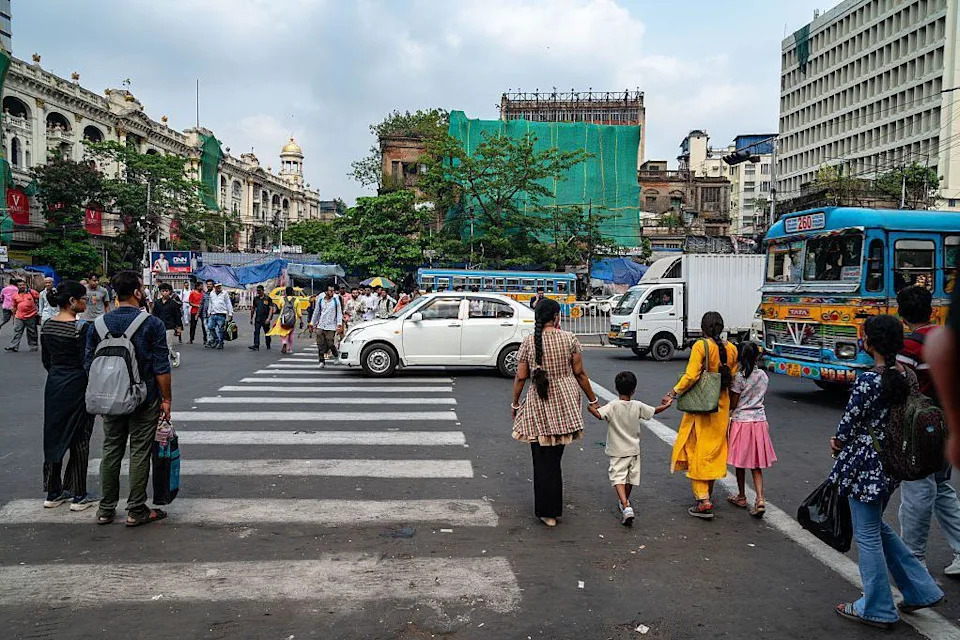
Zebra crossings - like this one in Kolkata - are treated as little more than road markings [NurPhoto via Getty Images]
What’s Wrong With Our Streets
Even where pavements exist, they are often broken, too narrow or inaccessible to older people, children and those with disabilities. Common problems include:
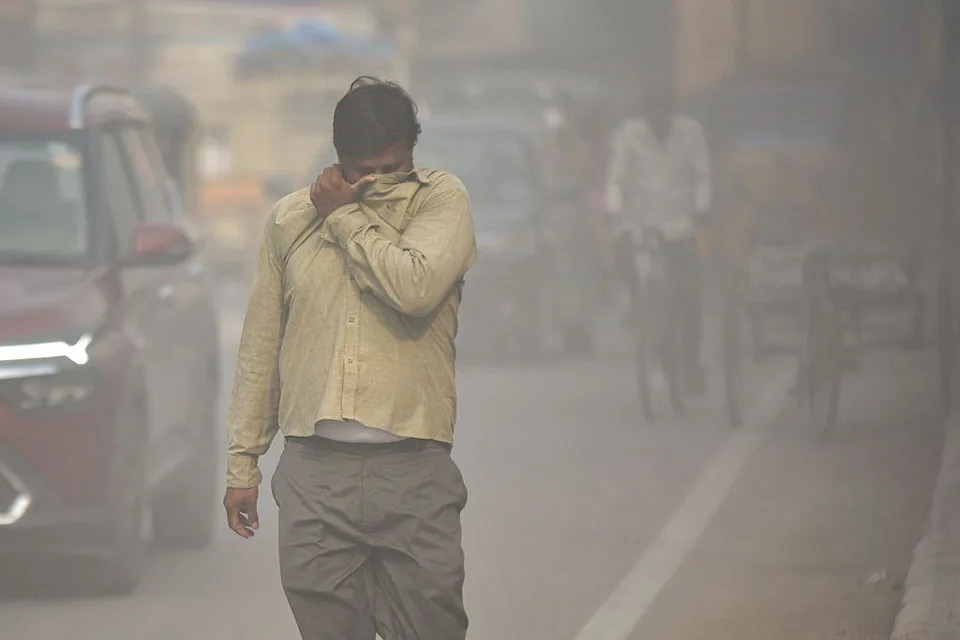
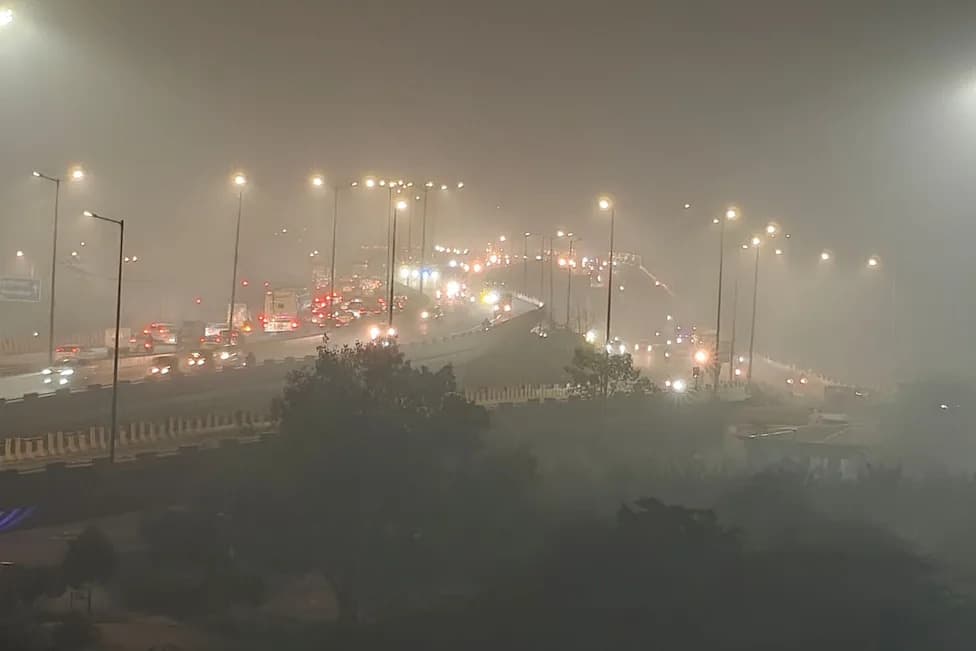
A pedestrian walks through a haze of dust pollution in Hyderabad [NurPhoto via Getty Images]
- Obstructions from motorcycles, parked cars, street vendors and utility works.
- Discontinuous footpaths that end abruptly, forcing people back onto the road.
- Pavements set unnaturally high above the carriageway or concealed by parked vehicles.
- Faded zebra crossings and junctions that motorists routinely ignore.
- Flyovers and high-speed arterials that push pedestrians into hazardous detours.
The Clean Air Initiative for Asian Cities (CAI-Asia) Walkability report gave surveyed Indian cities a median score of just 47 out of 100, with the worst conditions around public-transport terminals—the very places where most journeys begin and end on foot.
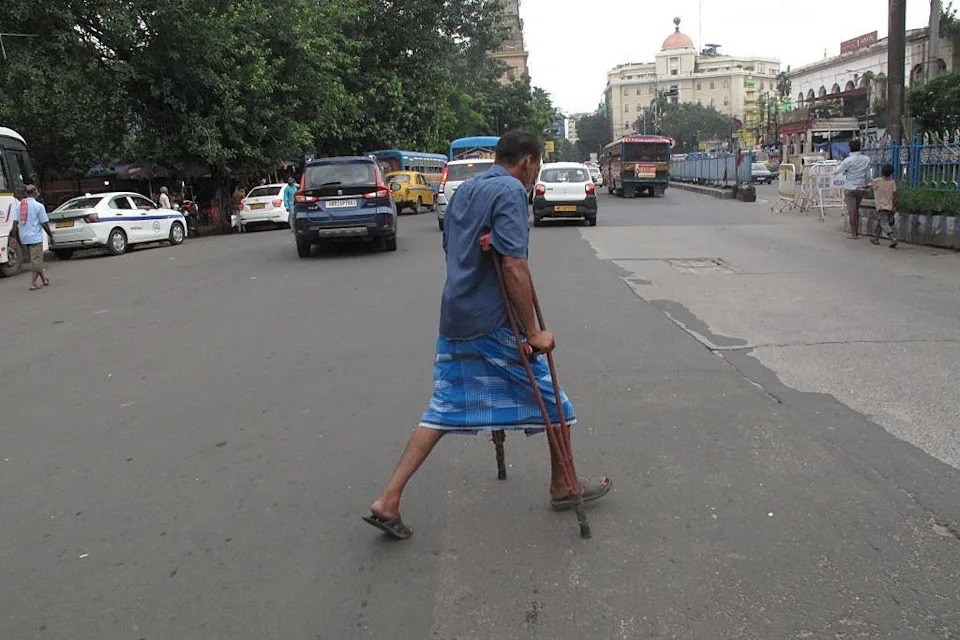
A man with a physical disability navigates a busy road in Kolkata [NurPhoto via Getty Images]
The Human Cost
Marginalising pedestrians has deadly consequences. Official figures attribute roughly a fifth of road deaths to pedestrians, but independent studies cited by transport scholar Geetam Tiwari estimate the real share at 30–40%. In metro cities such as Delhi and Mumbai pedestrians account for more than half of road fatalities. According to the World Bank, road crashes already cost India an estimated 3–5% of GDP each year through lost productivity, healthcare costs and long-term disability.
As Justice P.S. Narasimha wrote in the judgment, "Walking is the simplest of the simple human activity, inextricably connected to life." The Court held that "the fundamental right to walk on demarcated footpaths shall override the privilege of a motorised vehicle."
Why Change Has Been So Slow
Experts point to governance, design and priorities. Footpaths may exist on paper but remain unusable due to lack of maintenance and encroachment. Urban transport governance continues to prioritise vehicle throughput: carriageway space is treated as sacrosanct, lane widths are generous, and traffic-calming measures are rare. Public pressure over congestion often nudges authorities to prioritise moving vehicles rather than protecting pedestrians. In some cities, mid-block crossings have been removed in favour of U-turns and overbridges that favour cars but disadvantage walkers.
What Needs To Change
Legal recognition is a start, but it must be followed by concrete action:
- Design streets for people: continuous, wide, accessible footpaths; safe, visible crossings; and traffic-calming measures.
- Lower default urban speed limits (for example, 30 km/h) and redesign lanes to discourage high speeds.
- Enforce maintenance and anti-encroachment rules, and integrate vendors with pedestrian infrastructure, shaded routes and resting spots.
- Prioritise inclusive design so older people and wheelchair users can travel safely.
- Improve governance by setting measurable walkability standards and holding agencies accountable.
Walking Beyond Mobility
The judges also highlighted walking's cultural and political significance: it is "necessity for the poor, meditation for some, an act of resistance for others and a path to discovery." India's history—Gandhi's Salt March, Subhas Chandra Bose's "Delhi Chalo" and countless protest marches—underlines walking's role in public life. As Geetam Tiwari says, safe walking infrastructure should do more than just create footpaths: it must integrate street life—vendors, shade, seating and space for children.
For decades, Indian cities have focused on moving vehicles. The Supreme Court's ruling asks a simpler question: how do people walk? For many of us, the immediate wish is modest and unremarkable: a footpath that reliably carries us from one end of the street to the other.
Help us improve.