Public-health campaigners have filed the first formal Supreme Court challenge to India’s draft front-of-pack food warning rule, arguing it would require a red hexagon only when a product is high in two of three nutrients (added sugar, salt or saturated fat), thereby letting many harmful products go unlabeled. The complaint, brought by nonprofit 3S And Our Health and represented by lawyer Rajiv Shankar Dvivedi, is due to be heard on September 10. The dispute intensifies debate between health advocates citing international examples like Chile’s 2016 law and industry groups that have opposed stringent labeling.
Activists Take India’s Food Warning Plan To Supreme Court, Call It An ‘Industry-Friendly Loophole’
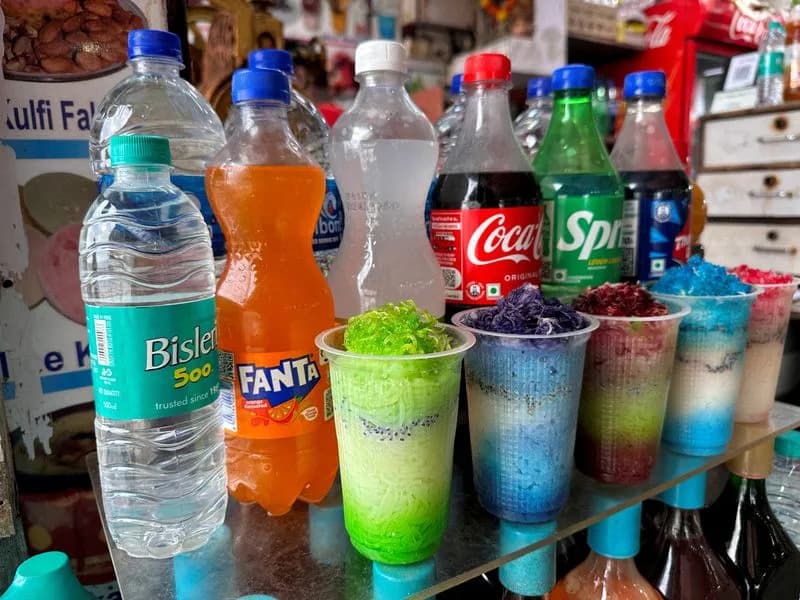
FILE PHOTO: Soft drink bottles are displayed next to plastic cups of falooda, a traditional Indian dessert drink, at a food stall in Mumbai, India, August 21, 2026. Picture taken with a mobile phone. REUTERS/Francis Mascarenhas/File Photo
Indian public-health campaigners have lodged the first formal Supreme Court challenge to a government draft rule on front-of-pack food warnings, saying the proposal would allow many unhealthy products to avoid prominent labeling and undermine public health.
Who Filed The Complaint? The petition was filed by nonprofit 3S And Our Health and reviewed by Reuters. It argues that the government's draft — which would require a red hexagonal warning only when a product exceeds limits for at least two of three concerning nutrients (added sugar, salt or saturated fat) — creates an "industry-friendly loophole" that exempts products high in a single harmful nutrient.
Key Allegation
"A product that is high in sugar alone remains a diabetes risk," lawyer Rajiv Shankar Dvivedi, representing 3S And Our Health, wrote in the filing. The complaint is scheduled to be heard on September 10 in the Supreme Court.
Government Response An Indian government source told Reuters the activists' objections are misplaced, noting that many countries phase in front-of-pack labelling rules. The source said India plans to tighten the rules in a second phase by adding separate warning labels for each nutrient, though no timelines have been set. The source spoke on condition of anonymity because the matter is sensitive and before the courts.
Why It Matters
Front-of-pack warnings are intended to make it easier for consumers to identify foods high in nutrients linked to chronic disease. International evidence is frequently cited in the debate: Chile's 2016 law, which places separate black octagonal warnings on packs for each nutrient that is high, was followed by a reported 23.7% decline in purchases of sugary drinks.
India faces a large and growing burden of diet-related illness: a Lancet study estimated 180 million adults were overweight or obese in 2021, with projections rising to 450 million by 2050.
Industry And Public Debate
The government’s draft has unsettled the country’s more than $100 billion packaged food and drink sector, which has long resisted strong front-of-pack warnings. Reuters previously reported that India softened its approach in March after lobbying from Coca-Cola and coalitions backing Nestle and PepsiCo opposed prominent front-of-pack labels.
The court case pits public-health advocates — who say single-nutrient risks should trigger warnings — against industry groups and a government that says phased implementation will allow stricter measures later. The Supreme Court hearing will likely shape whether and how India proceeds.
Next Steps: The Supreme Court is scheduled to hear the complaint on September 10. Depending on the court's guidance, the government could revise the draft, set phase timelines, or proceed with legal and regulatory processes.
Help us improve.