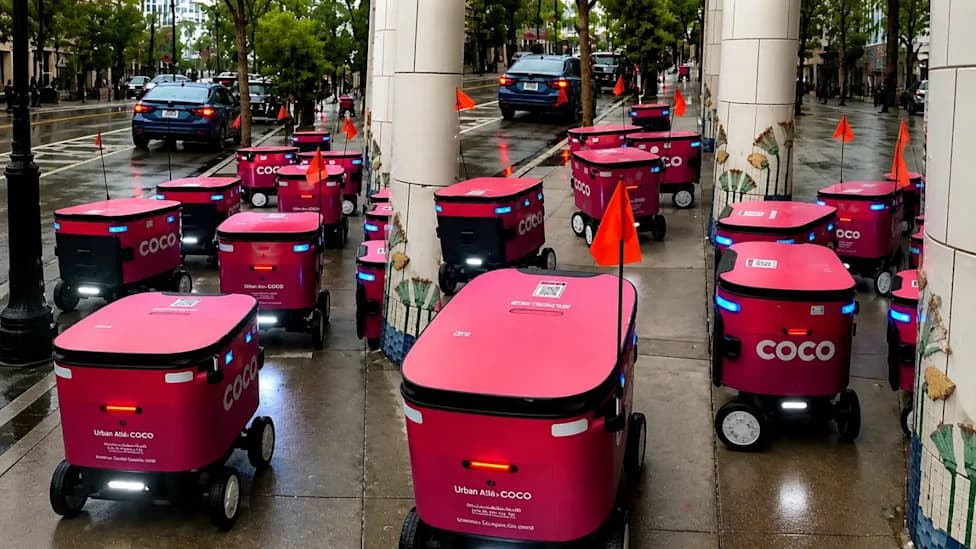
Campaigners and the charity Living Streets are calling for a ban on autonomous delivery robots from U.K. pavements until explicit safety laws are introduced to protect pedestrians, especially disabled people. The six-wheeled machines operate in several cities and can reach speeds up to 4 mph, raising concerns that they have expanded into a regulatory gap. Public opinion appears to favour restrictions — a YouGov poll found 60% support a ban — while the Department for Transport plans trials and a new legal category to study safe pavement use. Operators warn that regulation should balance safety with innovation and emissions benefits.
UK Charity Calls For Ban On Pavement Delivery Robots To Protect Disabled Pedestrians
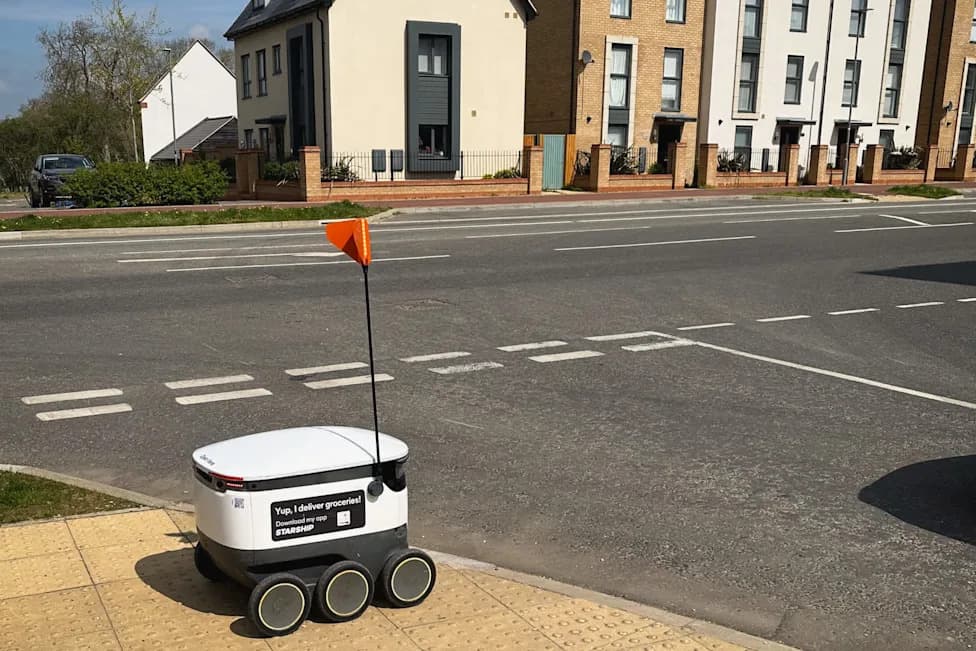
Photo Credit: iStock
A growing dispute over sidewalk delivery robots in the U.K. has sharpened a basic question about public space design: should pavements prioritise fast-moving commercial technology or the everyday needs of pedestrians who rely on safe, accessible walkways?
Campaigners Demand a Pause
Campaigners quoted by The Independent and the national charity Living Streets are urging that autonomous delivery robots be removed from pavements until specific safety legislation is introduced to protect pedestrians — with disabled people singled out as particularly vulnerable.
The six-wheeled devices, which can carry takeaways and groceries at speeds of up to 4 miles per hour, are already operating in Leeds, Milton Keynes, Bristol and Manchester. Critics say their rapid expansion has exploited a regulatory gap: current U.K. road traffic law does not yet include a dedicated statutory framework for personal delivery devices, allowing companies to operate without rules written expressly for pavement use.
Voices From The Community
“Our pavements are not for sale and should be for people. Delivery robots are putting pedestrians at risk and creating accessibility issues,” said Tanya Braun, director of external affairs at Living Streets.
Disabled campaigners describe real impacts. Dr Amit Patel, who lost his sight in 2013, said encounters with the machines have disrupted his guide dog and added unnecessary obstacles to his independent mobility. Wheelchair users also warn that many pavements are already narrow or cluttered and that robots risk blocking essential routes to public transport, shops and healthcare.
“There’s a real danger that large numbers of disabled people will have our routes blocked, stopping us from getting to the bus stop, the local shops, our GP surgery, or from taking our children to school,” said Ben Foley, campaigns and policy lead at Wheels for Wellbeing.
Government And Industry Responses
Living Streets has written to Transport Secretary Heidi Alexander requesting a halt to current commercial robot operations until safety legislation is in place. The Department for Transport (DfT) says it intends to create a new legal category for "low-speed zero-emission vehicles" and will run trials to study how pavement robots and pedestrians can safely share space.
A spokesperson for Starship Technologies, a major U.K. operator, acknowledged the need for regulation but warned against measures that would stifle innovation: “Regulation should make sure operations are safe and accessible, and give local communities a say over what works for their areas.” Industry groups also point to potential benefits such as new jobs and reduced carbon emissions from last-mile deliveries.
Broader Context
Public backing for tighter controls appears substantial: a YouGov poll found 60% of respondents favour banning delivery robots from public footpaths entirely. The debate comes as cities and companies experiment with a range of robotic and hybrid delivery systems, from autonomous street deliveries to underground tubes and sorting robots in recycling plants.
- Serve Robotics is expanding autonomous electric food delivery in Los Angeles.
- Researchers are testing hybrid last-mile systems that pair vans with delivery robots.
- Some companies are piloting underground robotic delivery tubes to move packages beneath neighbourhoods.
- Robotics are also being used in recycling plants and on beaches for tasks such as intelligent sorting and sand-sifting.
The DfT’s planned trials aim to balance innovation and decarbonisation goals with the need to prioritise pedestrian safety and the accessibility of public spaces. Campaigners say that until clear, enforceable safeguards exist, pavements should remain prioritised for people.
Help us improve.