CBP’s FY2025 data show export theft focuses on common SUVs, not only luxury supercars. The Baltimore Field Office recovered 307 stolen vehicles — led by the Honda CR‑V (44) and Toyota Highlander (24) — many bound for West Africa and Southwest Asia. SUVs and 2020–2025 model years dominate recoveries because intact, low‑mileage vehicles fetch higher prices overseas. Owners should use visible locks, hardwired trackers, and run VINs through NICB VINCheck when buying used cars.
CBP Data: Export Rings Prefer Everyday SUVs Over Million‑Dollar Supercars
CBP's Stolen-Car Export Numbers Reveal the Real Target Isn't the $270,000 Lamborghini—It's the Honda CR-V
A 2024 Lamborghini Urus valued at $269,885 was stopped in Norfolk, Virginia last year before it could be shipped to the United Arab Emirates. The seizure made headlines — but Customs and Border Protection's fiscal 2025 data show the export-theft pipeline runs on far more ordinary vehicles.
Baltimore Field Office Report
The CBP Baltimore Field Office, which covers seaports from Trenton, New Jersey, down to the Virginia–North Carolina line, published its annual stolen-vehicle export recovery data this summer. Buried after the exotic-car photos is the operational reality: the most-recovered model at those ports in fiscal 2025 was the Honda CR‑V, with 44 examples removed from outbound containers. The Toyota Highlander followed with 24 recoveries, the Dodge Durango with 19, and the Range Rover Sport with 11 — none of them supercars, but common SUVs found in driveways across the region.
Scale And Destinations
Baltimore-area officers recovered 307 stolen vehicles across those ports in FY2025, a 23% increase over the prior year, with a combined value of about $14.5 million. The Area Port of Norfolk–Newport News accounted for 163 recoveries (≈$8.8 million), ranking second nationally behind the New York Field Office's territory. The Port of Baltimore added 122 recoveries (≈$5.2 million), and Philadelphia and Wilmington together reported 22 more (≈$500,000). Nationally, CBP intercepted 1,251 stolen-vehicle export attempts in FY2025, up slightly from 1,244 the year before.
Sixty-five percent of Baltimore's recoveries — 201 vehicles — were destined for West Africa. Ghana received the largest share (102 vehicles), followed by Nigeria (39), Togo (27), Guinea (9), Benin (8), Liberia (7), Ivory Coast (6), and Senegal (3). Another 20% (61 vehicles) were bound for Southwest Asia, led by Iraq (23) and Turkey (22), with the United Arab Emirates (15) and Lebanon (1) rounding out that group. CBP specifically flagged Southwest Asia as a growing destination market.
Why SUVs And Recent Model Years Dominate
These shipments are rarely meant for chop shops. Ghana and Nigeria drive on the right, the same as the United States, so an intact, low-mileage Highlander or CR‑V can be re-registered and driven locally — making the intact vehicle more valuable to export rings than its parts. Baltimore’s numbers reinforce the pattern: SUVs comprised 73% of recoveries (224 of 307 vehicles) and 84% (258 vehicles) were 2020–2025 model years.
Economics explains the focus: a three-year-old CR‑V has much of the same drivetrain as a new one; Honda and Toyota parts networks already exist throughout West Africa; and the theft acquisition cost to the criminal network can be effectively zero. By contrast, a Lamborghini Urus is rare, harder to move discreetly, and has a tiny buyer pool overseas — which is why exotics make headlines but not the steady profit model.
Different Markets, Different Crimes
The export-theft trend is diverging from U.S. vehicle-theft patterns. The National Insurance Crime Bureau reported a 23.2% decline in nationwide vehicle thefts in 2025, to 659,880 incidents — the lowest total in decades — while CBP’s export recoveries remained essentially flat. The two trends reflect different criminal markets: opportunistic theft (curbed by immobilizers and improved factory security) versus coordinated export theft (which uses cloned keys, tow trucks, or inside coordination and a preexisting buyer network overseas).
How CBP Intercepts These Shipments
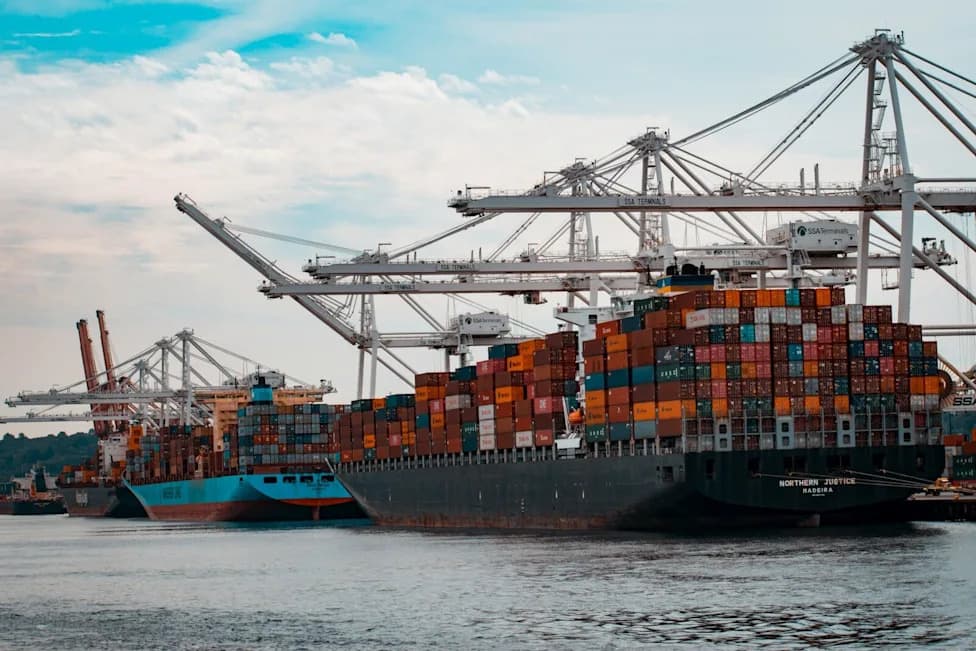
CBP treats outbound containers as potential crime scenes. Officers use non-intrusive imaging to verify container contents against manifests, cross-check VINs against stolen-vehicle databases before a box leaves the dock, and notify owners and insurers when a vehicle is confirmed stolen. As Matthew Suarez, CBP’s Acting Director of Field Operations in Baltimore, put it:
"Our seaports are not gateways for criminal organizations."
The window to catch a stolen vehicle before it disappears is measured in days. A vintage Mercedes nearly made it onto a container ship from San Francisco earlier this year before investigators intervened — a near miss that illustrates the stakes. Once a container clears customs and crosses open water, the chances of recovery drop sharply.
Practical Advice For Owners And Buyers
- Install visible physical deterrents (steering-wheel locks) and hardwired GPS trackers that a thief cannot easily disable.
- Don't leave a spare key fob in obvious places near the door.
- If you're buying a used vehicle — especially a CR‑V, Highlander, Durango, or Range Rover Sport priced unusually low for its mileage — run the VIN through the National Insurance Crime Bureau's free VINCheck before paying a deposit.
Export theft rings and title-washing schemes are close cousins: a re-VINned vehicle can end up back on a domestic lots as easily as inside a shipping container. That’s why prevention and early detection matter more than ever.
Bottom Line
A headline-catching $269,885 Urus in Norfolk is a real loss and a dramatic example. But for interpreting where the volume — and therefore the real risk for most drivers — lies, ignore the flashy photo and look at the model list: mass-market SUVs parked in driveways are the vehicles stolen most often for export.
Help us improve.