Google’s planned $15 billion data centre near Visakhapatnam, Andhra Pradesh, is under construction but facing growing local opposition over water use and potential harm to the nearby Kambalakonda Wildlife Sanctuary. Activists and legal groups say the project could worsen a city water shortfall (410 ML/day supply vs. 480 ML/day demand) and disturb wildlife; courts will hear related petitions on August 24. Google and state officials say legal requirements are being met and pledge water-protective cooling and noise-mitigation measures.
Google’s $15 Billion India Data Centre Faces Local Backlash Over Water Use and Wildlife Risks
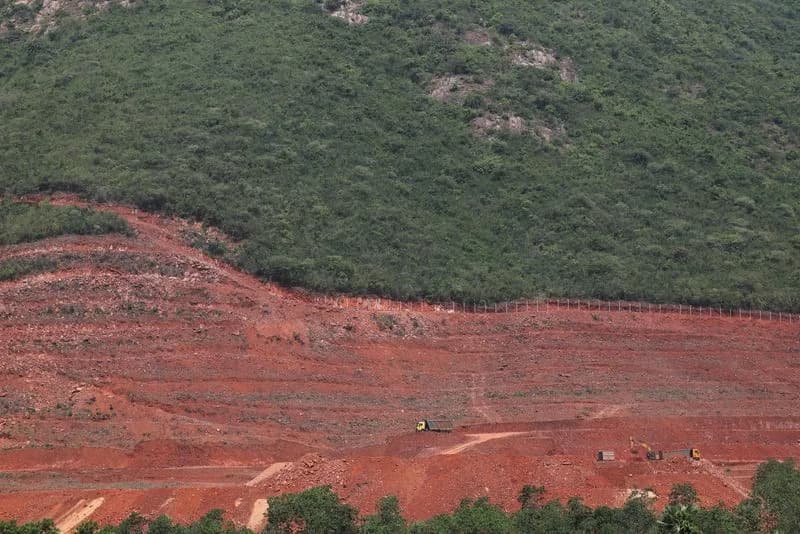
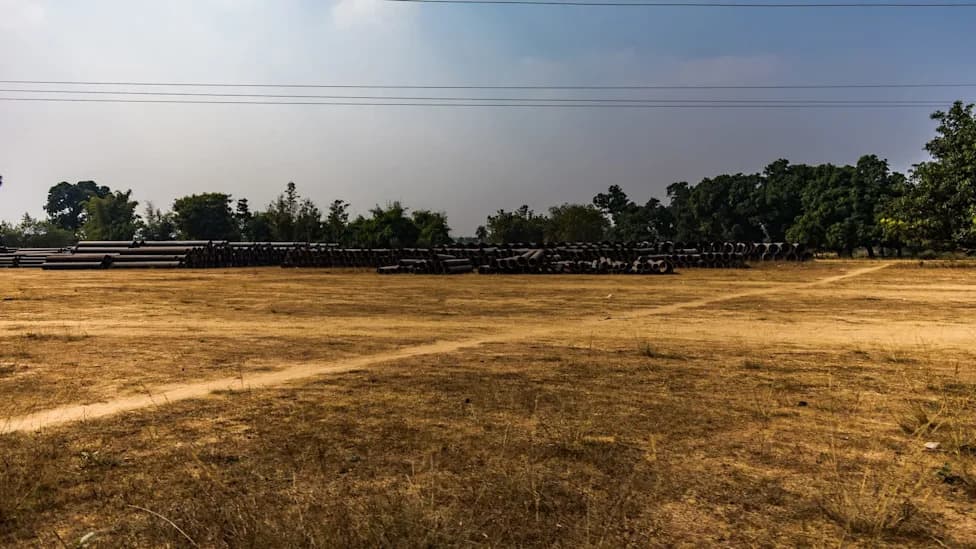
Trucks at the construction site of the Google-Adani data centre in Tarluvada, Visakhapatnam, Andhra Pradesh, India, August 3, 2026. REUTERS/Priyanshu Singh
Construction is underway on Google’s planned $15 billion data centre hub near Visakhapatnam in Andhra Pradesh, with heavy machinery terracing a hillside above the site. But the project is drawing mounting opposition from local activists and environmental groups, who say it risks straining water supplies and harming nearby wildlife habitat.
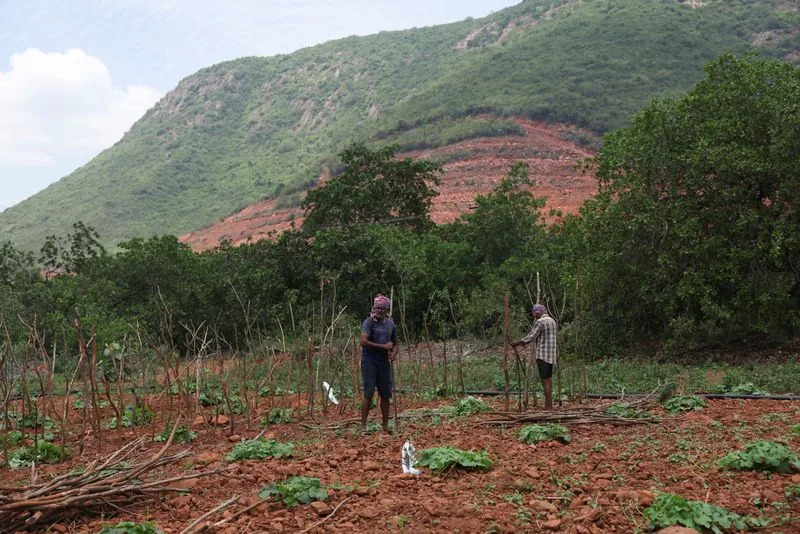
Farmers work in a field near the construction site of the Google-Adani data centre project in Tarluvada, in Visakhapatnam, Andhra Pradesh, India, August 3, 2026. REUTERS/PriyaNshu Singh
Local Concern And Protests
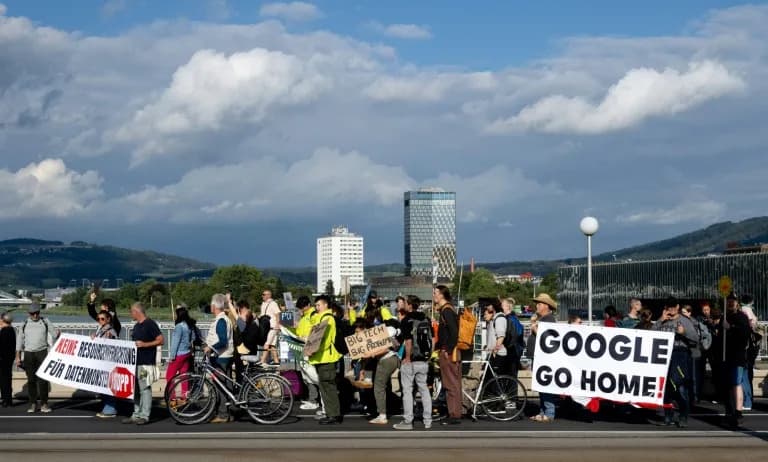
Protests in Visakhapatnam have grown in recent weeks, with demonstrators — including children — marching with banners reading "We cannot drink DATA" and painting handcuffs on the Google logo, according to social media posts and on-the-ground reporting. Community groups such as Green Visakha have organised door-to-door awareness campaigns and planned beach demonstrations to highlight what they say are shortages and livelihood risks.
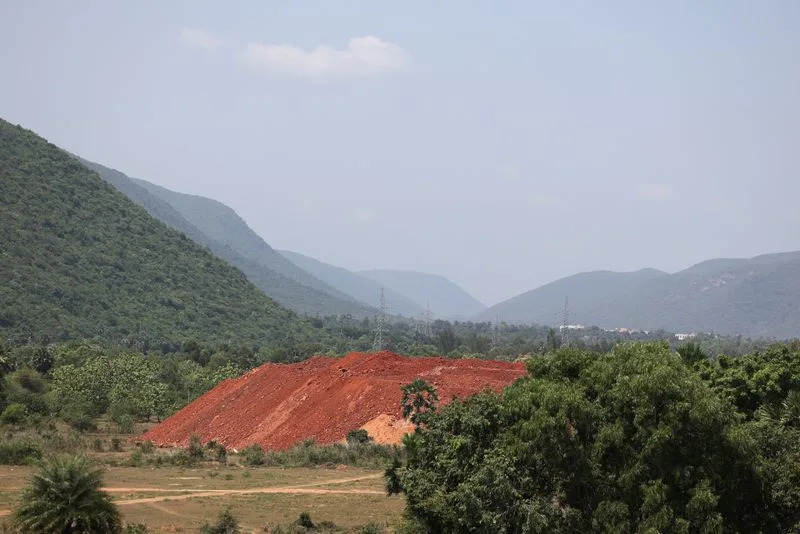
The Kambalakonda Wildlife Sanctuary, as seen from the construction site of the Google-Adani data centre in Tarluvada, Visakhapatnam, Andhra Pradesh, India, August 3, 2026. REUTERS/Priyanshu Singh
Water Stress And Technical Claims
Activists point to the city’s current water shortfall: authorities say Visakhapatnam receives about 410 million litres of water per day, while demand is roughly 480 million litres. Rationing is common in the city of around 2.5 million residents. Opponents say large-scale data centres can consume substantial water for cooling and fear the development could worsen local shortages.
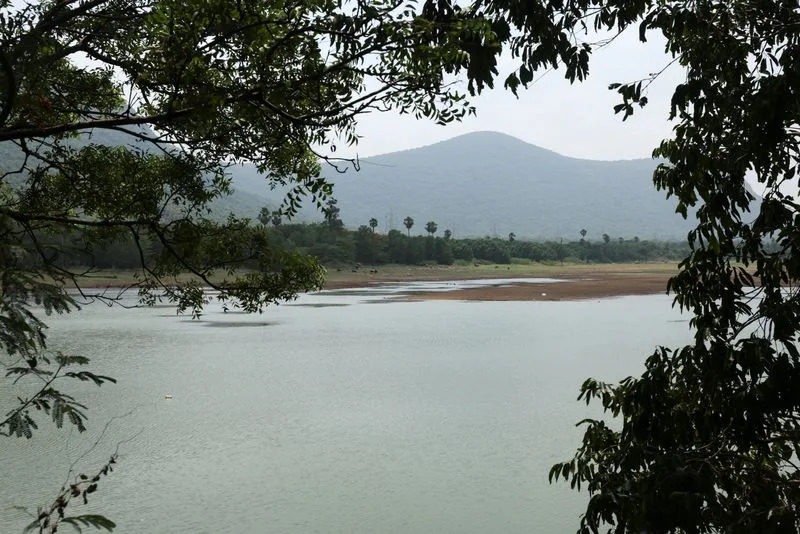
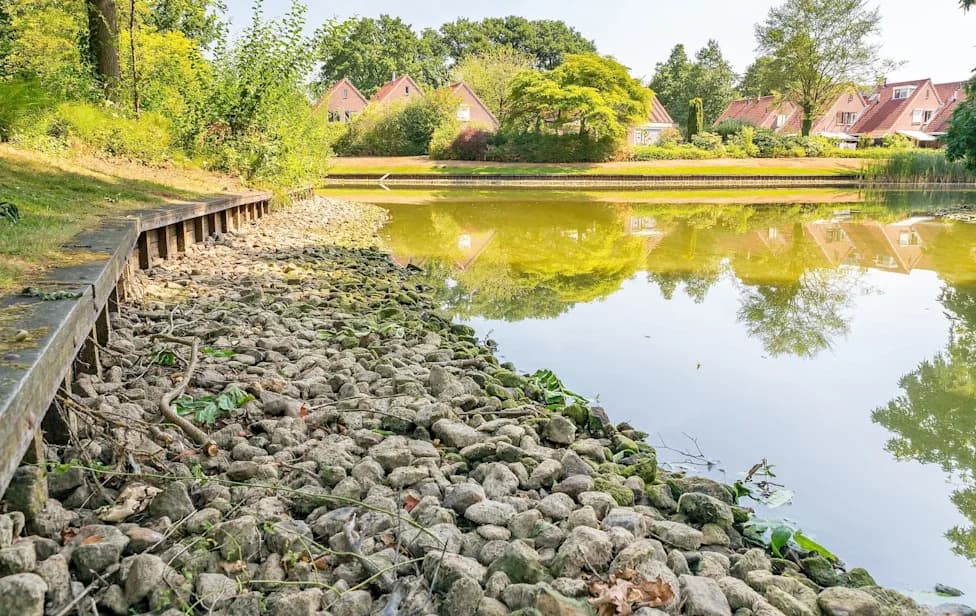
The Mudasarlova Reservoir near the Google-Adani data centre construction site in Visakhapatnam, Andhra Pradesh, India, August 3, 2026. REUTERS/Priyanshu Singh
Google has said the site will follow applicable laws and that it will use "advanced air cooling" to protect local water resources. State officials also maintain that no water intended for rural or residential supply will be diverted to the data centres and that the nearby reservoir will not be used for the project.
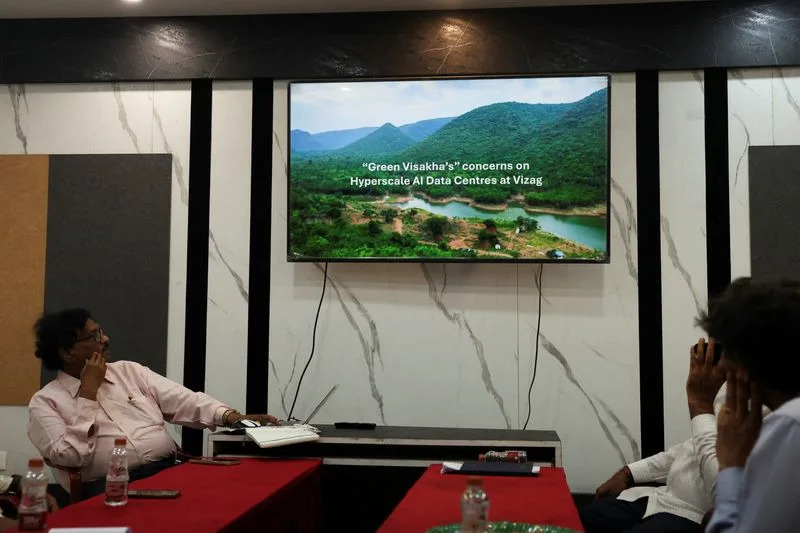
Raja Rama Mohan Roy, founder of the non-profit Green Visakha, gives a presentation on Green Visakha's concerns about the proposed hyperscale AI data centres in Visakhapatnam, Andhra Pradesh, India, August 2, 2026. REUTERS/Priyanshu Singh
Wildlife, Noise And Legal Challenges
Campaigners and a public interest litigation filed by Jal Biradari (Water Community) contend the project may strain a nearby reservoir and threaten the Kambalakonda Wildlife Sanctuary — about 860 metres from the site and home to species such as leopards and pangolins. They cite concerns about heavy construction, noise and habitat disturbance.
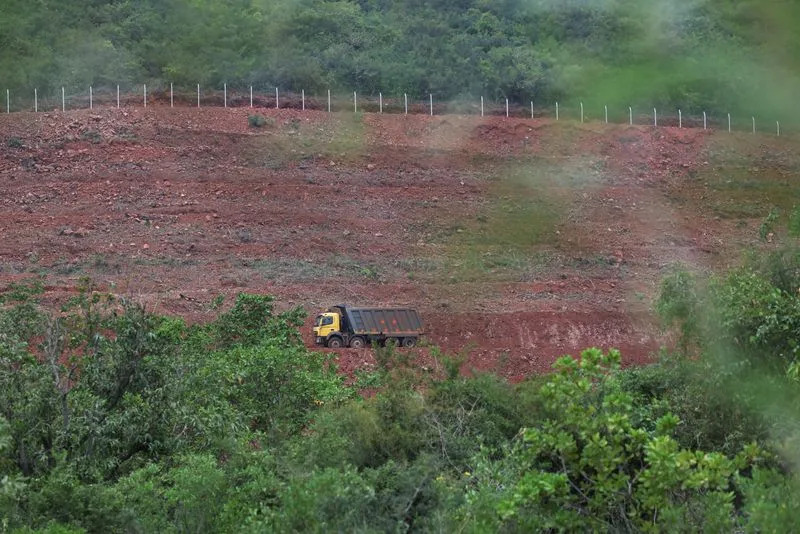
A truck at the construction site of the Google-Adani data centre in Tarluvada, Visakhapatnam, Andhra Pradesh, India, August 3, 2026. REUTERS/Priyanshu Singh
The Andhra Pradesh High Court has asked the state to respond to the litigation; the next hearing is scheduled for August 24. Separately, the Human Rights Forum has filed three cases at India’s environmental court seeking to halt the project, arguing the environmental and water impacts were not properly assessed.
Developer Partnership And Economic Claims
The development is a partnership between Google and the Adani Group and is promoted by supporters and officials as a transformational investment that could create as many as 188,000 jobs. Adani had not responded to Reuters queries at the time of reporting.
Official Responses And Mitigation Measures
The state government called activists' claims "incorrect and misleading" but said it is open to engagement and to providing factual clarifications or suitable redressal where claims are legitimate. Google said it would deploy sound-dampening measures to be "a quiet, unobtrusive neighbour." On-site reporting showed active earthmoving and exposed ground as work continued.
What’s Next
The project’s future now hinges on legal challenges and ongoing public scrutiny. Key issues for courts and regulators will include water sourcing plans, environmental impact assessments and mitigation measures for nearby wildlife. Local campaigners warn that guaranteed water assurances for the project — reportedly for 20 years — could disadvantage city residents if shortages continue.
Reporting: Reporting by Munsif Vengattil and Aditya Kalra; editing noted in original Reuters copy.
Help us improve.