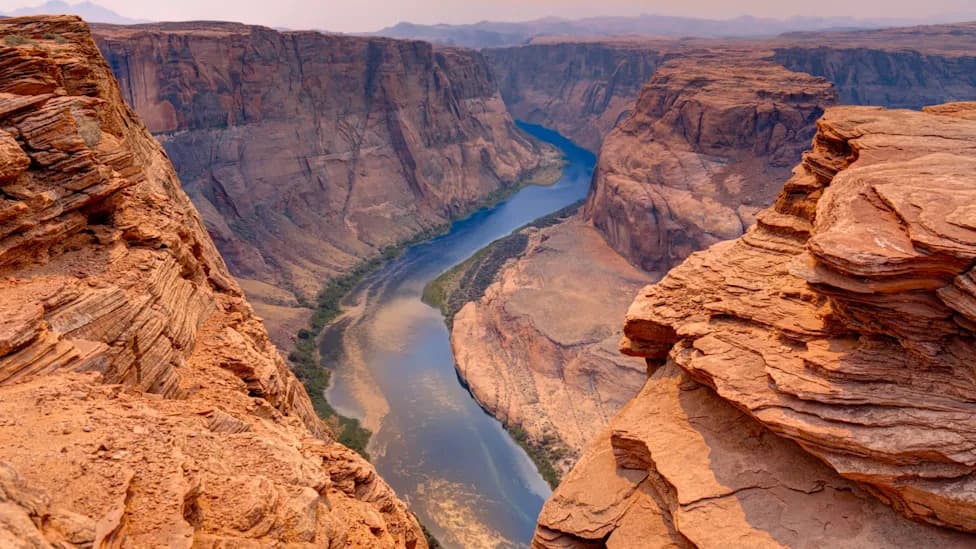
The combined storage in Lakes Mead and Powell has fallen to levels last seen in 1957, underscoring the severity of the Colorado River crisis. Low snowpack across Colorado, New Mexico, Utah and Wyoming and unusually hot spring temperatures have driven losses of roughly 15,000–16,000 acre-feet per day. Officials warn the lakes' drought buffer is nearly gone and Lake Powell could fall below hydropower levels by next spring. Federal agencies are preparing an environmental impact statement that may recommend water-use reductions; experts say reservoirs will likely keep declining until spring snowmelt.
Colorado River Alarm: Lakes Mead and Powell Hold Only As Much Water As Mead Did In 1957
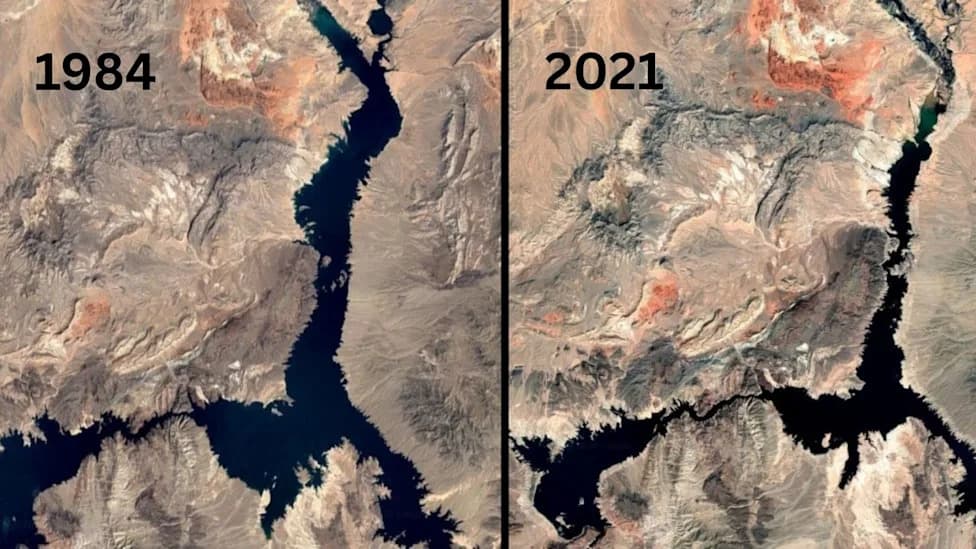
Photo Credit: Google Earth
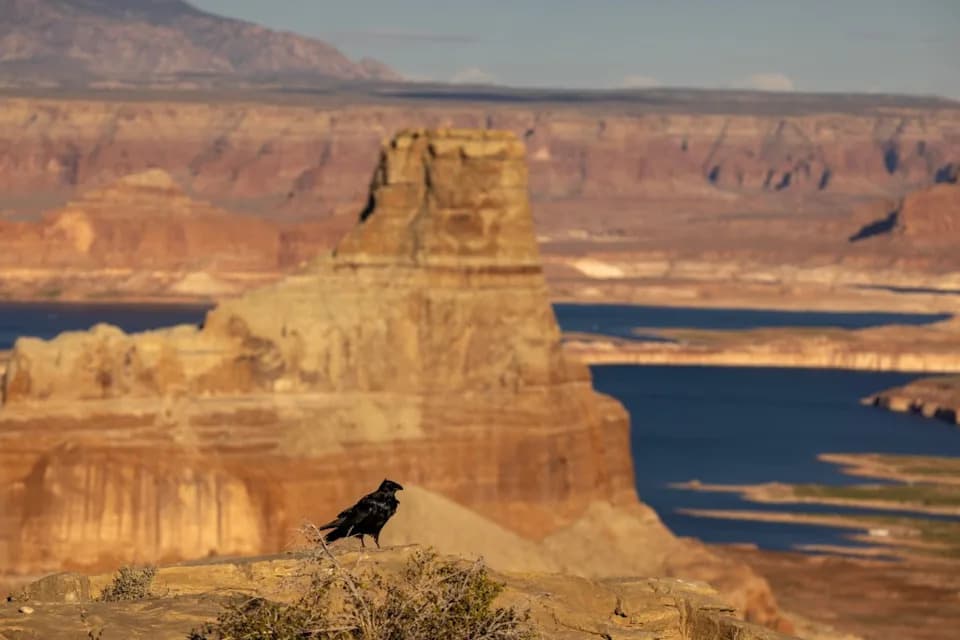
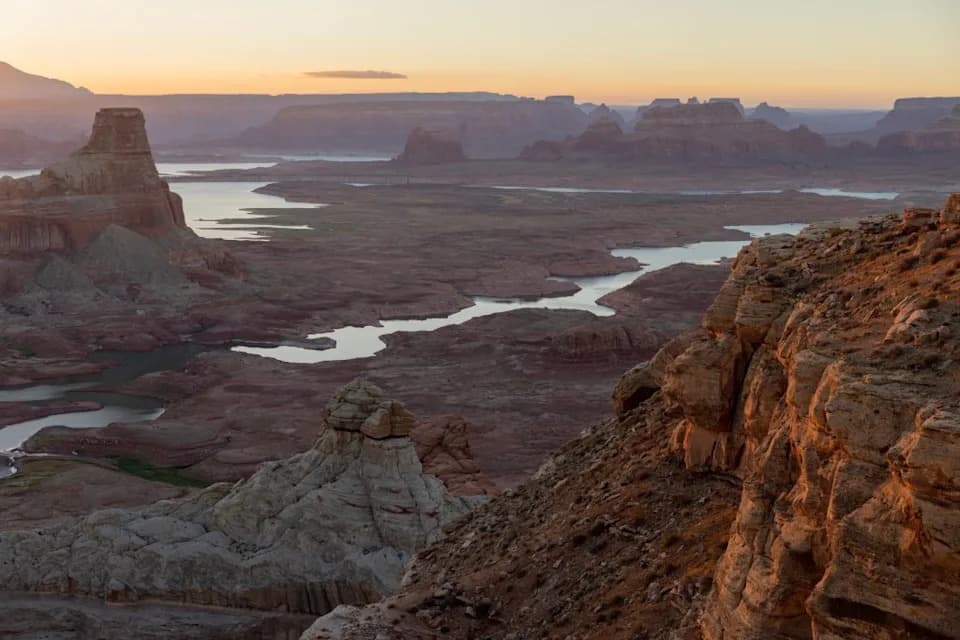
Combined storage in Lakes Mead and Powell has dropped to nearly the same volume that Lake Mead alone contained in 1957, a stark indicator of the worsening Colorado River crisis.
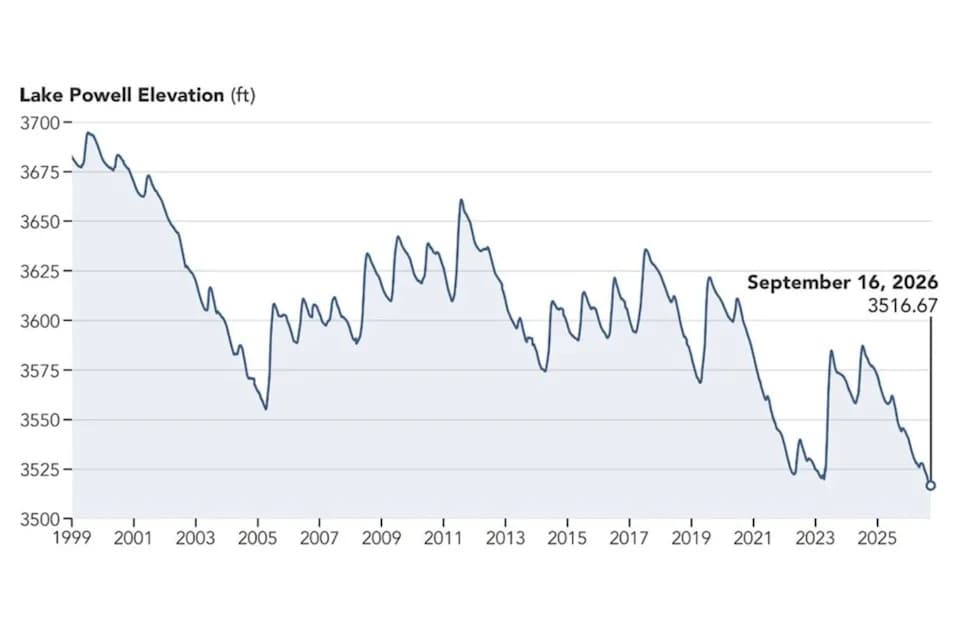
On July 12, federal data showed the two reservoirs reached this near-record low, matching storage levels last seen in May 1957 — before Lake Powell began filling behind Glen Canyon Dam.
What’s Causing the Drop?
Scientists point to an unusually small snowpack across Colorado, New Mexico, Utah and Wyoming — the primary source states for Colorado River flows — compounded by intense spring heat across the Colorado River Basin. Over four of the past five months, including most of July, the two reservoirs have been losing roughly 15,000 to 16,000 acre-feet per day.
Why This Matters
For decades, Mead and Powell acted as the river's emergency reserve, protecting water deliveries to major cities such as Phoenix, Tucson and Los Angeles and supporting large agricultural regions in Arizona and California. That buffer is rapidly disappearing.
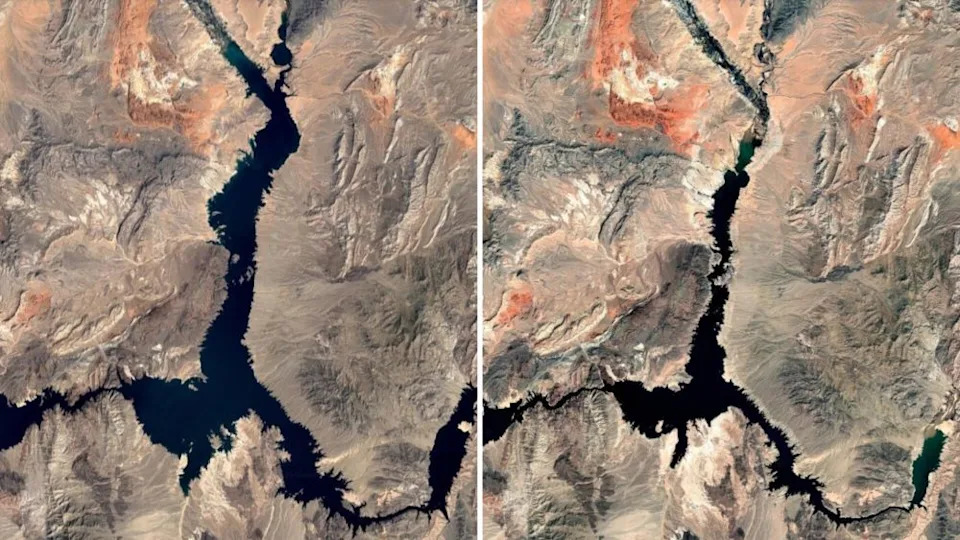
Photo Credit: Google Earth
"This represents a teaching moment to communicate to the general public how dire is the situation and how little remaining water we have in the reservoir system," said Jack Schmidt, director of Utah State University's Center for Colorado River Studies.
Anne Castle, who served as Assistant Interior Secretary for Water and Science during the Obama administration, warned the reservoirs' short-term drought buffer is now "almost nonexistent." The consequences are broad: hotter, drier conditions can stress drinking-water systems, reduce crop yields, increase pressure on energy supplies and leave communities more vulnerable to wildfires and other climate-related emergencies.
Impacts And Responses
Federal forecasts indicate Lake Powell could fall below the level needed for Glen Canyon Dam to produce hydropower by next spring if current trends continue. Federal officials are preparing a final environmental impact statement expected to recommend reductions in Colorado River water use to narrow the widening gap between supply and demand. That process will shape near-term actions by states and water users.
Schmidt described the situation with a simple metaphor: "The amount of water we have left in the bathtub can be fixed by increasing flow out of the faucet or closing down the drain. We can't increase what's coming out of the faucet. We have to decrease the flow out of the drain." In practical terms, that means stepped-up conservation, tougher interstate negotiations and greater pressure on cities, farms and industries to cut usage.
Experts expect the reservoirs to continue setting new lows until the next seasonal snowmelt replenishes flows in the spring.
Photo Credit: Google Earth
Help us improve.