Recent travels across Italy reveal that decay once associated with the Mezzogiorno is spreading nationwide. Infrastructure responsibility was shifted to cash-strapped provinces, and recent funding cuts have left roads and public assets in disrepair. Economically, real wages lag 1990 levels and key manufacturing has declined. Most alarmingly, Italy recorded 355,000 births versus 652,000 deaths last year, with a fertility rate of 1.14 and a median age of 49.1 — a demographic collapse that offers a warning to Britain and other ageing Western nations.
Italy Is Running Out Of Italians — What Britain Can Learn From Its Demographic Decline
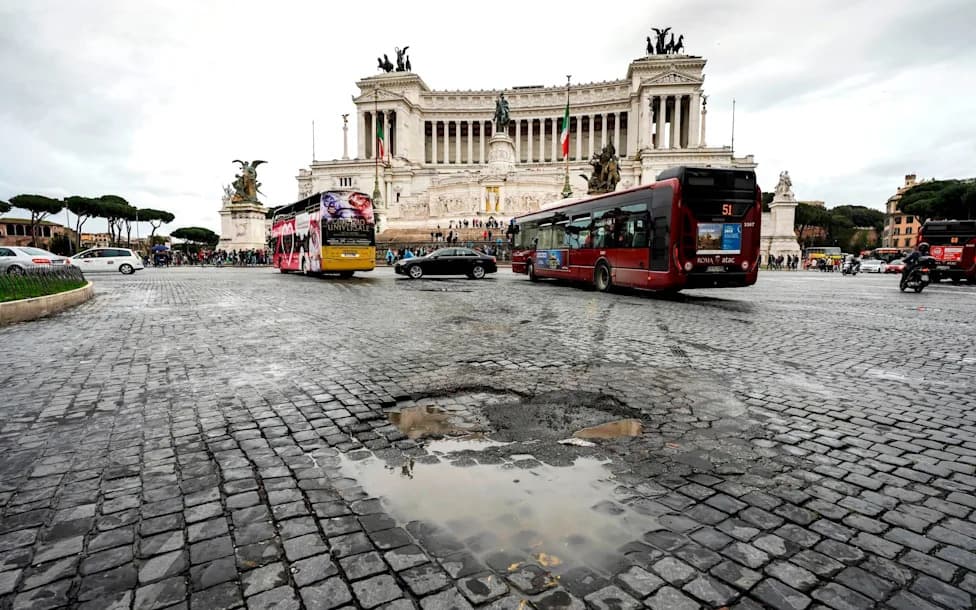
Potholed roads, abandoned factories and dying shopping centres abound - Andreas Solaro/AFP/Getty Images
Over the past two years I have travelled widely across Italy, from Sardinia and Sicily to Puglia and Calabria — the Mezzogiorno — where romantic decay and ancient splendour are often presented as two sides of the same coin. Those familiar scenes — peeling façades, overgrown verges and towns that seem to shut down by early afternoon — are still there, and Italy can be extraordinarily charming.
But recent trips further north — first around Trieste, then across the industrial plain south of Milan through the Po Valley, Pavia and Piacenza — revealed something more worrying: the disorder and deterioration I once associated with the deep south are now visible across much of the country.
Roads, Budgets and a Slow Unravelling
The first thing you notice is the roads. On main routes between towns it can feel like there is a pothole every hundred metres, each big enough to unsettle a small car. After a week of swerving, both my nerves and my suspension were frayed — and that impression is backed by policy decisions and hard figures.
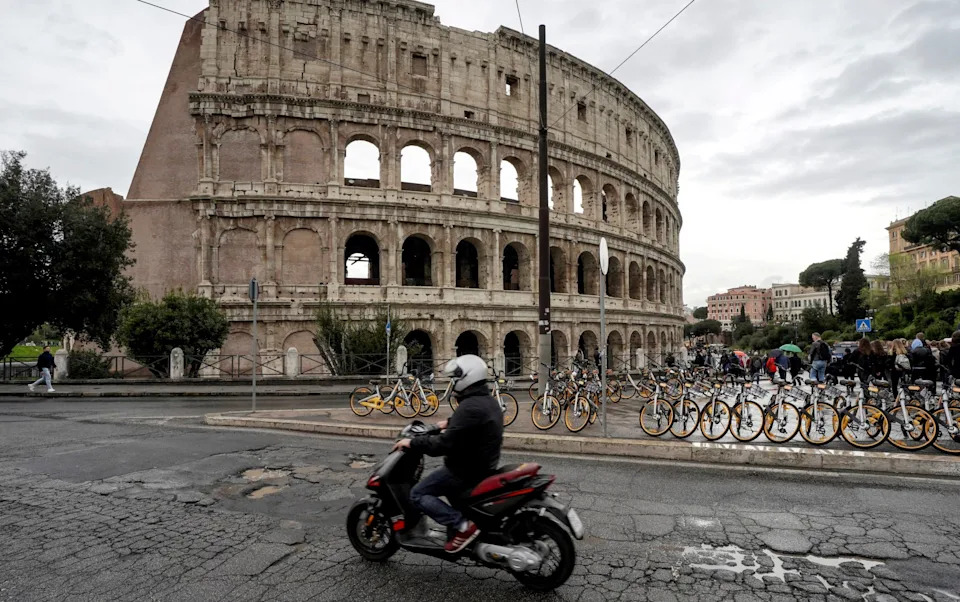
You can't travel between towns without hitting a pothole every hundred metres - Andreas Solaro/AFP via Getty Images
In 2014 national reforms significantly reduced provincial powers and budgets while leaving local authorities responsible for roughly 130,000 kilometres of road. Routine maintenance largely vanished. By 2017 provincial presidents were lodging formal complaints with prosecutors, anticipating the legal fallout if neglected infrastructure caused fatalities. The collapse of Genoa's Morandi bridge in 2018 was a stark illustration of those risks.
Last year the central government announced cuts of about 70% to provincial road funds, with regions such as Emilia-Romagna facing reductions of roughly half their allocations. Local officials warned that, absent new funding, road closures could be the only safe option.
Signs of Economic and Social Stagnation
Once you notice the potholes, other signs of decline become apparent: abandoned factories with broken skylights, threadbare shopping centres, and graffiti in many urban areas. These are visible symptoms of a deeper economic malaise.

Graffiti and vandalism are widespread in major cities - Emanuele Cremaschi/Getty Images
Italy is the only major advanced economy where real wages are lower than in 1990. GDP per head has barely risen since the euro's introduction, and car production — in the birthplace of Fiat, Alfa and Lancia — has fallen back to volumes not seen since the 1950s. Meanwhile, sectors that once defined 'Made in Italy' — textiles, footwear and furniture — have largely relocated to manufacturers in China and elsewhere.
The Demographic Emergency
Underpinning all of this is a more profound reality: Italy is running out of Italians. Last year the country recorded 355,000 births — an historic low, nearly 40% fewer than in 2008 — against 652,000 deaths. That represents a natural population loss approaching 300,000 people annually — roughly the size of Verona disappearing each year. With a fertility rate of 1.14 and a median age of 49.1, Italy is the oldest country in the European Union.
What appears as decay may, in large part, be the normal condition of an extremely aged society: too few young workers to mend roads, too few young families to sustain shops, and too few taxpayers to support essential services.
A Warning for Britain and Other Western Nations
Britons often tell themselves our problems are unique — but they are not. In 1987 Italy celebrated 'il sorpasso', the moment its economy overtook Britain’s; today that milestone feels distant. The direction of travel matters: ageing populations, flatlining productivity and a state struggling to maintain basics are not Italy’s problem alone. Any Western nation that cannot raise its birth rate and cannot compete effectively on productivity may see similar outcomes.
In a small station bar near Piacenza, young Italians watched the World Cup final — a generation that has little recent memory of their national team on the world stage — and then drifted away into the warm night down the potholed roads. That scene felt like a quiet epitaph and a warning.
Policy choices — from investment in infrastructure to immigration and family support — will determine whether this trajectory can be reversed. For countries such as Britain, Italy’s experience is a cautionary example rather than an inevitability.
Help us improve.