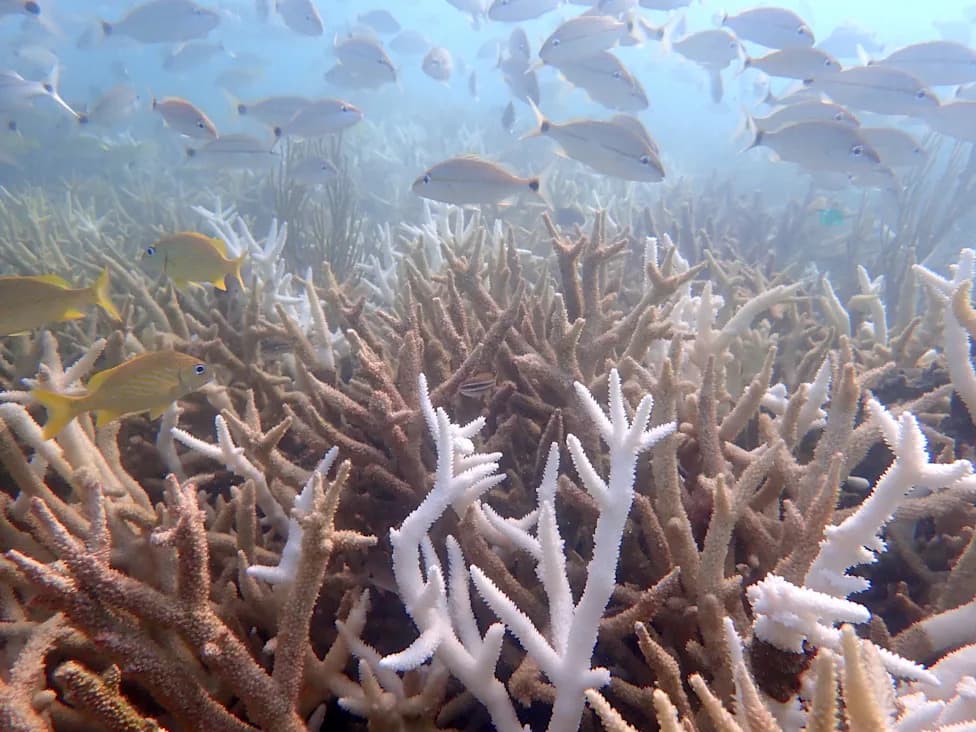
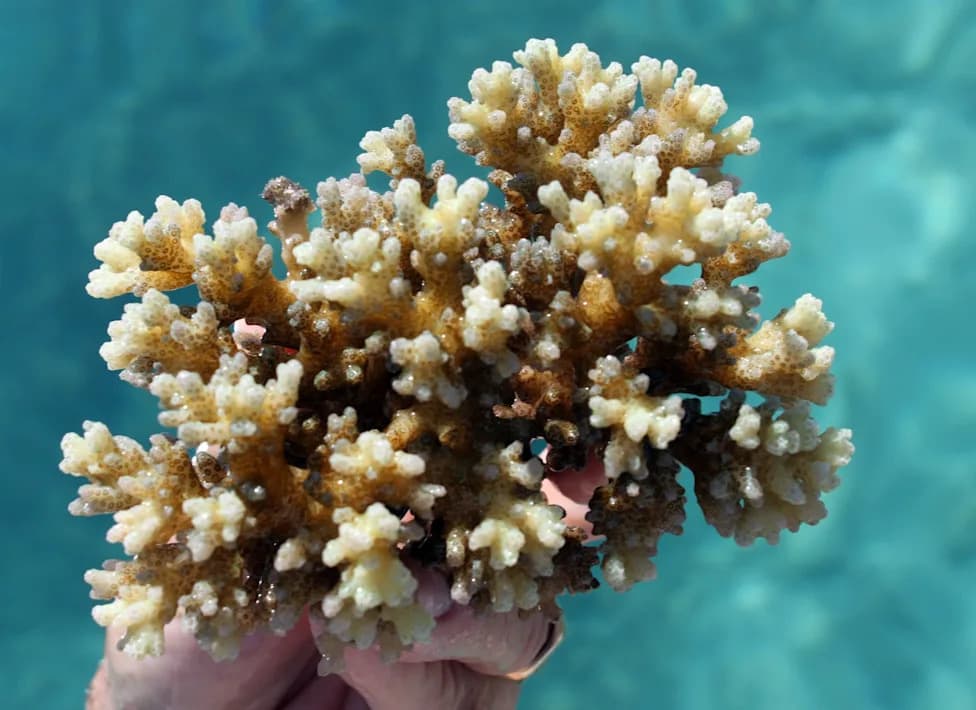
University of Miami researchers have begun a proactive "coral shuffle," relocating Elkhorn coral fragments to shaded tanks, aquaria and deeper waters to reduce the risk of bleaching ahead of peak summer heat. The move prioritizes fragments descended from some of Florida's last natural Elkhorn colonies and uses careful inspection and cleaning protocols. NOAA has already reported early signs of bleaching, and the Florida Keys are at level two on the bleaching watch chart, prompting readiness to expand rescues to include endangered Staghorn juveniles if conditions worsen.
Preemptive 'Coral Shuffle' Off South Florida: Researchers Relocate Rare Elkhorn Corals Ahead of Summer Heat
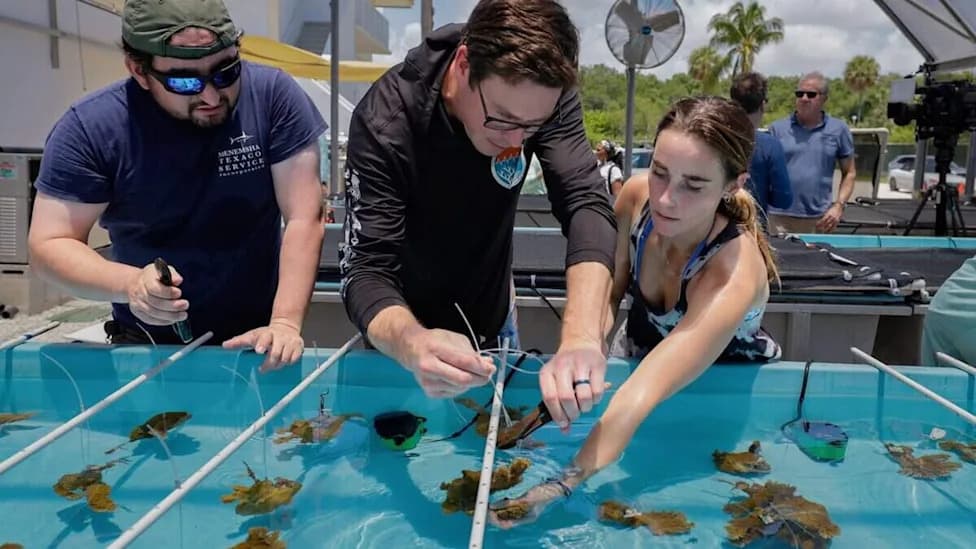
Photo Credit: X
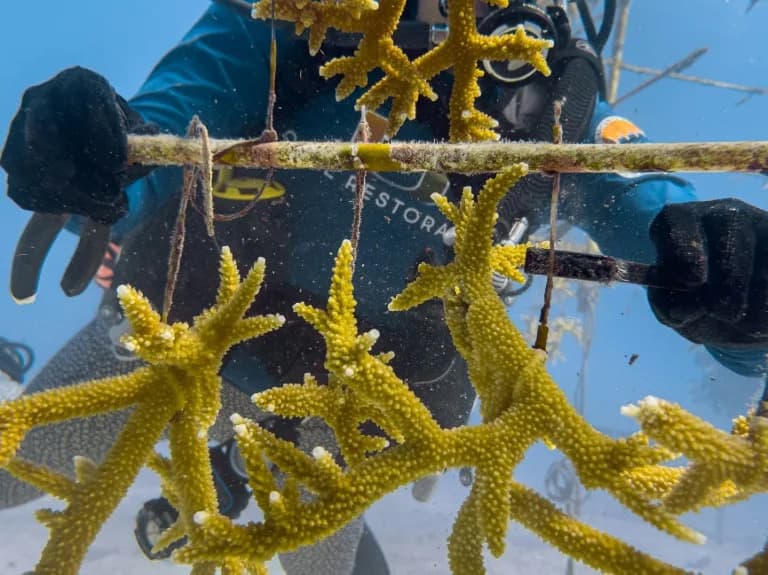
As summer approaches, University of Miami researchers have launched a preemptive "coral shuffle," moving valuable Elkhorn coral fragments from offshore nurseries into land-based aquaria, shadier sites and deeper water to shield them from rising ocean temperatures.
Why This Matters
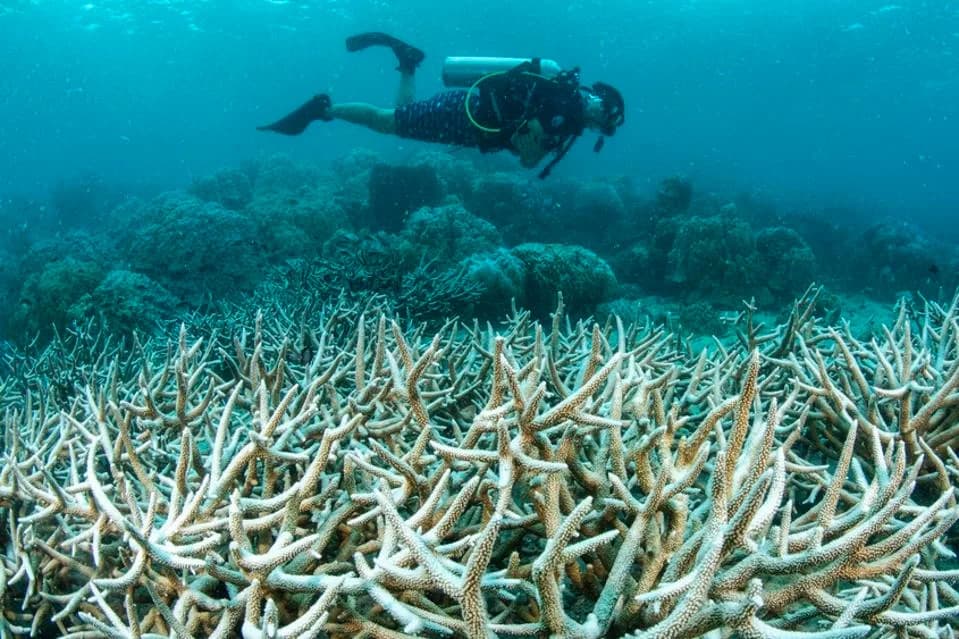
Record marine heat in 2023 caused widespread bleaching and heavy coral mortality across South Florida. NOAA teams have already detected early signs of bleaching this season, prompting researchers to act early to protect critical breeding stock and preserve the region's reef resilience.
What Scientists Are Doing
Under the University of Miami's Rescue a Reef program, teams are prioritizing fragments that descend from some of the last naturally occurring Elkhorn colonies on Florida's reef — specimens scientists consider essential for future restoration efforts. The preemptive moves aim to limit exposure during the hottest weeks when bleaching risk is highest.
"This really isn't the full-blown emergency you saw in 2023, because we were on our heels. This is us being proactive,"
— Dalton Hesley, senior research associate, Rescue a Reef.
Researchers said the work is deliberate and methodical. Each fragment is inspected for pests and hitchhiking organisms, given a cleansing bath, and suspended in shaded, temperature-controlled tanks at the University of Miami's outdoor lab. Tanks and deeper-water placements are configured to reduce thermal stress during peak heat.
On-the-Ground Details
- Priority focus on breeding stock descended from rare natural colonies.
- Inspection and cleaning protocols remove hitchhikers and disease risks.
- Corals are held in shaded or temperature-managed tanks, or moved to deeper water when appropriate.
- Teams can scale up to include endangered Staghorn coral juveniles if conditions deteriorate.
Scientists are watching regional indicators closely. By Monday, the Florida Keys had reached level two on NOAA's coral bleaching watch chart — a designation signaling major bleaching with likely coral losses — while mainland South Florida remained at level one.
"Any coral bleaching is concerning, but visible coral stress this early in the summer season does not bode well for the health of our reefs,"
— Ian Enochs, head of NOAA's Atlantic Oceanographic and Meteorological Laboratory coral program.
Diego Lirman, associate professor at the University of Miami's Rosenstiel School, noted that slightly cooler waters around Miami helped spare some reefs during last year's heat wave. The current rescue plan focuses on the highest-priority stock, with flexibility to broaden operations as needed.
Broader Stakes
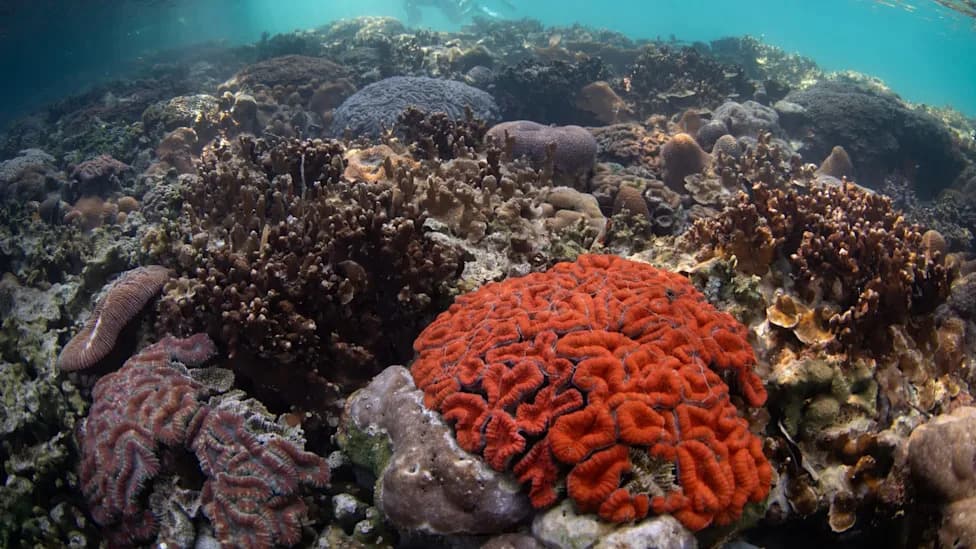
Coral reefs support fisheries, tourism and coastal economies and act as natural buffers that reduce wave energy during storms. When reefs bleach and die, fish lose habitat, recreation industries suffer, and shorelines become more exposed to erosion and storm damage.
The early, targeted effort in South Florida underscores a shift toward proactive conservation: moving vulnerable corals out of harm's way before full-blown bleaching events can occur.
Help us improve.